Starting a practice
Sole Trader or Limited Company for Therapists? A UK Comparison
How UK therapists can compare sole trader status with a limited company: liability, tax, Companies House costs, and a simple way to decide which fits.
On this page11 sections
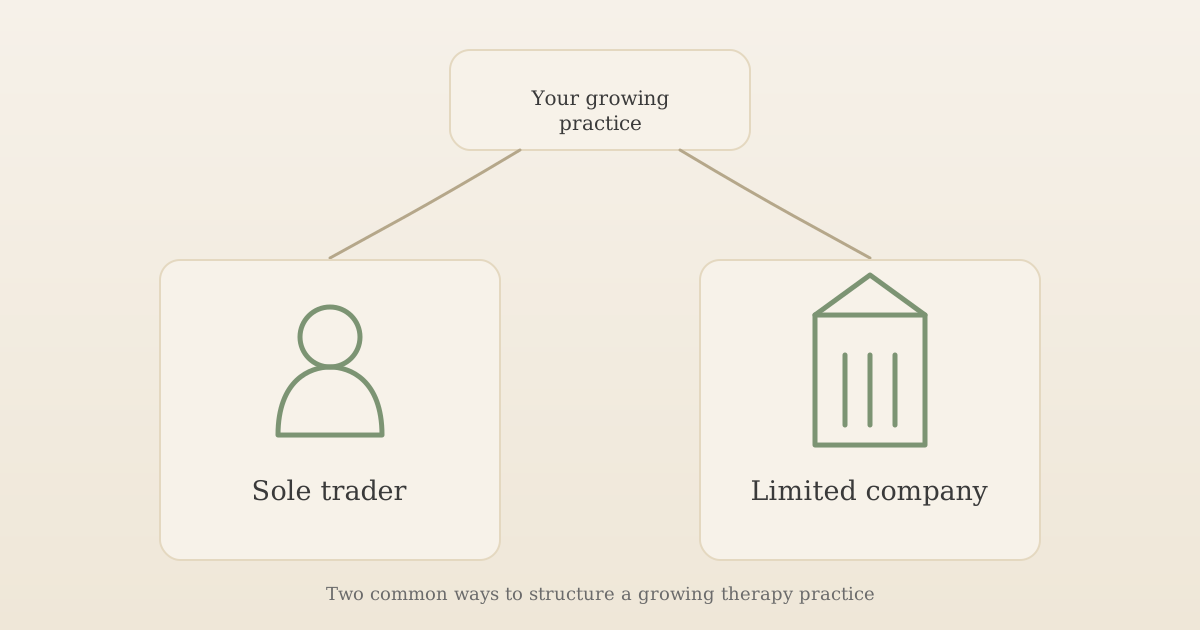
Once you've decided to set up a private practice, one of the first practical questions is whether to trade as a sole trader or set up a limited company. This is one of the choices covered briefly in our guide to setting up a private therapy practice in the UK; this post goes deeper into what each structure actually means for a therapist, in plain English.
This guide compares sole trader and limited company status for UK-based counsellors and therapists: how each is registered, how tax works differently, what liability protection actually covers, and a simple way to think through which fits your practice now.
Key takeaways:
- As a sole trader, you and your business are legally the same thing. You register for Self Assessment once your income passes £1,000 a year, and you pay Income Tax and National Insurance on your profit.
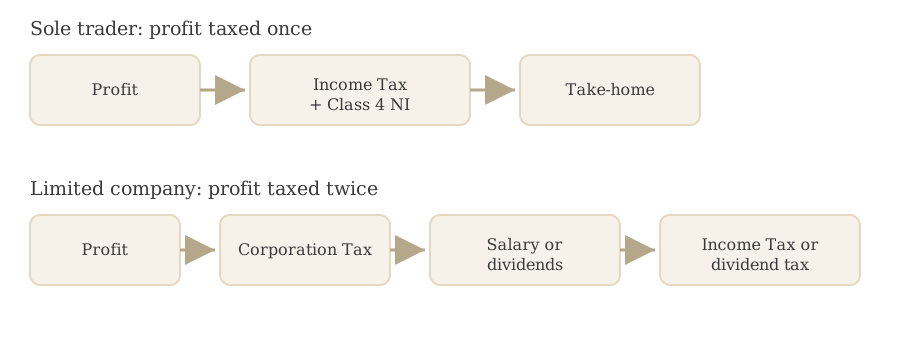
- A limited company is a separate legal entity. It must be registered with Companies House before you trade through it, and its profit is taxed twice: once as Corporation Tax, then again as Income Tax or dividend tax when you draw money out personally.
- "Limited liability" protects your personal assets from business debts. It does not protect you from a clinical negligence claim, which professional indemnity insurance covers regardless of your structure.
- There's no single structure that's always more tax-efficient. It depends on your profit level, how much you draw out, and your other income, so this is worth checking with an accountant rather than assuming.
- Many therapists start as sole traders and incorporate later once their practice has grown; switching is common and generally straightforward with the right advice.
Important: This is a practical overview, not legal, tax or accountancy advice. Business structure decisions depend on your specific profit, income and circumstances. Check current HMRC and Companies House guidance, or speak to an accountant, before registering a business structure or changing an existing one.
The quick comparison
| Sole trader | Limited company | |
|---|---|---|
| Legal status | You and the business are the same legal entity | A separate legal entity from you |
| Registration | Register for Self Assessment once income passes £1,000/year | Must register with Companies House before trading |
| Liability for business debts | Unlimited: your personal assets are at risk | Limited to what you've invested in the company |
| Tax on profit | Income Tax + Class 4 National Insurance on all profit | Corporation Tax on the company's profit, then tax again on what you draw out |
| Ongoing filing | One Self Assessment return a year | Annual accounts, a confirmation statement, and Corporation Tax return |
| Typical admin | Simpler; many manage it without an accountant | More formal; most directors use an accountant |
What being a sole trader means for a therapist
As a sole trader, there's no separate legal entity between you and your practice. You can start seeing clients and taking payment straightaway; you only need to register for Self Assessment with HMRC once your income from the practice passes £1,000 in a tax year (6 April to 5 April).
Because there's no separation between you and the business, you're personally responsible for any business debts, which is described as "unlimited liability". For most solo therapy practices, with low overheads and no borrowing, this is a modest risk in practice, but it's the key legal difference from a limited company.
You pay Income Tax and Class 2 and Class 4 National Insurance on your profit, not your turnover: your allowable business expenses (supervision, insurance, room hire, software, and so on) come off first. Our guide to pricing a private practice covers working out what your fee needs to cover before tax, including the same Income Tax bands referenced below.
What running a limited company means for a therapist
A limited company is a separate legal entity from you. It must be registered with Companies House before you start trading through it, which currently costs £100 online and usually completes within 24 hours. You become a director (and typically the sole shareholder), responsible for running the company within its legal duties.
The company owns the profit it makes, not you directly. You extract money from it as a salary (taxed like any employee's income, through PAYE), as dividends (taxed separately, see below), or both. The company also has to file annual accounts and a confirmation statement with Companies House every year, alongside its own Corporation Tax return to HMRC, which is why most directors use an accountant.
Limited liability doesn't cover clinical risk
It's worth being precise about what "limited liability" actually protects. It limits your personal responsibility for the company's debts, such as unpaid rent on a therapy room or a supplier invoice, to what you've put into the company. It does not shield you from a professional negligence claim arising from your clinical work; a claim like that is against your practice as a therapist, not against the company as a debtor.
That risk, for both sole traders and limited companies, is what professional indemnity insurance is for. Our guide to setting up a private therapy practice covers arranging appropriate insurance as an early step regardless of which structure you choose; incorporating is not a substitute for it. See our guide to professional indemnity insurance for therapists for what it actually covers, what your registration body requires, and what run-off cover means if you later change structure.
How the tax actually compares
This is the part that catches people out: profit inside a limited company is not automatically taxed less than the same profit earned as a sole trader, because it's taxed twice before it reaches you personally.
As a sole trader, profit is taxed once, directly as your income. For example, on £40,000 of profit in the current tax year, using the standard Personal Allowance of £12,570 and the 20% basic rate up to £50,270:
- Income Tax: 20% on the £27,430 above your Personal Allowance ≈ £5,486
- Class 4 National Insurance: 6% on profit between £12,570 and £50,270 ≈ £1,646
- Take-home from that profit: roughly £32,868, before any pension contributions or other deductions
As a limited company, the same £40,000 of profit is first subject to Corporation Tax: 19% up to £50,000 of profit (rising to 25% above £250,000, with marginal relief between the two). Whatever's left after Corporation Tax is then taxed again when you draw it out: a salary is taxed through PAYE like any employee's income, and dividends have their own £500 tax-free allowance before being taxed at 10.75% (basic rate), 35.75% (higher rate) or 39.35% (additional rate) on top of the allowance. These dividend rates rose by two percentage points from 6 April 2026, following the Autumn Budget 2025, so if you're comparing against older guidance, check it reflects the current rates.
Most directors reduce the total tax by taking a small salary (which also counts as an allowable expense that lowers the company's Corporation Tax bill) and the rest as dividends, rather than taking everything as one or the other. Whether that combination ends up ahead of the sole trader route depends on your exact profit level, your salary/dividend split, and any other income you have, which is genuinely worth ten minutes with an accountant or a specialist calculator rather than a single generic number. Treat any "limited companies pay less tax" claim you read elsewhere, including implicitly in this post, with that caveat attached.
Admin, filing and costs to expect
| Cost or task | Sole trader | Limited company |
|---|---|---|
| Registration | Free (Self Assessment) | £100 online (Companies House) |
| Annual filing | One Self Assessment return | Confirmation statement (£50/year), annual accounts, Corporation Tax return |
| Business bank account | Optional, but sensible | Effectively required; company money is legally separate from yours |
| Typical accountant involvement | Often optional for straightforward cases | Common, given the extra filings |
These are the current administrative baseline costs; separately budget for an accountant's fee if you use one, which varies by how much support you need.
A simple way to decide
- Just starting, building your first caseload part-time alongside other work? Sole trader is usually simpler while your profit and time in practice are still growing. See our guide to getting your first counselling clients for realistic early-stage timelines.
- Profit comfortably above what you personally need to live on, and you'd rather leave some in the business? A limited company can make sense here, since undrawn profit is only taxed at the Corporation Tax rate until you extract it.
- Planning to bring in an associate, take on staff, or want a more formal structure for certain contracts? A limited company often fits better as a practice grows beyond just you.
- Not sure yet? That's normal this early. Sole trader status is easy to change out of later, so it's a reasonable default while you find your feet, rather than a decision to over-think before you've seen your first client.
Whichever you choose, a website, fees page and business costs like software and hosting (see our breakdown of therapist website costs) are handled the same way either side: as ordinary business expenses that come off your profit before tax.
Can you switch structure later?
Yes. It's common to start as a sole trader and incorporate once profit has grown enough to make it worthwhile. In practice this means registering a new limited company, opening a business bank account for it, telling HMRC you've stopped trading as a sole trader for that income, and transferring things like your website domain, supplier contracts and any ongoing client agreements across. An accountant can make sure the transfer, final Self Assessment return and new company's first accounts are handled correctly, since getting the cut-over date and reporting wrong can create avoidable admin later.
Before you register: a quick checklist
- Decided whether you'll register for Self Assessment (sole trader) or with Companies House (limited company)
- Understood the tax difference: profit taxed once, or taxed once at company level and again on what you draw out
- Arranged professional indemnity insurance regardless of structure
- Budgeted for an accountant if you're incorporating, or checked whether you're confident handling Self Assessment yourself
- Set up a separate business bank account, especially if incorporating
- Noted the current VAT registration threshold (£90,000 taxable turnover) in case your practice approaches it
Frequently asked questions
Should a therapist be a sole trader or a limited company?
There's no single right answer for every therapist. Many practitioners start as sole traders because it needs no separate registration and is simpler to run, then consider a limited company once profit is comfortably above what they need to live on, or when a more formal structure suits their plans. The right choice depends on your profit level, other income and future plans, so it's worth a conversation with an accountant before you register anything.
Do I pay less tax as a limited company?
Not automatically. A limited company pays Corporation Tax on its profit, and you then pay Income Tax or dividend tax again on whatever you draw out personally. Many directors reduce the total by taking a small salary and the rest as dividends, but whether this beats paying Income Tax and National Insurance as a sole trader depends on your specific profit level and how much you draw out, not on the structure alone.
Does a limited company protect me if a client makes a negligence claim?
No. Limited liability protects your personal assets from the company's business debts, such as unpaid bills or a lease, not from a professional negligence claim arising from your clinical work. That risk is covered by professional indemnity insurance, which every therapist needs regardless of whether they trade as a sole trader or a limited company.
Can I switch from sole trader to a limited company later?
Yes, and it's common to start as a sole trader and incorporate once your practice and profit have grown. You'll need to register a new company with Companies House, open a new business bank account, tell HMRC about the change, and may need to transfer contracts and any existing client agreements to the new company. An accountant can help make sure the transfer and reporting are done correctly.
Start with what fits your practice now
Neither structure is universally "better": a sole trader keeps things simple while you're building a caseload, and a limited company can suit a more established practice with higher profit or different plans. What doesn't change either way is the need for proper insurance, clear financial records and a straightforward way for clients to find and contact you. Get those right first, and the business structure decision becomes easier to revisit as your practice grows.
Get a website that grows with your practice
UpTopWeb builds calm, professional websites for counsellors and therapists, for one simple monthly fee, whichever business structure you choose.
Get a free website