Starting a practice
How Much Should Counsellors Charge? Pricing a Private Practice
A step-by-step way to work out how much to charge for counselling, starting from your real costs and income goal rather than a guess or a competitor's price.
On this page9 sections
"How much should I charge?" is one of the first genuinely difficult questions a new counsellor or therapist has to answer, and it's easy to either guess low out of nerves or copy a number from someone else's website without knowing whether it actually works for your circumstances. A workable fee comes from your own costs and income goal, checked against what similar practitioners charge locally, not from a single "correct" industry number.
This guide walks through a practical way to set a fee for your private practice: what UK counselling fees typically look like, how to add up your real costs, a worked example of the calculation, and how to think about reduced rates, different session formats and reviewing your fee over time.
Key takeaways:
- There's no single correct fee. UK counselling and psychotherapy fees vary widely by qualification, location, specialism and format, so treat any published range as a starting point, not a target.
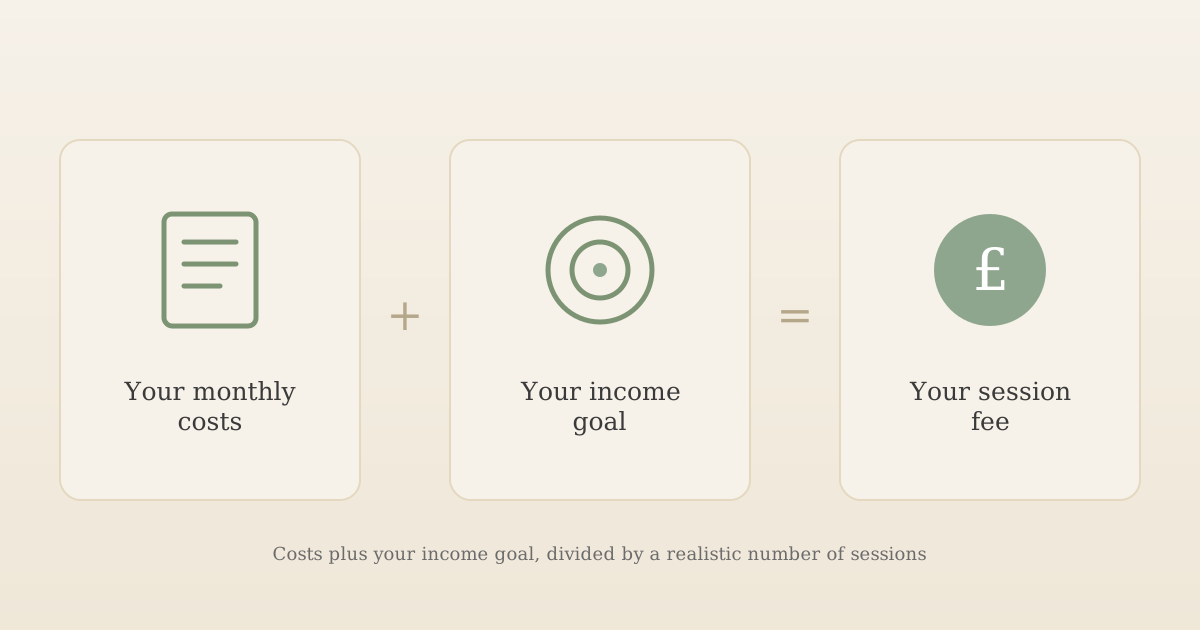
- Work backwards from your real monthly costs and the income you need, then check the result against local rates, rather than starting from a competitor's number.
- Your session fee isn't your take-home pay. Insurance, supervision, room hire, software, membership and tax all have to come out of it before anything is "yours".
- Review your fee at least once a year, and give existing clients clear, reasonable notice before any increase.
- If you're setting up more broadly, our guide to setting up a private therapy practice in the UK covers the other early decisions, from qualifications to insurance and client records.
- Once you know your fee, your website needs to state it clearly — see our complete guide to counsellor website design for what to include, real examples and pricing.
Important: This is a practical overview, not tax, legal or financial advice. Your VAT position, allowable expenses and business structure depend on your specific circumstances, so check current HMRC guidance or speak to an accountant for anything that materially affects your tax position.
What UK counselling and psychotherapy fees typically look like
Published ranges vary by source, but they tend to agree on the shape: newly qualified practitioners generally sit at the lower end, experience and additional training push fees up, and location makes a real difference, with London and other major cities usually higher than smaller towns. Counselling Directory's own guidance for people looking for a therapist describes a typical range from around £35 up to £150 or more per session, with highly experienced or specialist practitioners at the top end (see their article on how much counselling typically costs).
| Practitioner type or stage | Typical range per session* |
|---|---|
| Newly qualified counsellor | £35–£55 |
| Experienced, qualified counsellor | £45–£75 |
| Psychotherapist, integrative or specialist training | £60–£100 |
| Highly experienced or clinical psychologist | £90–£150+ |
*Rough UK-wide ranges based on published guidance, not a guarantee of what you should charge. London and other major cities often sit above these figures; smaller towns and rural areas are often below them.
Treat this table as context for a sense check, not as the basis for your own fee. The next sections work out a fee from your own costs and goals instead.
Your fee isn't your take-home pay
Before working out a number, it helps to be clear about what a session fee actually has to cover. As Counselling Directory puts it in their article on what a therapy session fee pays for, the fee a client pays isn't simply your time; it also covers the professional infrastructure that makes safe, ethical practice possible.
Typical monthly costs to account for include:
- Professional indemnity and public liability insurance
- Clinical supervision
- Professional body membership
- Room hire, if you see clients in person
- Booking or practice management software
- A website and hosting; see our breakdown of what a therapist website costs if you haven't budgeted for this yet
- Marketing, including any directory listings
- Accounting or bookkeeping
- Ongoing CPD and training
Add income tax and National Insurance on top, since those come out of your profit, not before it. For the current tax year, the standard Personal Allowance is £12,570, with the basic rate of 20% applying to income between £12,571 and £50,270. If you're newly self-employed, small amounts of trading income up to £1,000 a year can fall under the trading allowance rather than needing full Self Assessment reporting; check current HMRC guidance for how this applies to you.
Work out your fee in four steps
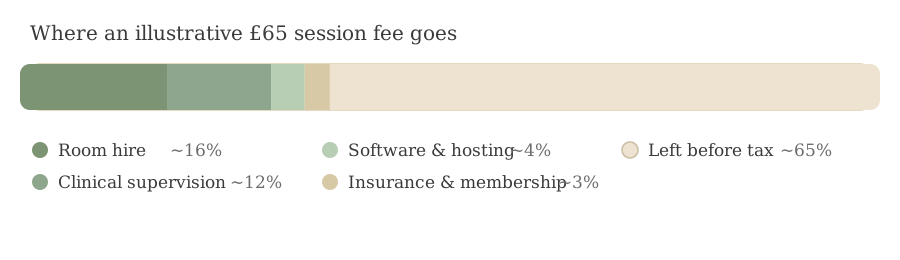
The numbers below are an illustrative example to show the method, not a benchmark to copy. Replace them with your own real costs, goal and realistic session count.
Step 1: Add up your real monthly costs. Say a newly qualified counsellor, building a caseload of online and in-person clients around other part-time work, has: insurance £15, supervision £120, professional membership (annualised) £15, one day a week of room hire £160, booking software £20, and website hosting £20. That's £350 a month.
Step 2: Decide the income you need from counselling right now. Not your eventual goal once your diary is full, but a realistic figure for this stage of building a caseload. In this example, £650 a month.
Step 3: Estimate a realistic number of paid sessions. Not your maximum possible diary capacity; a number you can actually expect to fill while building up. Here, 15 sessions a month, roughly three to four a week. If you're still working on filling your diary, our guide to getting your first counselling clients covers realistic timelines and where those early enquiries tend to come from.
Step 4: Divide, and round to a sensible number. (£350 + £650) ÷ 15 = £66.67, which rounds to a client-friendly £65 or £70 a session. Then check that figure against the range table above for someone at your stage and location, and adjust if it looks obviously out of step with what similar practitioners nearby are charging.
As your caseload grows, redo this calculation with your updated costs, income goal and session count rather than leaving your fee unreviewed for years.
Different rates for different circumstances
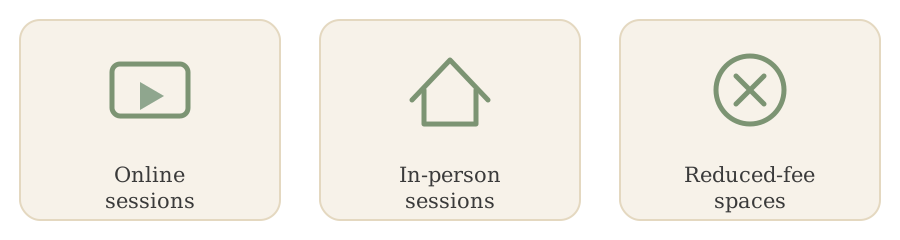
A single flat fee works for many practices, but it's common to vary pricing in a few specific ways:
- Online versus in-person. Some therapists charge the same for both; others price online sessions slightly lower to reflect the absence of room hire. Either is defensible as long as it's consistent and clearly stated.
- Reduced-fee or concessionary spaces. Many practitioners hold a small number of lower-cost spaces for clients on a low income, students or the unemployed. Decide the number of spaces and the criteria in advance, so the offer is sustainable rather than open-ended.
- Block bookings or packages. Charging per session rather than per block is more common in UK private practice and keeps client commitment flexible, but some practitioners offer a modest discount for a paid-in-advance block. If you do this, be clear about your cancellation and refund terms.
Whatever you choose, state it clearly on your website and in your initial contract, so there's no ambiguity about what a client is agreeing to pay.
Common pricing mistakes to avoid
- Pricing based on confidence, not costs. A fee that feels "too high to ask for" is a common reason new therapists underprice, even when the maths says otherwise. Trust the calculation over the nerves.
- Forgetting non-billable time. Notes, admin, marketing, CPD and the occasional cancellation or no-show all take time that isn't directly billed. Building a small buffer into your income goal accounts for this more honestly than ignoring it.
- Copying a fee without knowing the context behind it. A more experienced therapist's fee reflects their costs, location and specialism, not yours. Use published ranges as a sense check, not a template.
- Never revisiting the number. Costs rise most years, supervision and insurance included. A fee set three years ago and never reviewed quietly becomes a pay cut in real terms.
Reviewing and raising your fees over time
Reviewing your fee roughly once a year, alongside rising costs, is common practice. When you do raise it, give existing clients clear written notice with enough lead time to plan, explain the change simply, and think about whether any long-standing or particularly vulnerable clients need a different approach, such as a delayed increase or a short transition period. Your professional body's guidance on varying a working agreement is a good place to check what's considered appropriate notice for your context.
Quick reference: what to add up before you set a fee
- Insurance and professional body membership
- Clinical supervision
- Room hire, if applicable
- Booking software and a website
- Marketing and directory listings
- Accounting and admin time
- Income tax and National Insurance on your profit
- The income you realistically need at this stage, not your eventual goal
- A realistic, not maximum, number of paid sessions
Frequently asked questions
How much should a newly qualified counsellor charge in the UK?
There's no fixed figure, but newly qualified counsellors in the UK often start somewhere in the £35 to £55 range per session, adjusting for location, room costs and whether sessions are online or in person. Work it out from your own costs and income goal rather than copying another therapist's fee, since their overheads and circumstances are unlikely to match yours.
Is it a good idea to charge less than other therapists to get started?
A slightly lower introductory fee can help you build a caseload, but pricing well below the local going rate for very long can undervalue your work and make later increases feel bigger to existing clients. If you want to price competitively while you're new, consider a limited-time or limited-space reduced rate with a clear end point, rather than a permanently low fee.
How often should I review or raise my counselling fees?
Many practitioners review fees once a year, alongside rising costs like supervision, insurance, room hire and professional membership. Give existing clients reasonable notice in writing, explain the change clearly, and consider whether long-standing or vulnerable clients need a different transition, such as a delayed increase, in line with your professional body's guidance on ending or varying a working agreement.
Do counsellors and therapists need to charge VAT?
It depends on your turnover and your specific registration, not just on being a therapist. You only need to register for VAT once your taxable turnover passes the current threshold (£90,000, checked on a rolling 12-month basis), and whether particular health or welfare services are exempt depends on rules that don't automatically apply to every counselling or psychotherapy qualification. Check current HMRC guidance if you're near the threshold or unsure.
Start from your numbers, not a guess
There's no universally "correct" fee for a counselling session, but there is a more reliable way to find yours: add up your real costs, decide the income you actually need at this stage, divide by a realistic session count, and check the result against what similar practitioners in your area charge. Revisit the calculation at least once a year as your costs, experience and caseload change.
Get a website that shows your fees clearly
UpTopWeb builds calm, professional websites for counsellors and therapists, including a clear fees page, for one simple monthly fee.
Get a free website