Starting a practice
Christmas Break for Therapists: Telling Clients and Updating Your Website
A week-by-week plan for a therapist's Christmas break in 2026: when to tell clients, what to put in writing, and the website, Google and email changes to make before you stop.
On this page8 sections
A Christmas break for therapists is easy to underplan. You know the dates; your clients often don't, and nor does your website, your Google Business Profile or your directory listing. This guide gives you a week-by-week plan for the 2026 Christmas break: when to tell clients, what to put in writing, and the five places online that should say you're away.
It's written for UK counsellors and psychotherapists in private practice, uses BACP's Ethical Framework 2026 (in force from 3 November 2026) where a professional standard applies, and reflects the bank holiday dates and urgent support services as checked on 3 November 2026.
Key takeaways:
- BACP's 2026 framework asks you to give clients "reasonable, advance notice of any planned breaks" (point 4.5b). It doesn't set a number of weeks, so decide yours and put it in your contract.
- Tell clients in session first, then confirm the exact dates and return day in writing.
- Be honest about whether you'll check messages, and give every client urgent support numbers for their part of the UK.
- Keep your enquiry form open over Christmas, but add a dated notice, set Google "special hours" and change your out-of-office before your last session.
Important: This is a practical overview, not legal, clinical or professional advice. Your professional body's code, your supervisor and your own contract come first. If you're not a BACP member, check what your own body's code says about breaks.
What BACP's 2026 framework says about breaks
The Ethical Framework 2026 groups breaks and endings under core responsibility 4.5: manage breaks and endings "in ways that minimise the impact for clients". Three of its five points apply directly to a Christmas break:
- 4.5b: give clients "reasonable, advance notice of any planned breaks".
- 4.5d: manage any unplanned breaks to minimise the risk of harm and disruption. Illness over Christmas is the obvious one.
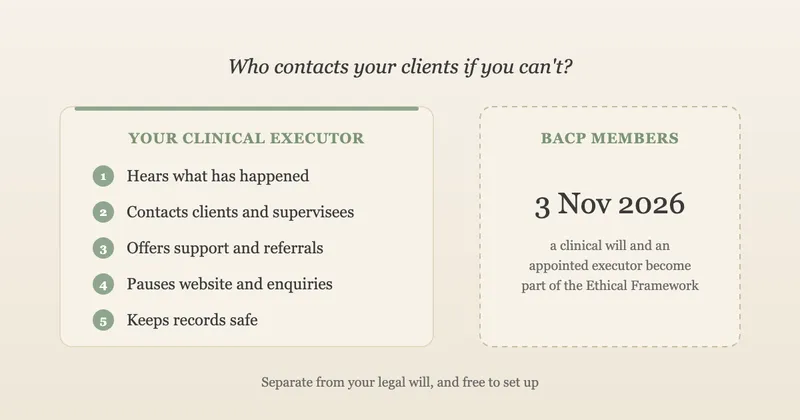
- 4.5e: have a clinical will and a named executor who can contact clients if you can't.
"Reasonable" isn't defined, which leaves it to your judgement. A client in weekly work who struggles with gaps needs more notice than a client who's coming to the end of a short piece of work. If you want the wider picture of what changed when the framework came into force, our summary of the BACP Ethical Framework 2026 covers it.
The Christmas 2026 dates to plan around
GOV.UK lists these bank holidays over Christmas 2026:
| Date | Bank holiday | Where |
|---|---|---|
| Friday 25 December 2026 | Christmas Day | Whole UK |
| Monday 28 December 2026 | Boxing Day (substitute day, because 26 December is a Saturday) | Whole UK |
| Friday 1 January 2027 | New Year's Day | Whole UK |
| Monday 4 January 2027 | 2nd January (substitute day) | Scotland only |
Because Christmas Day and New Year's Day both fall on a Friday, a common pattern this year is a last session in the week of 14 December or 21 December, and a first session back on Monday 4 January (Tuesday 5 January in Scotland if you don't work bank holidays). Whatever you pick, it's the return date that clients and enquirers most need to see.
A week-by-week Christmas break plan for therapists
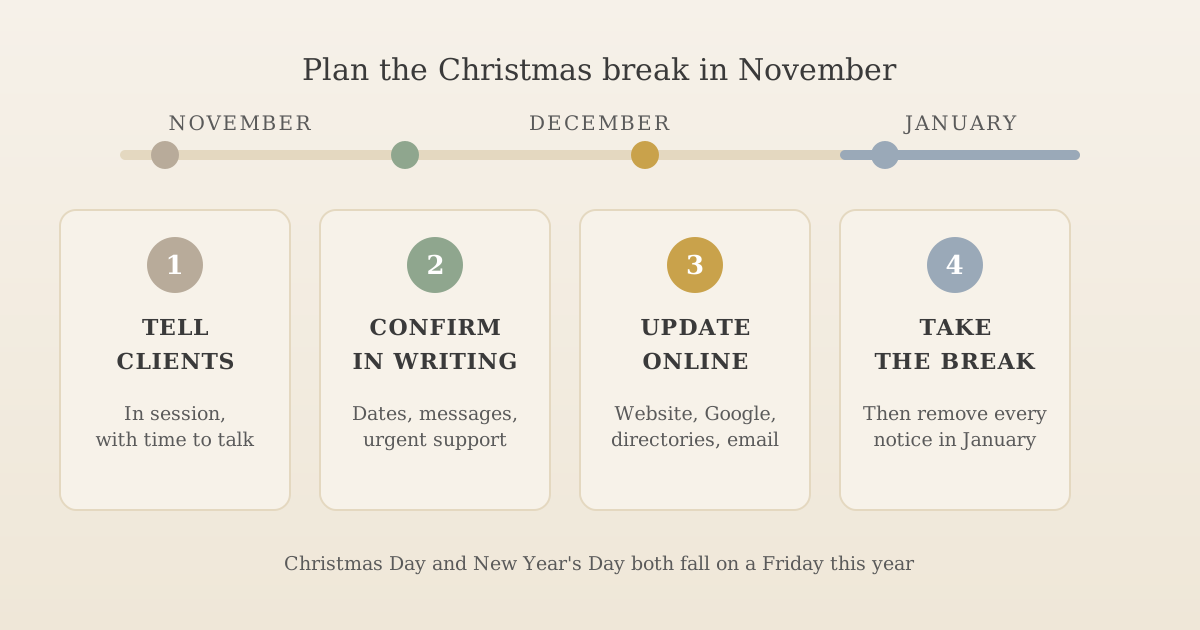
Here's a timeline that works backwards from a last session on Friday 18 December and a return on Monday 4 January. Move it to fit your own dates.
| When | What to do |
|---|---|
| Now to mid-November | Decide your dates. Mention the break in session, giving more notice to clients who find breaks difficult. Discuss anyone you're worried about in supervision. |
| Late November | Confirm the dates in writing to every client: last session, return date, whether you'll check messages, and urgent support numbers. |
| Early December | Update your website, Google Business Profile and directory profiles (see below). Check invoices and block bookings match your contract. |
| Your last week | Remind clients in their final session before the break. Set your email out-of-office. Check your clinical will executor has what they need. |
| The break | If you've said you won't check messages, don't feel you have to. The notices are doing the work. |
| First week of January | Remove every notice and reset Google hours. Reply to enquiries that came in, oldest first. |
What to put in writing to clients
A short email or letter is enough. Include:
- Your last session date and your return date.
- Whether you'll check messages. "I won't be checking email or texts between 19 December and 3 January" is clearer, and kinder, than leaving it open.
- What happens to their regular slot. Say that it's held for them in January, if it is.
- Urgent support numbers for their part of the UK (below).
Keep it practical and keep clinical content out of it. The conversation about what the break might mean for a client belongs in the session, not the email.
Urgent support numbers to include
Give clients the services that cover where they live, and remind them that you're not an emergency service:
- Anywhere in the UK: Samaritans, free on 116 123, 24 hours a day. Shout, a free 24/7 text service: text the word SHOUT to 85258. If someone's life is at risk, call 999 or go to A&E.
- England: NHS 111, choosing the mental health option, as described on the NHS urgent mental health help page.
- Wales: NHS 111 Wales, press 2 for urgent mental health support, 24 hours a day.
- Scotland: NHS 24 on 111, choosing the mental health option to reach its Mental Health Hub.
- Northern Ireland: Lifeline on 0808 808 8000, 24 hours a day.
These numbers were checked on 3 November 2026. Check them again before you send anything, because services do change.
Your fees and contract over the break
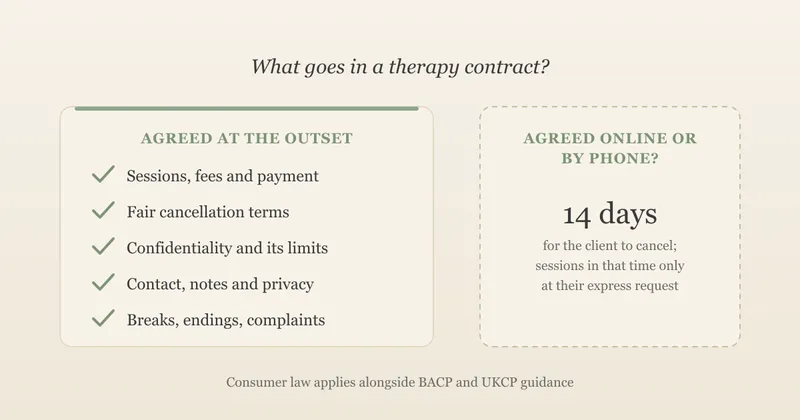
Your therapy contract should already have a line on breaks and holiday notice. Before you invoice for December, check three things:
- Sessions in your break aren't charged if your contract says sessions you cancel aren't charged. Check block bookings and monthly invoices especially, because they're where a mistake usually hides.
- Your notice matches your contract. If your contract promises four weeks' notice of breaks and you're giving two, fix the notice, not the contract.
- Anything unclear gets fixed for next year. If a term could be read two ways, don't apply the reading that suits you. Rewrite it when you next update your contract.
Five places online that should say you're away
This is the part most therapists forget. Your existing clients know about the break; a new client finding you on 27 December doesn't. People often start looking for a therapist over the holidays and in early January, so an unanswered enquiry with no explanation can lose you a client before you've spoken.
1. A dated notice on your website
Add a short notice to your home page and contact page. It should give your return date, say when you'll reply to enquiries, and point to urgent support. For example:
Christmas break: I'm away from Saturday 19 December and back on Monday 4 January. You're welcome to get in touch in the meantime, and I'll reply to every enquiry by Wednesday 6 January. I'm not an emergency service. If you need urgent help, call NHS 111 (mental health option) or Samaritans on 116 123, or 999 if a life is at risk.
Use actual dates rather than "over the festive period". A notice without dates looks the same on 3 January as it does on 3 February, and if you forget to take it down, it tells visitors you're still away.
2. Your enquiry form's confirmation message
Keep the form open. Change the on-screen confirmation message, and any automatic email it sends, to give your reply date. While you're there, check the form still asks only for what you need: our GDPR checklist for therapist websites covers what an enquiry form should and shouldn't collect.
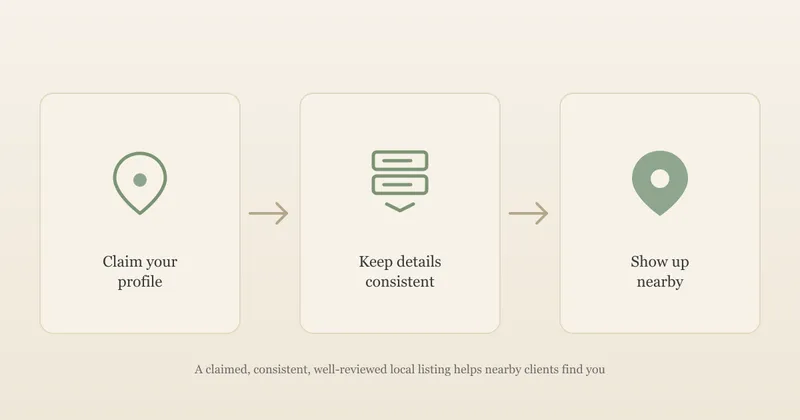
3. Google Business Profile special hours
If you have a Google Business Profile, set special hours for each day you're closed, rather than changing your regular hours and having to remember to change them back. Google's help page also suggests confirming your hours for official holidays even when they're the same as usual, so searchers can see they're accurate. Our guide to local SEO for therapists covers the rest of your profile.
4. Directory profiles
If your counselling directory profile mentions availability, add your return date or a line saying enquiries will be answered from January. Directories differ in what they let you change, so check each one you're listed on.
5. Email and phone
Set an out-of-office reply with the same dates and urgent support line as your website notice. Keep it short and generic: it goes to anyone who emails you, so it shouldn't mention clients or sessions. Update your voicemail greeting too if clients phone you.
When the break isn't the one you planned
Point 4.5d is about the breaks you don't plan. If you're ill over Christmas or something stops you returning on the date you gave:
- Update your website notice and out-of-office with a new return date as soon as you can, or "I'll confirm my return date as soon as possible" if you don't know it yet.
- Contact clients directly, or ask your clinical will executor to if you can't.
- Tell your supervisor, who can help you think about which clients need contact first.
This is also why it's worth checking your clinical will before Christmas rather than after: the executor needs to know where to find client contact details and how to get into them.
Frequently asked questions
How much notice should a therapist give clients before a Christmas break?
BACP's 2026 Ethical Framework (point 4.5b) asks for reasonable, advance notice of planned breaks but doesn't set a number of weeks. Many therapists mention a Christmas break four to six weeks ahead and then confirm the dates in writing, with more notice for clients who find breaks hard. Whatever you choose, make it consistent with what your contract says.
Should therapists check emails over Christmas?
That's your choice, but be honest about it. If you won't be checking messages, say so in your notice, your out-of-office reply and on your website, and give clients and new enquirers urgent support numbers instead. Saying 'get in touch if you need me' and then not replying is worse for a client than a clear 'I'm away until 4 January'.
Do I need to switch off my website enquiry form while I'm away?
No. New clients often start looking over Christmas and in early January. Keep the form open, add a short dated notice saying when you'll reply, and make sure the confirmation message or email says the same. Remove the notice when you're back.
Should I charge clients for sessions during my Christmas break?
Follow your therapy contract. If it says sessions you cancel aren't charged, sessions that fall in your break shouldn't be either, so check that invoices and any block bookings match. If a term isn't clear, fix it for next year rather than applying it in your favour now.
Start this month
Most of a good Christmas break happens in November. Tell clients early, confirm the dates in writing, and give everyone the urgent support numbers that apply to them. Then spend twenty minutes making sure your website, Google profile, directories and email all say the same dates, so the people who find you over Christmas know exactly when they'll hear back.
Christmas notices on your website, handled
UpTopWeb sites include unlimited edits, so we can add your dated holiday notice and urgent support details, then take them down when you're back.
Further reading
Related articles
Starting a practice13 minute read
Therapy Contracts for UK Counsellors: What to Include and What's Fair
Starting a practice14 minute read
Clinical Will for Therapists: Free UK Template and Guide
SEO11 minute read
Local SEO for Therapists: A Practical Checklist