SEO
Local SEO for Therapists: A Practical Checklist
A practical guide to local SEO for therapists: set up your Google Business Profile, choose between an address and a service area, and get genuine reviews.
On this page8 sections
If you see clients in person, or within a defined local area, local SEO for therapists is one of the few parts of SEO that pays off relatively quickly. It doesn't need technical skill, mostly consistency and a bit of set-up time, and it runs alongside your website rather than replacing it.
This guide goes deeper into local SEO than our beginner's guide to SEO for therapists: setting up your Google Business Profile properly, deciding whether to show your address or a service area, keeping your details consistent everywhere, and getting genuine reviews without breaching Google's rules or your professional body's. A Google Business Profile is a local listing rather than a backlink in the SEO sense; see our guide to backlinks for therapists for how those work separately.
Key takeaways:
- A Google Business Profile is worth setting up if you see clients in person or within a defined area; it matters far less if you work entirely online.
- Most home-based or online therapists are better suited to hiding their address and showing a service area instead of a home address.
- Your practice name, address (or service area) and phone number should read identically everywhere: your website, your Google Business Profile, and any directory listing.
- Genuine reviews help, but Google prohibits incentivised or selectively solicited ones, and a public review can raise confidentiality questions worth thinking through first.
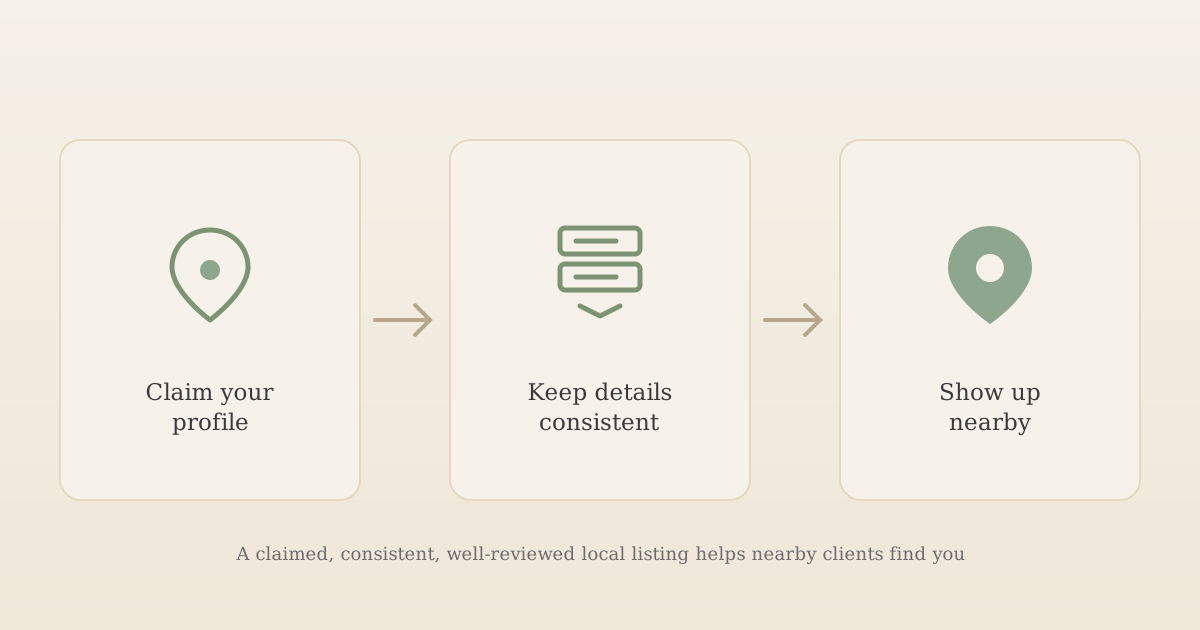
Setting up your Google Business Profile
If you haven't claimed a Google Business Profile yet, Google's Business Profile help centre walks through creating and verifying one. A few details matter more than the rest for a therapy practice:
- Business name. Use your real practice or trading name, exactly as it appears on your website. Don't add keywords like "best" or a specialism that isn't in your actual business name; Google's guidance treats this as a policy violation, and it looks odd to a prospective client too.
- Category. Choose the closest match, such as "Counselor" or "Psychotherapist", rather than a broader category like "Health consultant". A specific category helps Google match your profile to relevant local searches.
- Service area or address. Covered in detail below, since this is the decision most therapists get wrong by default.
- Phone number and website link. Use the number and website you actually want a prospective client to contact, kept current as anything else changes.
- Hours and booking link. Set your actual working hours (or mark yourself as by-appointment-only if that fits better), and link directly to your contact or booking page rather than your homepage if you have one.
Once claimed, treat the profile as a living part of your online presence rather than a one-off task: revisit it whenever your hours, fees or contact details change on your website.
Should you show your address, or use a service area?
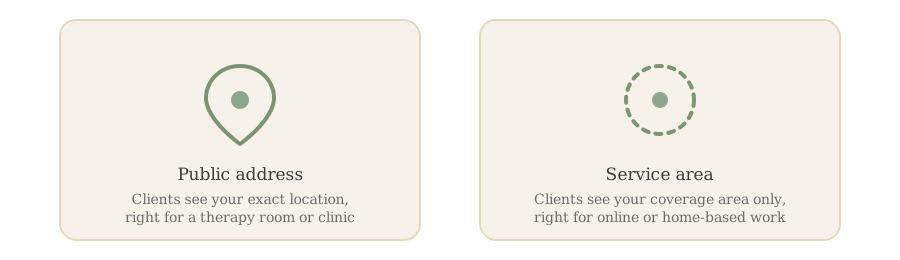
This is the decision most therapists overlook, and it matters more for a home-based practice than almost anything else on this list. Google's own guidance on managing your business address is direct: "you should only choose to not show your address if your business is a service-area business", meaning one that doesn't serve customers at that address. If you hide your address, your profile shows your chosen service area (towns, postcodes or districts you cover) instead, and Google recommends that area not extend much beyond a two-hour drive from your actual base.
In practice, that gives most therapists a straightforward choice:
- Show your address if you rent a dedicated therapy room or clinic space that clients travel to. A visible address helps clients confirm the location before booking, and it's exactly what the address field is for.
- Hide your address and set a service area if you work from home, see clients online, or travel to clients rather than the other way round. Google still requires a real address behind the scenes to verify the profile, but it's never shown publicly once you switch this setting off.
Getting this backwards, publishing a home address because it "seemed like the right field to fill in", is a common and avoidable mistake. Check this setting explicitly rather than assuming Google chose sensibly for you by default.
Keeping your details consistent (NAP)
Local SEO relies partly on Google cross-checking your business name, address (or service area) and phone number, often shortened to NAP, across multiple places: your website, your Google Business Profile, and any directory listing such as the BACP Therapist Directory or Counselling Directory. A mismatch (a slightly different name, an old phone number left on one listing, or an address written two different ways) works against the consistency Google looks for when deciding how much to trust a local result.
A simple way to check this: search your own practice name in Google, open every result that comes back, and compare the name, contact details and address or service area against what's actually on your website today. Fix anything that's drifted, then repeat the check every few months rather than only once, since directory listings in particular are easy to forget about after the initial sign-up. Our guide to website maintenance for therapists covers this kind of periodic upkeep alongside the more technical side of keeping a site current. The same consistency also matters beyond Google, as our guide to AI search for therapists covers, since an AI chat assistant has no reliable way to know which version of your details is current if it finds several conflicting ones.
Getting genuine reviews, without breaching Google's rules or your own
Reviews are a real ranking factor and a trust signal for a prospective client deciding between practices, but there are two sets of rules worth being careful with before you start asking for them.
Google's rules. Google's policy on prohibited and restricted content is explicit that businesses must not offer any incentive, payment, discount or free service, in exchange for posting, revising or removing a review, and must not "discourage or prohibit negative reviews, or selectively solicit positive reviews from customers." In practice: you can let clients know they're welcome to leave a review if they'd like to, but you can't offer anything for it, and you can't only ask the clients you know were happy.
Your professional body's rules. This is where a therapist's situation genuinely differs from most other local businesses. UKCP's Code of Ethics and Professional Practice explicitly bans including client testimonials in advertising (clause 13), and while BACP's Ethical Framework doesn't set an equivalent outright ban, it does require confidentiality, client autonomy and trust to be protected in anything you publish; see our website essentials guide for how the two bodies differ in more depth. A public Google review sits in a slightly different position to a testimonial you choose and publish yourself, but the underlying concern is the same either way: a review, however positive, confirms in public that the reviewer is your client. Think through whether inviting reviews is appropriate for your practice and client group before doing it, and never single out a specific client to ask.
If you work entirely online, how much of this matters
If you see clients online only, with no fixed local area, most of the above still applies loosely (Google Business Profile categories and consistency are still worth getting right), but the local-specific pieces (an address or tightly defined service area, NAP consistency against a physical location) matter far less than they do for a therapist seeing clients in person. Our guide to do therapists need a website covers where a directory listing, social media and your own website each fit for building visibility when you're not anchored to one place. If you're still deciding how to structure the practice itself, our guide to setting up a private therapy practice in the UK covers the fuller picture, from qualifications and insurance through to getting found, whether that's locally or online.
A simple local SEO checklist for therapists
- Google Business Profile claimed and verified
- Business name matches your website exactly
- Category set to the closest match (e.g. Counselor, Psychotherapist)
- Address shown (room or clinic clients visit) or hidden with a service area set (home-based or online)
- Phone number and website link current
- Hours accurate, or marked as by-appointment
- Name, address or service area, and phone number checked for consistency across your website, Google Business Profile and any directory listings
- A plan for inviting genuine reviews that respects Google's rules and your professional body's confidentiality guidance
Frequently asked questions
Do therapists need a Google Business Profile?
If you see clients in person, or work within a defined local area, yes, it's worth setting up and keeping accurate, since it's part of how Google shows local results for nearby searches. If you work entirely online with clients from anywhere in the UK, it matters much less and isn't essential.
Should a therapist show their home address on Google Business Profile?
Not usually, if you work from home. Google lets a service-area business hide its address and show a coverage area instead, which suits most home-based or online therapists better than publishing a home address. An address is worth showing if you rent a dedicated therapy room or clinic space that clients visit.
Can therapists ask clients to leave a Google review?
You can encourage genuine reviews, but Google's own policies prohibit offering any incentive, payment, discount or free service, in exchange for a review, and prohibit selectively asking only satisfied clients to leave one. On top of Google's rules, think about client confidentiality: a public review can reveal someone is your client, so never ask for one in a way that puts a client in an awkward position.
What is NAP consistency and why does it matter for local SEO?
NAP stands for name, address and phone number. Local SEO relies partly on Google cross-checking your details across your website, your Google Business Profile and any directory listings; a mismatched name, an old phone number or a different address format on one of them can undermine the trust signals Google uses to rank local results.
Start with the profile, then the consistency
Local SEO for a therapist practice comes down to a claimed, accurately filled-in Google Business Profile, the right choice between an address and a service area, and the same details everywhere someone might find you. None of it guarantees a top local ranking on its own, but getting it right removes one of the more common, avoidable reasons a nearby search doesn't find you at all.
This is a practical overview, not legal, tax, regulatory or professional advice. Check current guidance from Google and your professional body for anything that affects your specific situation.
Get a website that pairs with a strong local listing
UpTopWeb builds calm, professional websites for counsellors and therapists, with the consistent details a Google Business Profile relies on handled from day one.
Get a free website