SEO
SEO for Therapists: A Beginner's Guide
How search engine optimisation actually works for a therapist or counsellor website, explained without jargon, plus the on-page and local SEO basics worth doing first.
On this page9 sections
SEO gets talked about like it's either a magic switch or a technical minefield, and it's neither. For a therapist or counsellor website, SEO mostly comes down to a handful of unglamorous basics: describing what you do in the words a client would actually search, structuring your pages so Google can understand them, and keeping your details consistent if you see clients in person. None of it guarantees a page-one ranking, and none of it works overnight.
This guide covers what SEO actually means for a UK therapist website, the on-page and technical basics worth getting right, local SEO and your Google Business Profile, common mistakes, and where AI-powered search fits into the picture.
Key takeaways:
- SEO is Google trying to match a search to the most relevant, trustworthy page it can find, not a set of tricks to outsmart it.
- The words on your pages matter more than any technical setting: use the language a client would actually type into Google.
- Page titles, meta descriptions and clear headings are the highest-value basics to get right first.
- If you see clients in person, a consistent, accurate Google Business Profile matters as much as your website copy.
- SEO is a slow, background channel. Pair it with the faster channels covered in our guide to getting your first counselling clients rather than relying on it alone in your first few months.
- Want SEO and AI search handled for you rather than done yourself? See our complete guide to websites for therapists for what's included, real examples and pricing.
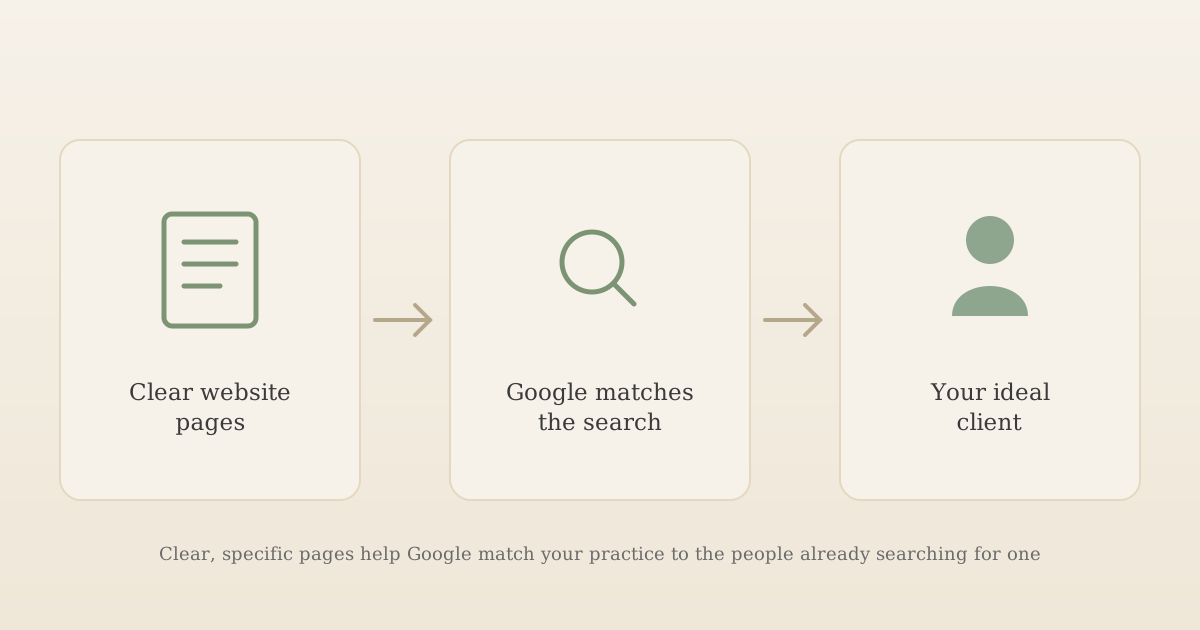
What SEO actually means for a therapist website
Search engine optimisation is the process of helping a search engine understand what a page is about and who would find it useful, so it can show that page to the right searches. Google's own SEO Starter Guide frames this in plain terms: a good page title is "unique to the page, clear and concise, and accurately describes the contents", and a good meta description is "short, unique to one particular page, and includes the most relevant points". Nothing there is a trick; it's closer to good writing than to a technical skill.
For a therapist website specifically, that translates to three things:
- Your pages should say plainly what you offer and who it's for. A page titled "Online anxiety counselling for adults in Bristol" gives Google (and a visitor) far more to work with than "Services".
- Your site should be easy for Google to read. Clear headings, one focused topic per page, and working links matter more than any hidden technical setting.
- If you see clients locally, your Google Business Profile should match your website. Local SEO runs partly on consistency, not just content.
None of this is about "gaming" Google. Google's own guidance on creating helpful content is explicit that content made primarily to manipulate rankings, rather than to genuinely help a reader, is what its systems are designed to work against. Writing a genuinely useful, accurate page for a real client is the strategy, not a side effect of one.
How Google actually reads your website
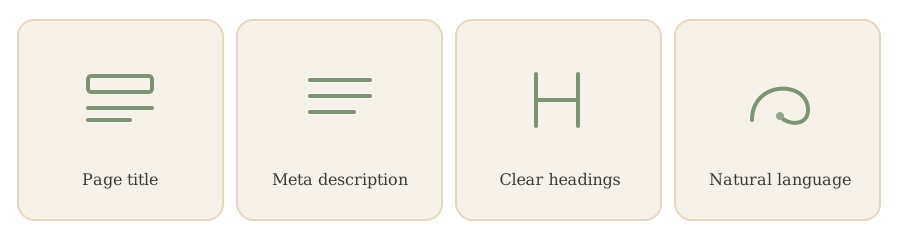
Before Google can show your page to anyone, it has to find it (crawling), read it, and decide what it's about (indexing). You don't need to understand the mechanics in depth, but four on-page elements do most of the work:
- Page title. The clickable headline shown in search results and browser tabs. Keep each one unique, specific and under around 60 characters where possible, for example "Bereavement Counselling in Leeds | [Your Name]" rather than a generic "Home" or "Services".
- Meta description. The short summary shown under your title in search results. It doesn't directly affect ranking, but a clear, specific one affects whether someone clicks through. Write one per page, around 140–160 characters, that gives a real reason to click.
- Headings. Use one H1 per page (usually your page title, often handled automatically by your website platform), then H2s and H3s to break up sections logically. This helps both readers scanning the page and Google understanding its structure.
- Natural, specific language in the body copy. Write the way a client would actually search, "online anxiety counselling for adults" rather than a dense list of keywords crammed into a sentence. Google's guidance is consistent on this: content written for a person, not for an algorithm, performs better over time.
If you haven't yet worked out what pages your site needs in the first place, our guide to what a therapist website should include covers the essential pages and trust signals before you optimise them.
Technical basics that matter more than obscure settings
A handful of technical basics affect SEO more than most therapists expect, and most of them are handled automatically by a decent website platform rather than needing manual setup:
- Page speed. Slow-loading pages frustrate visitors and can affect ranking. Heavy, uncompressed images are the most common cause on a small business site.
- Mobile-friendliness. Most searches for a local service happen on a phone. A site that's awkward to read or tap on mobile works against you twice over: with visitors and with Google.
- HTTPS. Your site should load securely (the padlock icon in a browser's address bar), which is standard on any reputable website platform today.
- One clear page per topic. Avoid two different pages both trying to rank for "anxiety counselling", which splits your own relevance rather than strengthening it. If you're weighing up how much a properly built site costs against DIY options, our breakdown of therapist website costs covers what's typically included in each route, including how much of this technical groundwork is handled for you.
You don't need to audit these yourself in detail if you've used a reputable website builder or a done-for-you service; most handle page speed, mobile responsiveness and HTTPS by default. It's worth a periodic sense check rather than a one-off task, though, since images and plugins added later can quietly slow a site back down.
Local SEO and your Google Business Profile
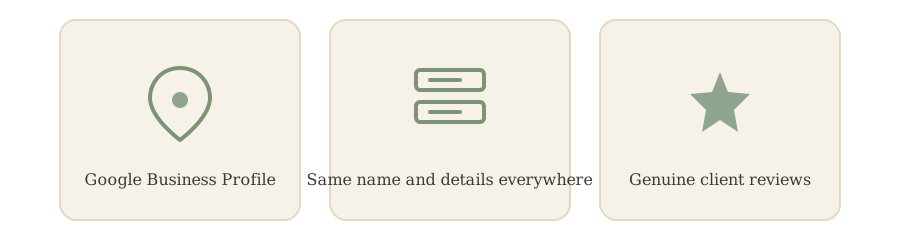
If you see clients in person or work within a defined local area, local SEO is worth setting up early, since it runs alongside, not instead of, your general website SEO. Three things matter most:
- A Google Business Profile, set up and verified through Google's Business Profile help centre, with your practice name, service area or address, and contact details kept accurate and up to date.
- Consistent details everywhere. Your practice name, location and contact details should read the same on your website, your Google Business Profile and any directory listing. Inconsistent details (a slightly different name or an old phone number on one listing) can undermine the trust signals Google relies on.
- Genuine client reviews, gathered ethically and in line with your professional body's guidance on testimonials and consent; see our website essentials guide for how testimonial rules differ between BACP and UKCP.
If you work entirely online with clients from anywhere in the UK, local SEO and a Google Business Profile matter less to you than they do to a therapist with a physical practice, and it's reasonable to deprioritise this section accordingly. Our guide to setting up a private therapy practice in the UK covers the fuller picture of getting found locally alongside the other early decisions, from qualifications to insurance.
For a deeper walkthrough, including whether to show your address or a service area and how to get genuine reviews without breaching Google's rules or your professional body's, see our local SEO checklist for therapists.
Beyond your own pages, a small number of genuine backlinks help too. See our guide to backlinks for therapists for where they realistically come from and what to avoid.
Common SEO mistakes therapists make
- Writing for search engines instead of people. Cramming a page with keyword variations reads badly and Google's own guidance actively works against it. Write for the person reading, and the relevant terms tend to appear naturally anyway.
- One thin "Services" page instead of focused pages. A single page trying to cover every specialism, location and issue you work with gives Google far less to match against a specific search than a few focused pages would.
- Inconsistent details across listings. A different practice name, address format or phone number between your website, Google Business Profile and directory listings works against the local trust signals Google looks for.
- Expecting fast results. SEO is a background channel that compounds slowly. Chasing quick wins, or abandoning it after a few weeks with no visible change, wastes the setup effort you've already put in.
- Ignoring page speed and mobile display. A site that looks fine on a desktop but loads slowly or displays awkwardly on a phone is working against most of your actual visitors.
A quick word on AI search
Search doesn't only mean a Google results page anymore. Tools like ChatGPT, Gemini and Google's own AI Overviews increasingly answer questions directly, sometimes citing a small number of sources rather than listing ten blue links. The honest answer for most therapists right now is that the fundamentals above, clear, accurate, well-structured pages that genuinely help a reader, are also what these AI systems draw on when deciding what to cite; there's no separate trick required to appear in them today. Our dedicated look at AI search for therapists covers what Google's own guidance actually says, what the current UK usage data shows, and what's genuinely worth doing about it. If you want to check the specific technical items yourself, from structured data to which AI crawlers to allow, see our guide to making your therapist website ready for AI search.
Where to start this month
If you're doing this yourself, a realistic order to tackle it in:
- Check every page has a unique, specific title and meta description.
- Read through your body copy and swap generic phrases for the specific language a client would search.
- Confirm your site loads reasonably fast and displays properly on a phone.
- Set up or claim your Google Business Profile if you see clients in person, and check it matches your website exactly.
- Revisit this list every few months rather than treating it as a one-off task; pages, plugins and business details all drift over time. Our guide to website maintenance for therapists covers what that ongoing upkeep actually involves and costs.
Frequently asked questions
What is SEO for a therapist website?
SEO (search engine optimisation) is the practice of helping search engines like Google understand what your website offers and who it's for, so it can be shown to people searching for a therapist like you. For a therapist website, that mostly means clear page titles, natural language that matches how clients actually search, and consistent local details if you see clients in person.
How long does SEO take to work for a therapist website?
Slower than most other client channels. It commonly takes months rather than weeks to see meaningful movement, since a new or recently changed website has to be crawled, indexed and then compared against competing pages before it ranks reliably. Treat SEO as a background channel you start early, not a way to fill your diary this month.
Do therapists need a Google Business Profile?
If you see clients in person or work within a defined service area, a Google Business Profile is worth setting up and keeping accurate, since it's part of how Google shows local results. If you only work online with clients anywhere in the UK, it matters less and isn't essential.
Can therapists do their own SEO, or do they need to hire someone?
Most of the basics, clear page titles, meta descriptions, natural language and a Google Business Profile, are things a therapist can reasonably do themselves without technical skill. Hiring help tends to make more sense for technical issues (page speed, structured data) or if you'd rather spend your time on clients than on your website.
Start with the words, not the tricks
SEO for a therapist website isn't a technical minefield or a shortcut to a full diary. It's mostly about describing what you do in the words a client would actually search, structuring your pages so Google can understand them, and keeping your local details consistent if you see clients in person. Get those basics right, be patient with the timeline, and revisit them periodically as your site and practice grow.
Get a website built with SEO basics handled
UpTopWeb builds calm, professional websites for counsellors and therapists, with clear page titles, structure and technical basics in place from day one.
Get a free website