Therapist websites
Website Maintenance for Therapists: What It Actually Costs
What website maintenance really involves for a therapist website, what it costs across DIY, freelance and done-for-you routes, and what happens if you skip it.
On this page7 sections
A therapist website isn't a one-off purchase, it's something that keeps needing small amounts of attention for as long as it's live: software that needs updating, backups that need taking, and content that drifts out of date as your practice changes. "Maintenance" is the catch-all term for that ongoing work, and it's usually the least-discussed line item when therapists first compare website options.
This guide covers what website maintenance actually involves, what it typically costs across the DIY, freelance and done-for-you routes, and what tends to go wrong when it's skipped.
Key takeaways:
- Maintenance means software and security updates, backups, uptime monitoring, and the ongoing content edits that keep a site accurate.
- A DIY builder usually bundles security and hosting into its existing fee, but content edits and update-checking are on you.
- A freelancer or agency commonly charges a separate retainer or per-edit fee for maintenance, on top of the original build cost.
- A done-for-you service can fold maintenance into one monthly fee with no separate charge; UpTopWeb includes it in its £19.99 a month price.
- For what the initial build itself typically costs, see our guide to how much a therapist website costs.
What "website maintenance" actually means
"Maintenance" gets used loosely, but for a therapist website it breaks down into four fairly concrete jobs:
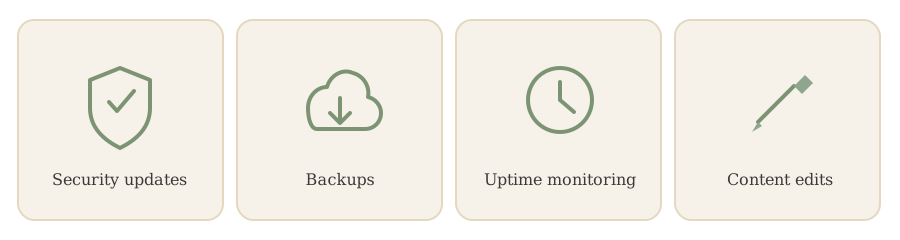
- Security updates. The platform, plugins and any add-ons your site runs on need patching as vulnerabilities are found. Google's own guidance on preventing malware infections is explicit that every plugin or add-on you install adds some risk of exploitation if it's left unpatched.
- Backups. A recent copy of your site, kept somewhere separate, so a hosting fault, a bad update or a hack doesn't mean starting from scratch. The NCSC's cyber security guide for small organisations treats regular backups as one of its core recommendations for exactly this reason. Good maintenance reduces this risk but doesn't remove it entirely, which is part of what professional indemnity and cyber cover is for.
- Uptime monitoring. Something (a person or a tool) noticing quickly if the site goes offline, rather than a prospective client being the first to find out.
- Content edits. Updating fees, availability, accreditations, testimonials and any other detail that changes as your practice does, so the site keeps saying something true.
The first three are mostly invisible when they're being done properly, you only notice maintenance when it's missing. The fourth, content edits, is the one therapists usually notice needs doing, since it directly affects whether the site still reads as accurate.
What it costs, by route
| Route | Security, hosting & backups | Content edits |
|---|---|---|
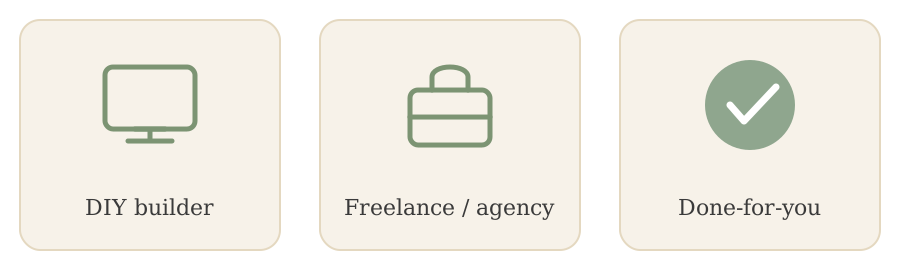
| DIY builder | Usually bundled into the existing monthly plan fee | Your own time, unless you pay extra for a specialist |
| Freelancer or agency | Often a separate retainer, commonly £20–£75/month, or billed per incident | Per-edit or per-hour fee, on top of the retainer |
| UpTopWeb | Included in the monthly fee, no separate charge | Included: unlimited edits |
The figures for freelance and agency retainers are typical ranges, not quotes, since providers vary; ask any provider to spell out exactly what a maintenance retainer covers, since "maintenance" can mean anything from full security handling to little more than a support email address.
DIY builder
Platforms like Wix and Squarespace apply their own platform-level security updates and handle hosting as part of the plan you're already paying for, covered in more detail in our therapist website cost guide. What they don't do for you is the content side: updating a page when your fees change, adding a new testimonial, or checking your accreditation details are still current. That stays your job, or gets forgotten about. If you're still deciding whether a builder is the right fit at all, see our comparison of website builders and custom or done-for-you websites for therapists.
Freelancer or agency
The upfront build fee from a freelancer or agency typically doesn't include ongoing maintenance. Most offer a separate retainer, commonly somewhere in the £20–£75 a month range for basic hosting and update handling. Content edits after that depend on how the site was built: some agencies build on a CMS and give you a login to make simple changes yourself, others handle every edit themselves and bill for it, either per change or at an hourly rate. Ask exactly what's covered before you sign anything: some retainers include security patching and backups as standard, others are little more than a support contact with edits billed separately regardless.
Done-for-you
A done-for-you service can fold the whole list, security, hosting, backups and content edits, into one fee with nothing billed separately. At UpTopWeb, for example, the £19.99 a month price includes hosting, SSL, security and unlimited edits, so a fee change or a new testimonial is a message away rather than a separate invoice.
What actually goes wrong when maintenance is skipped
Nothing dramatic happens the week you stop maintaining a site, which is exactly why it's easy to let slip. The problems show up later, and quietly:
- Security risk builds up. An unpatched plugin or outdated platform is a real, ongoing exposure that grows the longer it's left, not a risk that only applies to high-profile targets.
- The site can go offline without warning. A lapsed domain renewal or an unresolved hosting issue can take a site down with no notice, at exactly the moment a prospective client is searching.
- Details go stale. An old fee, a waiting list that's actually open again, or an accreditation that's since changed are the kind of small inaccuracies that undermine the trust a website is meant to build, even though nothing is technically broken.
- SEO drifts backwards. Our SEO guide for therapists covers this directly: pages, plugins and business details drift over time, and revisiting them periodically matters as much as getting them right in the first place.
None of this is really about technical failure. It's the slow, unglamorous cost of a task with no obvious deadline losing out to client work that does.
Can you maintain your own therapist website?
Really only on the DIY builder route, since that's the only one where you have your own account to log into in the first place. On a closed platform like Wix or Squarespace, security and hosting already happen automatically in the background, covered above, so there's no update to click through yourself. What's actually on you is noticing if something's wrong and keeping content accurate, and setting a recurring reminder every month or two is the realistic way to do that, since nothing else prompts you to.
If you're with a freelancer or agency, it's a mixed picture rather than a clean yes or no. The security, hosting and backup side almost always stays with them, that's not something you're choosing to do yourself. Content edits vary more: some build your site on a CMS and hand you a login so you can make simple changes yourself, others keep edits behind their own process and bill for each one. Ask which applies before you sign anything, since it changes what you're actually signing up to do. And a done-for-you service doesn't give you anything to maintain at all; at UpTopWeb, for example, there's no client dashboard, since the whole point is that it's handled for you rather than handed to you to manage.
The honest risk on the DIY route isn't technical difficulty, it's that a task with no deadline and no one chasing you tends to get pushed down the list indefinitely once a full client diary takes priority. There's also a simpler preference behind why most therapists move toward a route where it's handled for them: most would rather not have another login to remember or another system to work out when something needs changing. Being able to message someone and have it sorted, rather than logging in yourself to figure it out, is what makes a maintenance partner feel worth having, on top of the time it saves.
Questions to ask about maintenance before you commit to a route
- Is security patching included, or is it something I need to apply myself?
- Are backups taken automatically, and how would I restore one if I needed to?
- Is there a separate retainer fee for maintenance, and what exactly does it cover?
- How are content edits billed, per change, hourly, or included?
- How quickly would I be told if the site went offline?
Frequently asked questions
What does website maintenance actually include?
At minimum: keeping the underlying software and plugins updated, applying security patches, taking regular backups, monitoring that the site is actually online, and making the small content edits that keep it accurate as your practice changes. Anything less than that leaves a site slowly drifting out of date and more exposed to being hacked or going down.
How much does website maintenance cost for a therapist website?
It depends on the route. A DIY builder usually bundles security and hosting into its existing plan fee (roughly £15–£30 a month paid monthly, less if paid annually upfront; covered in our website cost guide), but content edits are on you. A freelancer or agency typically charges a separate retainer, often £20–£75 a month, or bills per edit or per hour. A done-for-you service folds maintenance into one fee; UpTopWeb, for example, includes hosting, security and unlimited edits in its £19.99 a month price (or £15.99 a month paid annually) with no separate maintenance charge.
What happens if I don't maintain my therapist website?
Nothing dramatic happens immediately, which is exactly why it gets neglected. Over time, unpatched software becomes a bigger security risk, a lapsed domain or hosting issue can take the site offline without warning, and out-of-date details (old fees, a closed waiting list, an outdated accreditation) quietly undermine the trust a website is supposed to build.
Can I maintain my own therapist website?
Realistically, only on the DIY builder route, since that's the only one where you have your own account to log into. Wix and Squarespace handle security and hosting automatically in the background, so there's nothing to patch yourself; what's actually on you is noticing if something's wrong and keeping content accurate. If you're with a freelancer or agency, security and hosting almost always stay with them, but content edits vary: some give you a CMS login to make simple changes yourself, others handle and bill for every edit. A done-for-you service gives you nothing to maintain at all, since it's handled for you by design rather than left for you to manage. Most therapists prefer it that way regardless of time saved: one less system to log into and figure out when something needs changing, so the practice stays the focus rather than the website.
Maintenance is part of the real cost, not an afterthought
A website's sticker price, whether that's a builder's monthly plan or a freelancer's upfront quote, is only part of what it costs to keep a site live, secure and accurate. Factor maintenance into the comparison from the start rather than discovering it as a separate bill later, and if you're still comparing the initial build cost across routes, our therapist website cost guide covers that side in full.
Get a website with maintenance already included
UpTopWeb designs and builds your therapist website for free, with one monthly fee covering hosting, security and unlimited edits, no separate maintenance bill.
Get a free website