Starting a practice
Professional Indemnity Insurance for Therapists: A UK Guide
What professional indemnity insurance actually covers for UK therapists, how it differs from public liability, what registration bodies require, and typical costs.
On this page10 sections
Professional indemnity insurance for therapists covers the cost of defending, and potentially settling, a claim that your professional advice or therapeutic work caused a client harm. It's one of the first practical foundations mentioned in our guide to setting up a private therapy practice, and it's the one you genuinely cannot skip: without it, a single complaint you're found liable for could cost far more than years of premiums combined.
This guide covers what professional indemnity insurance actually protects against, how it differs from public liability and employers' liability cover, what BACP, UKCP and HCPC require of their registrants, what a policy typically costs, and what to check for before you buy one.
Key takeaways:
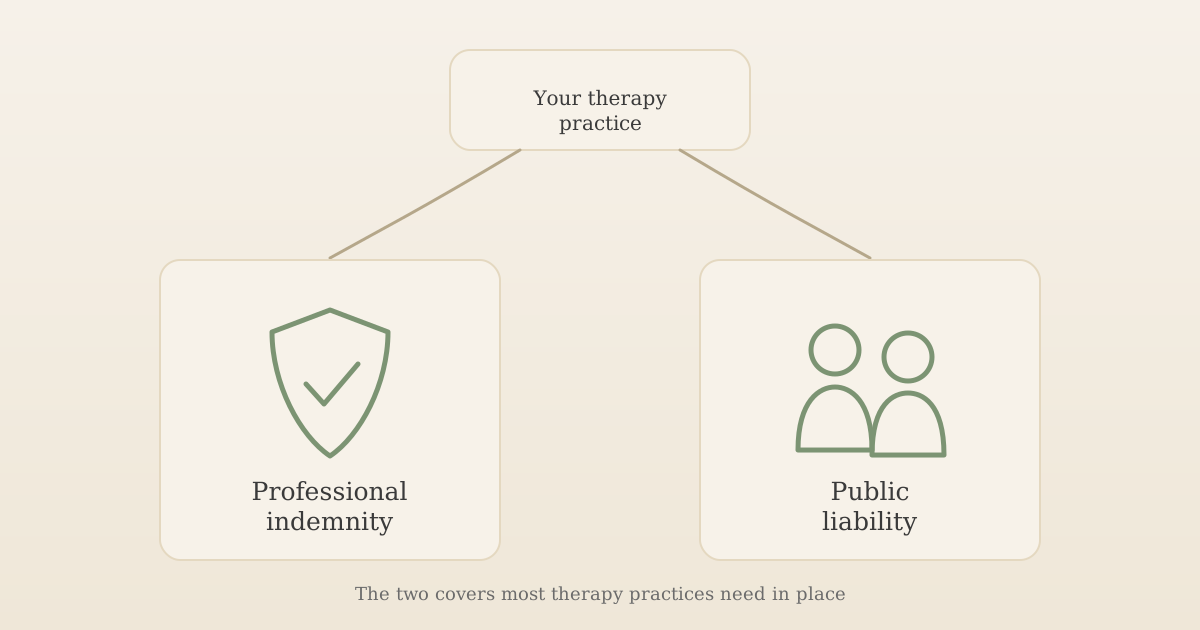
- Professional indemnity insurance covers claims that your therapeutic work or advice caused harm. Public liability covers physical injury or property damage. Most therapists need both.
- BACP, UKCP and HCPC all require registrants to hold adequate, ongoing indemnity cover as a condition of registration, whether you arrange it yourself or it's provided by an employer.
- If you employ anyone outside your family, employers' liability insurance is a separate legal requirement, not just a professional-body one, with a £5 million statutory minimum.
- Ask about run-off cover before you stop practising, change structure, or retire: most policies only cover claims made while the policy is active, and therapy claims can surface years after the work ended.
- Cost varies by specialism and cover level, but professional-body partnered policies are a useful reference point for what "normal" looks like.
Important: This is a practical overview, not legal, regulatory or insurance advice. Insurance requirements and what counts as adequate cover depend on your specific profession, registration body and practice. Check current guidance from your registration body and speak to an insurer or broker about your own circumstances.
Why therapists need professional indemnity insurance
Therapy carries a specific kind of professional risk: a client can allege that what you said, recommended or failed to notice caused them harm, even years after the sessions ended. Professional indemnity insurance exists for exactly this. It covers your legal defence costs and any compensation awarded, whether or not the claim ultimately succeeds, since defending even a claim you win can be expensive on its own.
This is different from general business insurance most small businesses think about first. A therapist's biggest realistic risk isn't a broken laptop or a burst pipe, it's a claim arising from the therapeutic relationship itself, which is precisely what professional indemnity is built to cover.
What your registration body actually requires
If you're registered with a professional body, indemnity insurance isn't optional. BACP's insurance requirements for members call for "adequate, current and ongoing professional indemnity insurance" as a condition of membership, and members selected for audit have to provide proof of it. That condition applies from your first day as a Registered Member, whatever route got you there; see our guide to whether a Level 4 Diploma is enough for private practice if you're not yet sure your own qualification clears BACP's registration bar. UKCP's Code of Ethics is equally direct: registrants must "ensure that your professional work is adequately covered by appropriate indemnity insurance."
For some titles the requirement goes further than a membership condition. The HCPC's registration requirements state that professional indemnity cover is "a condition of your registration" for every registrant, and HCPC registration is itself a legal requirement to use a protected title such as practitioner psychologist, clinical psychologist or arts therapist. For those professions, going without adequate cover isn't just against professional-body rules, it puts your legal right to practise under that title at risk.
None of the three bodies publish a single minimum figure that applies to everyone; each expects cover "appropriate to your practice, taking into account the nature and extent of its risks," which is a judgement you make with an insurer based on your specialism, client group and how you work, not a number you can look up once and reuse forever.
Unlike indemnity insurance, none of the three bodies require a DBS check as a condition of registration, but plenty of referral routes and directories do; see our guide to DBS checks for therapists for which level applies to your work.
Professional indemnity vs public liability
These two covers are often sold together, but they protect against different things, and it's worth understanding the distinction rather than assuming one implies the other.
| Professional indemnity | Public liability | |
|---|---|---|
| What it covers | Claims that your professional advice or therapeutic work caused harm | Claims of physical injury or property damage to a third party |
| Typical example | A client alleges your handling of a disclosure was negligent | A client trips on a loose rug in your waiting room |
| Who needs it | Every therapist seeing clients, regardless of setting | Anyone seeing clients in a physical space, including a room at home |
| Common minimum cover | Often £1 million or more, though this varies by insurer and specialism | Often £1 million or more, frequently bundled with indemnity cover |
If you work entirely online, it can be tempting to assume public liability doesn't apply to you. It still matters if you ever meet a client in person, even occasionally, and your ordinary home insurance is unlikely to cover claims arising from a professional activity carried out at home, so check that gap specifically rather than assuming you're covered by default.
If you take on staff: employers' liability insurance
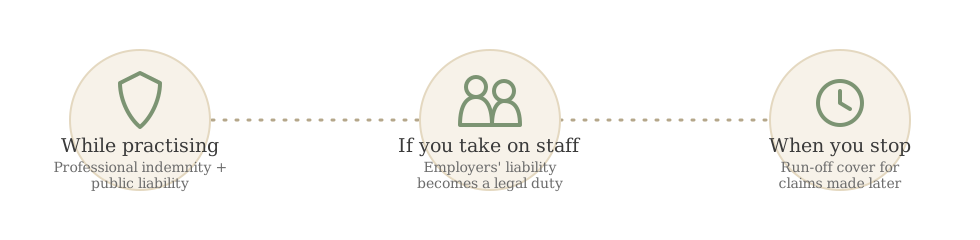
Most solo private practitioners never need this one, but it's a genuinely different category of requirement, not just another professional-body recommendation. Once you employ anyone who isn't a family member, even part time, employers' liability insurance becomes a legal requirement under the Employers' Liability (Compulsory Insurance) Act 1969, with a minimum of £5 million cover from an FCA-authorised insurer. Not holding it can mean a fine of up to £2,500 for every day you're uninsured.
This applies to a part-time receptionist, a virtual assistant you employ directly (rather than a self-employed contractor you pay invoices to), or an associate therapist you take on as staff rather than as an independent practitioner renting space from you. The distinction between "employee" and "self-employed associate" affects which insurance applies, so if you're growing beyond a solo practice it's worth getting that classification right before assuming either way.
Run-off cover: the part people forget
Most professional indemnity policies are "claims-made," meaning they only respond to a claim made while the policy is active, not to work carried out while a now-lapsed policy was active. That matters because a therapy-related claim can surface years after the sessions ended, sometimes well after you've stopped practising, changed profession or retired.
Run-off cover extends protection for claims arising from past work after your main policy ends. Before you let a policy lapse, whether because you're pausing practice, changing business structure, or retiring, check whether your insurer offers run-off cover and for how long, rather than discovering the gap only when a claim arrives.
What to check before you buy a policy
- Cover level. £1 million is a common starting point for both professional indemnity and public liability, but confirm it matches your specialism and client group rather than picking the cheapest option by default.
- What's actually included. Confirm whether the policy covers professional indemnity, public liability and any legal helpline or support service you might want, since some are sold as a single combined policy and others separately.
- Online and remote work. If you offer online therapy, confirm your policy explicitly covers remote sessions; some older or generic policies were written before this was standard practice.
- Run-off cover. Ask what happens to past-work claims if you stop practising or switch insurer.
- Retroactive date. If you're switching insurer, check whether the new policy covers work carried out before the switch, or only work going forward.
- Data and cyber exposure. A therapy practice holds highly sensitive client data, so it's worth asking whether your policy includes any cyber or data-breach cover, alongside the data protection practices covered in our guide to GDPR for therapists and the backup and update habits in our guide to website maintenance for therapists.
Where to get cover and what it typically costs
Cost depends on your specialism, client volume, cover level and any claims history, so there's no single number that applies to every therapist. As a reference point rather than a quote, BACP's partnered insurance policy offers £6 million of combined professional, public and product liability cover starting from £57.35 a year at the time of writing. UKCP and several insurers specialising in talking therapies offer comparable combined policies.
Get quotes from more than one provider before choosing, and read what's actually included rather than comparing on price alone. A cheaper policy with a lower cover limit or narrower definition of your work isn't a saving if it doesn't respond to the claim you actually receive.
Insurance checklist for private practice
- Professional indemnity insurance in place, at a cover level appropriate to your specialism
- Public liability insurance, especially if you ever see clients in person
- Confirmed your policy covers online or remote sessions, if you offer them
- Employers' liability insurance arranged, if you employ anyone outside your family
- Checked whether run-off cover is included or needs arranging separately
- Confirmed the retroactive date if you've switched insurer
- Kept proof of cover on file in case your registration body audits you
Frequently asked questions
Is professional indemnity insurance a legal requirement for therapists?
It depends on how you're registered. For HCPC-regulated titles such as practitioner psychologist or arts therapist, holding adequate indemnity cover is a legal condition of the statutory registration you need to use that title. For counsellors and psychotherapists registered with BACP, UKCP or NCPS, it's a mandatory condition of that professional body's membership rather than a government law, but in practice you can't ethically see clients, or usually get listed on a directory, without it.
What's the difference between professional indemnity and public liability insurance?
Professional indemnity covers claims that your professional advice or therapeutic work caused harm, for example a client alleging negligence. Public liability covers claims of physical injury or property damage, for example a client tripping in your waiting room. Most therapists need both, and many insurers sell them as a single combined policy.
Do I need employers' liability insurance as a private practice therapist?
Only if you employ someone who isn't a family member, including a part-time receptionist, virtual assistant on your payroll, or an associate you take on as staff rather than as self-employed. If that applies, employers' liability insurance is a legal requirement under the Employers' Liability (Compulsory Insurance) Act 1969, with a minimum of £5 million cover, not just a professional-body condition.
How much does professional indemnity insurance cost for a therapist?
Cost depends on your specialism, client group, session volume and cover level, so there's no single figure. As one reference point, BACP's own partnered policy, offering £6 million combined professional, public and product liability cover, started from £57.35 a year at the time of writing. Get a few quotes rather than assuming any single price applies to your practice.
Get the essentials in place first
Professional indemnity insurance is not the most interesting item on a new practice's checklist, but it's one of the few that genuinely can't wait. Confirm what your registration body requires, get quotes that reflect your actual specialism and way of working, and revisit cover whenever your practice changes, whether that's taking on your first associate or switching from sole trader to a limited company. Everything else about growing a private practice is easier to get right once this foundation is properly in place.
A website that reflects a properly set-up practice
UpTopWeb builds calm, professional websites for counsellors and therapists, so the rest of your practice looks as considered as your insurance and paperwork.
Get a free website