Starting a practice
DBS Checks for Therapists: A UK Guide
Do UK therapists need a DBS check? What basic, standard and enhanced checks actually cover, how self-employed therapists can now apply for one, and what it costs.
On this page10 sections
If you've tried to get a DBS check as a self-employed therapist, you've probably run into a frustrating gap: employers can request one for their staff in minutes, but until recently, therapists working for themselves had no reliable way to get anything beyond a basic check. That changed in January 2026. This guide covers whether UK therapists actually need a DBS check, which level applies to your work, how the self-employed route works now, and what it costs. It sits alongside the other practical foundations covered in our guide to setting up a private therapy practice in the UK.
Key takeaways:
- No single law requires every therapist to hold a DBS check, but schools, GP referral routes, employee assistance programmes and many directories routinely ask for one before they'll list or refer to you.
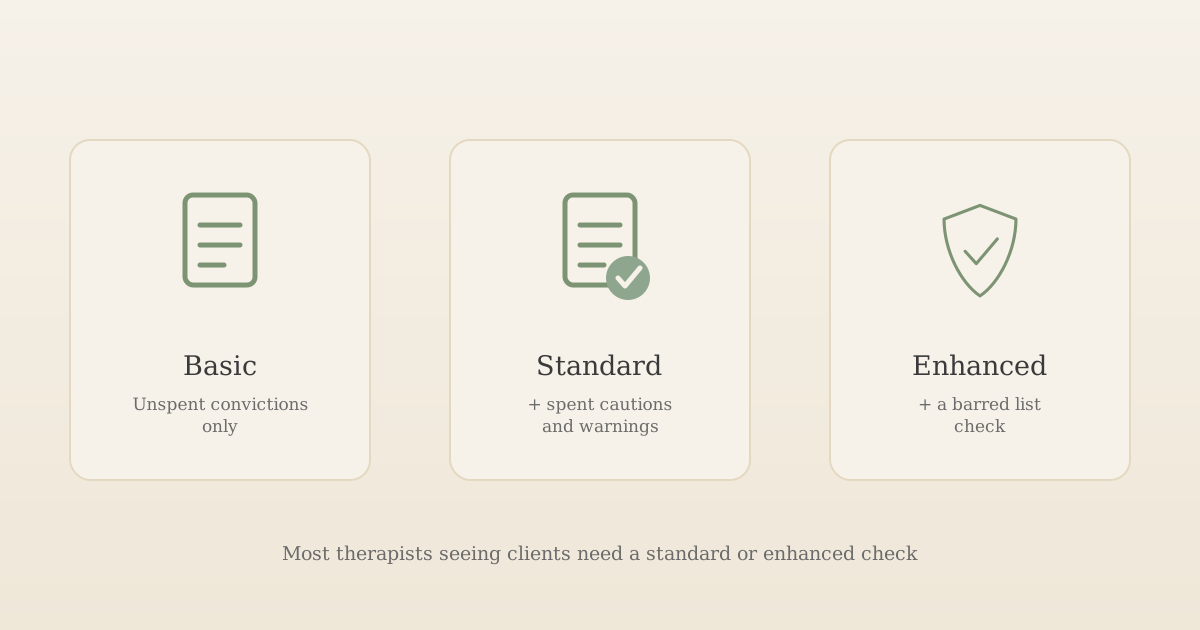
- There are three levels: basic, standard and enhanced. Most therapists seeing clients need standard or enhanced; whether a barred list check applies depends on your specific work, not your job title.
- Since 21 January 2026, self-employed therapists and personal employees have been able to apply for an Enhanced or Enhanced with Barred List(s) check through a DBS-registered umbrella body, closing a gap that previously limited most self-employed applicants to basic checks only.
- BACP, UKCP and NCPS aren't registered DBS bodies themselves, so none of them can process a check for you directly, whatever your membership level.
- A certificate doesn't expire, but the £16-a-year Update Service keeps a standard or enhanced check current without reapplying from scratch each time someone asks to see it.
Important: This is a practical overview, not legal or regulatory advice. DBS eligibility rules, umbrella body processes and fees can change, and some registration bodies' own guidance pages (see the note on BACP below) haven't caught up with the process as it now actually works. Check current guidance on gov.uk and with your registration body before relying on any of it.
Do therapists need a DBS check?
Unlike professional indemnity insurance, which BACP, UKCP and HCPC all require as a condition of registration or membership, a DBS check isn't a universal requirement baked into any of the main talking-therapies registration bodies. Counselling and psychotherapy aren't professions the DBS itself designates as always requiring an enhanced check, so whether you need one in practice depends on who you work with rather than your title alone.
That said, "not legally required" doesn't mean "not asked for." GP surgeries and NHS-linked referral routes, schools and universities, employee assistance programmes (EAPs), and a growing number of the therapy directories worth listing on treat a current DBS check as a basic condition of working with them, checked before you're referred a single client. And if your actual work meets the legal definition of regulated activity with children or vulnerable adults, covered below, holding an appropriate check is worth doing as safeguarding good practice even on the days nobody happens to ask for it.
The three levels of DBS check
| Basic | Standard | Enhanced | |
|---|---|---|---|
| What it shows | Unspent convictions and conditional cautions | + spent convictions, cautions, warnings and reprimands | + barred list check(s), where the role qualifies |
| Who can apply | Anyone aged 16+, including self-employed people, directly via gov.uk | Someone in an eligible role, applied for through a registered body or umbrella body | Someone in regulated activity, applied for through a registered body or umbrella body |
| Typical use for therapists | Rarely enough on its own for client-facing work | Common baseline for many directories and referral routes | Usually expected for work with children or vulnerable adults |
The gap that caught out self-employed therapists for years sits in that middle row: anyone can request their own basic check, but standard and enhanced checks have always required going through a body registered with the DBS, and self-employed people historically had no straightforward way into that system for themselves. More on what's changed there below.
What "regulated activity" actually means for a therapist
Not every counsellor or psychotherapist counts as being in regulated activity, and it's worth understanding why, because it's the thing that actually determines whether a barred list check applies to you. Gov.uk's eligibility guidance for healthcare roles addresses counsellors and psychotherapists specifically, and the deciding factors are your actual working pattern, not your job title:
- If you see clients privately, without a healthcare professional referring them to you, you're typically eligible for an enhanced check without a barred list search.
- If you take direct referrals from a GP or another regulated healthcare professional, an enhanced check with an adults' barred list search is more likely to apply.
- If you work with children frequently enough, or overnight, an enhanced check with a children's barred list search applies, and since 1 September 2026, that "frequently enough" threshold covers supervised work too, not just unsupervised contact.
If you're unsure which category your practice falls into, this is a genuinely useful question to put to whichever directory, referral scheme or professional body you're working through, since they'll usually already know what level their own listing or contract requires.
What changed for self-employed therapists in January 2026
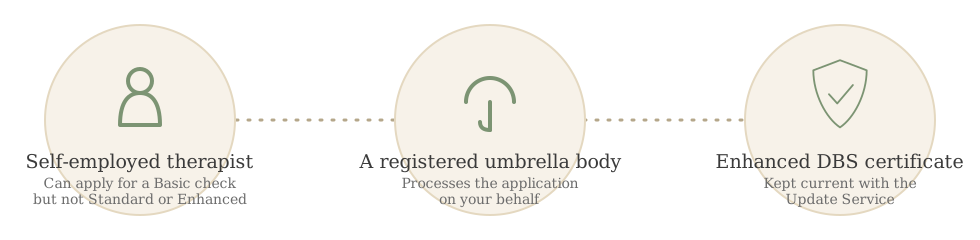
Before this year, a self-employed therapist wanting more than a basic check faced a structural problem: standard and enhanced checks require a registered body to submit the application, and that system was built around employers requesting checks on staff, not individuals requesting one on themselves. Some umbrella bodies found workarounds, but access was inconsistent, and plenty of self-employed practitioners simply couldn't get an enhanced check at all, regardless of how badly a directory or referral scheme wanted to see one.
Since 21 January 2026, following recommendations from the Independent Inquiry into Child Sexual Abuse, self-employed people and personal employees in eligible roles have been able to apply for an Enhanced or Enhanced with Barred List(s) check through a DBS-registered umbrella body. You still can't apply to the DBS directly for anything above a basic check, an umbrella body remains part of the process, but umbrella bodies can now process that application for your own self-employed role rather than only for someone else's staff.
Worth noting: BACP has been explicit that it isn't itself a DBS-registered body and can't process enhanced checks for its members directly, however senior your membership. Its own news page on this change, published in December 2025 before the route went live, still read as of this post's publish date as though a start date hadn't been confirmed, even though the route has been operating since 21 January 2026, so don't treat a professional body's own page as the most current word on process mechanics. If you're registered with BACP, UKCP or NCPS, check gov.uk directly for how the process currently works, since none of the three bodies process checks in-house.
Where to actually get one
For most self-employed therapists, this comes down to two practical routes:
- A DBS-registered umbrella body. The same directory linked above lists companies registered to process checks, including for self-employed applicants under the new route. Expect to prove your identity, sometimes in person, and confirm your role meets the eligibility criteria for the check level you're requesting.
- A basic check, direct from gov.uk. If a basic check is genuinely all your work requires, anyone aged 16 or over can request one directly without an umbrella body at all. It's faster and doesn't need a third party, but it won't cover a barred list search if your work actually needs one.
Get a couple of quotes before committing to an umbrella body if cost is a factor: admin fees vary, and the DBS's own fee is fixed regardless of which umbrella body processes your application.
What it costs and how long it lasts
The DBS's fee is £21.50 for a basic or standard check and £49.50 for an enhanced check, whether or not a barred list search is included. On top of that, umbrella bodies charge their own admin fee, commonly somewhere between £5 and £20, so budget for the combined total rather than the government fee alone. A DBS certificate itself has no fixed expiry date, but most organisations that ask to see one want something issued within the last one to three years, a convention rather than a rule, so check what a specific directory or referral scheme actually expects.
The DBS Update Service
The Update Service is a £16-a-year subscription that keeps a standard or enhanced certificate current without reapplying from scratch every time a new directory or referral scheme wants to see one. Once subscribed, you can give an organisation permission to check online whether anything has changed since your certificate was issued, and if nothing has, they can rely on the existing certificate rather than asking you to go through the whole application again. It only applies to standard and enhanced checks, not basic ones, and you need to join within 30 days of your certificate being issued, so it's worth deciding upfront rather than after the window's closed.
DBS checklist for private practice
- Worked out whether your actual work meets the definition of regulated activity with children, adults, or neither
- Confirmed which level of check your directories, referral routes or contracts actually expect
- Checked whether a basic check (self-service, no umbrella body needed) is genuinely enough for your situation
- If you need standard or enhanced, found a DBS-registered umbrella body and confirmed your role is eligible under the January 2026 self-employed route
- Subscribed to the Update Service within 30 days of getting a standard or enhanced certificate, if you want to avoid reapplying later
- Kept a copy of your certificate somewhere you can produce it quickly when a directory or referral scheme asks
- Added a line to your website noting your check level, alongside the other trust signals covered in our guide to what a therapist website should include
Frequently asked questions
Do therapists legally need a DBS check?
There's no single law that requires every therapist to hold a DBS check, and BACP, UKCP and NCPS registration doesn't include one as a membership condition either. In practice, whether you need one comes down to who you work with and who you work for: schools, GP referral schemes, employee assistance programmes, and many directories routinely ask for a current check before they'll list or refer to you, and if your work meets the legal definition of regulated activity with children or vulnerable adults, holding one is best practice even when nobody's asking.
What level of DBS check does a therapist need?
Most therapists seeing clients need at least a standard check, and often an enhanced one. Gov.uk's eligibility guidance for healthcare roles addresses counsellors and psychotherapists directly: whether you also need a barred list check depends on your specific work, for example whether you see children frequently or take direct referrals from a healthcare professional, rather than on your job title alone.
Can self-employed therapists get an enhanced DBS check themselves?
Not directly from the DBS, but the route opened up on 21 January 2026. Self-employed people and personal employees have since been able to apply for an Enhanced or Enhanced with Barred List(s) check through a DBS-registered umbrella body, provided their role is eligible. Before this change, self-employed therapists could usually only get a Basic check on their own, which doesn't include a barred list search.
How much does a DBS check cost and how long does it last?
The DBS's own fee is £21.50 for a basic or standard check and £49.50 for an enhanced check, and umbrella bodies add their own admin fee on top, typically £5 to £20. A certificate itself doesn't expire, but most organisations that ask for one want to see something issued within the last one to three years, unless you keep it current with the £16-a-year Update Service, which covers standard and enhanced checks only.
Getting this right once
A DBS check isn't the most interesting item on a new practice's to-do list, but it's one that quietly gates access to referral routes, directories and school or EAP contracts if it's missing. Work out what your actual practice requires, use the self-employed route that opened up this year if an enhanced check applies to you, and set up the Update Service early so it's one less thing to redo every time someone new asks to see it.
A website that's ready for referral partners to check
UpTopWeb builds calm, professional websites for counsellors and therapists, so the rest of your practice looks as considered as your paperwork.
Get a free website