AI search8 minute read
How to Make Your Therapist Website Ready for AI Search
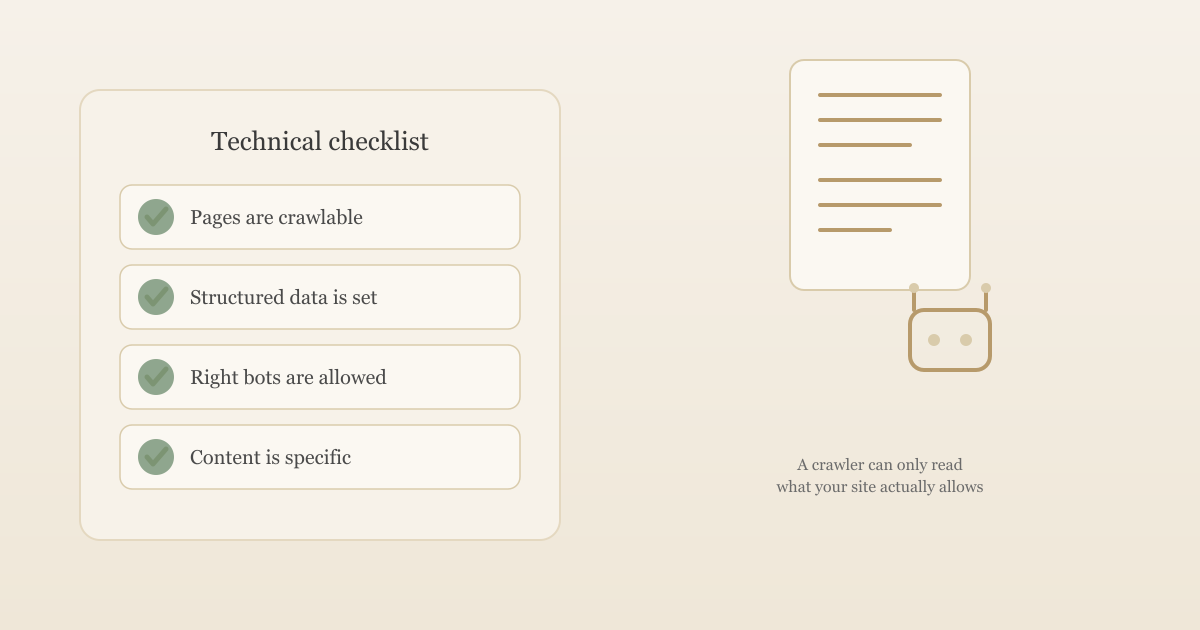
The specific technical checklist behind AI search readiness: what's already handled, what to check yourself, and which AI crawlers to actually let in.

Author
Jack writes practical guidance for therapists building and growing private practices.
Jack focuses on clear, useful articles that help therapists make confident decisions about their practice, visibility and website.
23 articles
The specific technical checklist behind AI search readiness: what's already handled, what to check yourself, and which AI crawlers to actually let in.
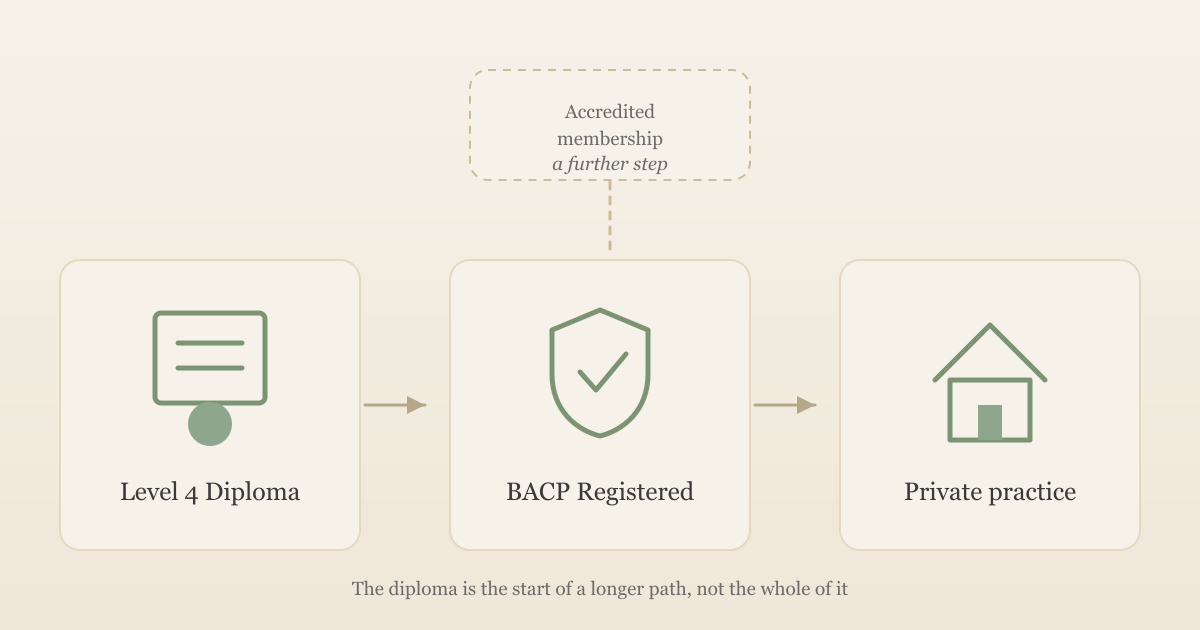
A Level 4 Diploma can get you BACP registered and seeing private clients, but it has real limits. What it actually covers, and what SCoPEd changes.
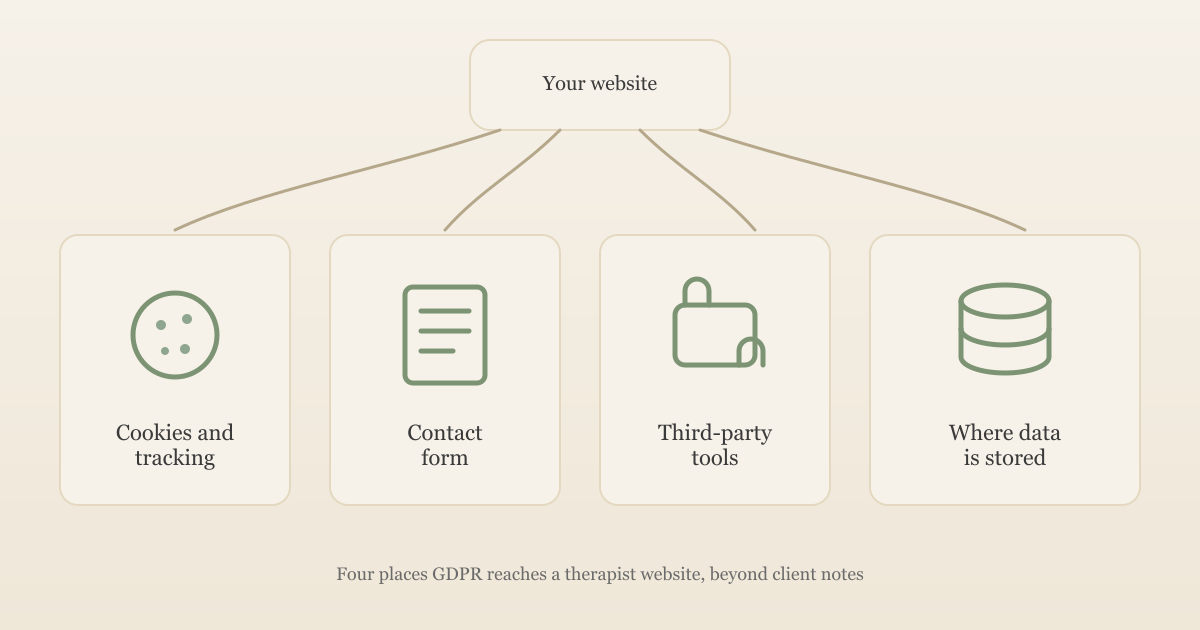
What actually makes a therapist website GDPR compliant: cookies, your enquiry form, third-party tools and where your data ends up being stored.
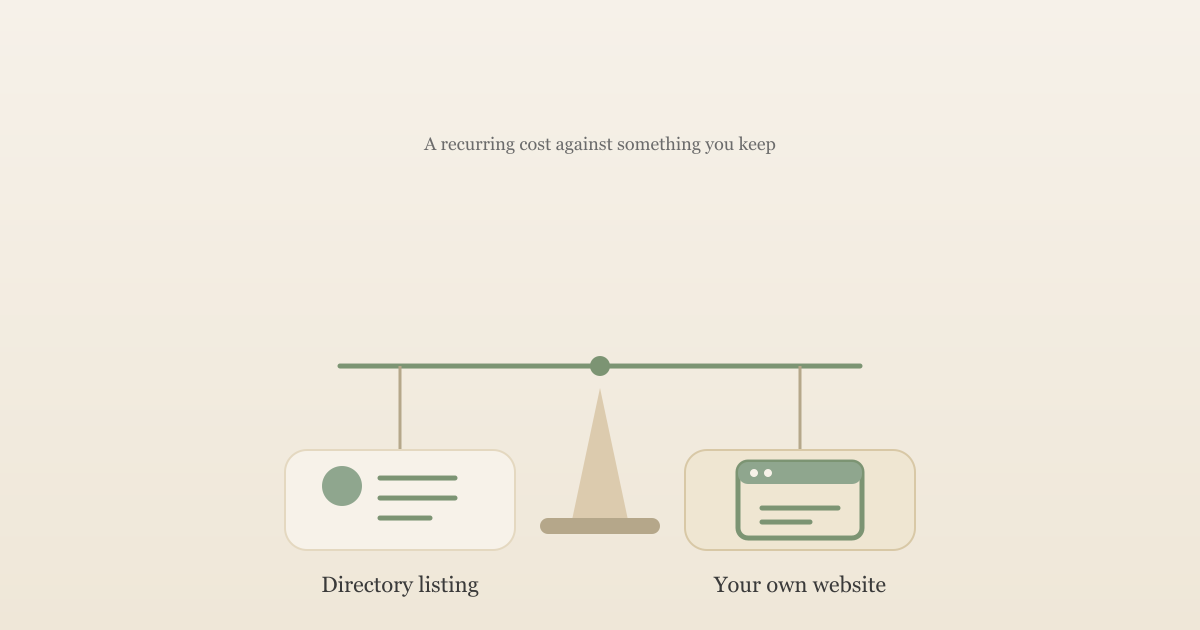
Counselling Directory costs from £24.50 a month, BACP's from £76 a year. What UK therapists actually say about the return, and when a listing pays off.
BACP and UKCP both allow therapists on social media, but expect clear boundaries. What their guidance actually says, and a simple policy you can use.
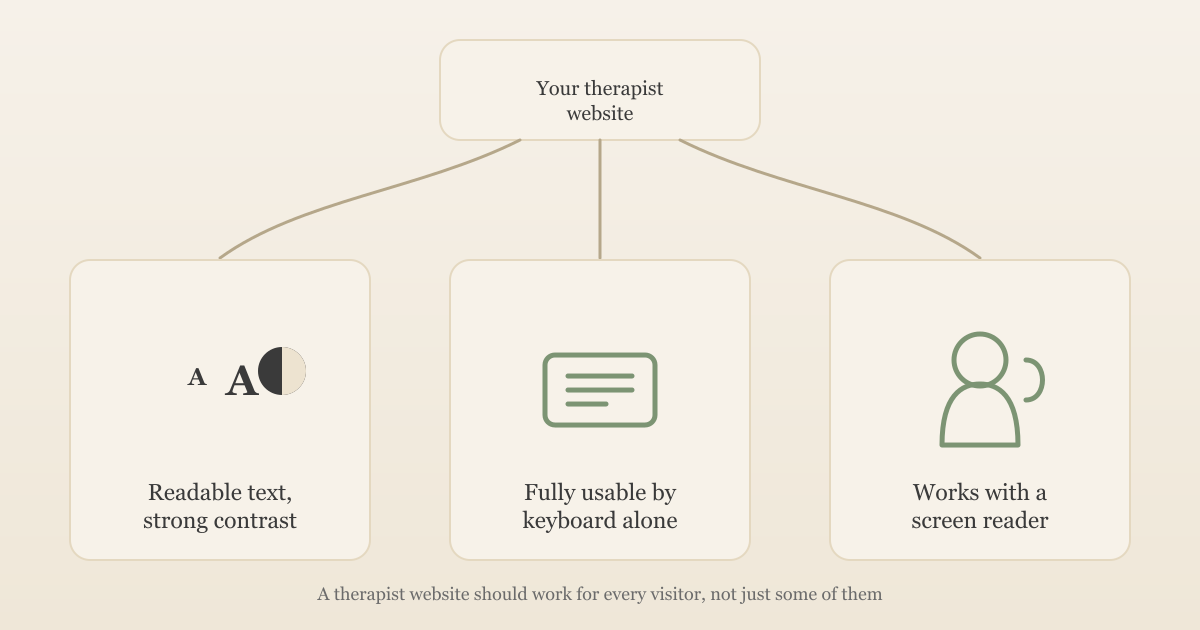
What UK law actually requires for therapist website accessibility, what WCAG 2.2 AA means in practice, and the most common mistakes to fix first.
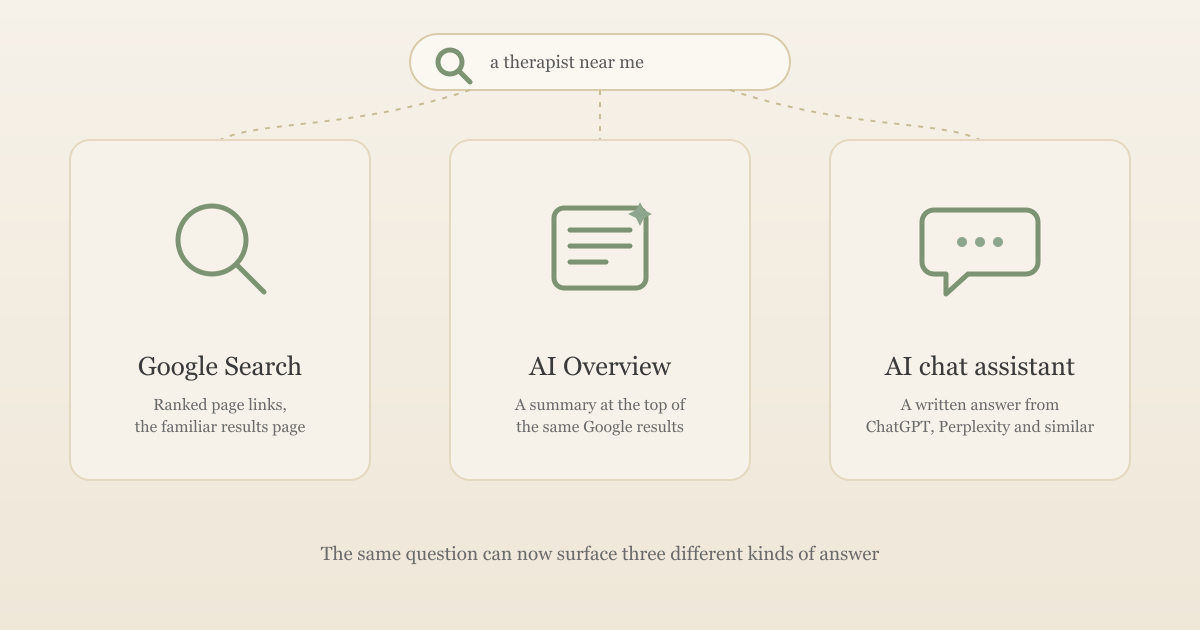
What Google's AI Overviews and tools like ChatGPT actually mean for how clients find a UK therapist, and what your website genuinely needs to do about it.
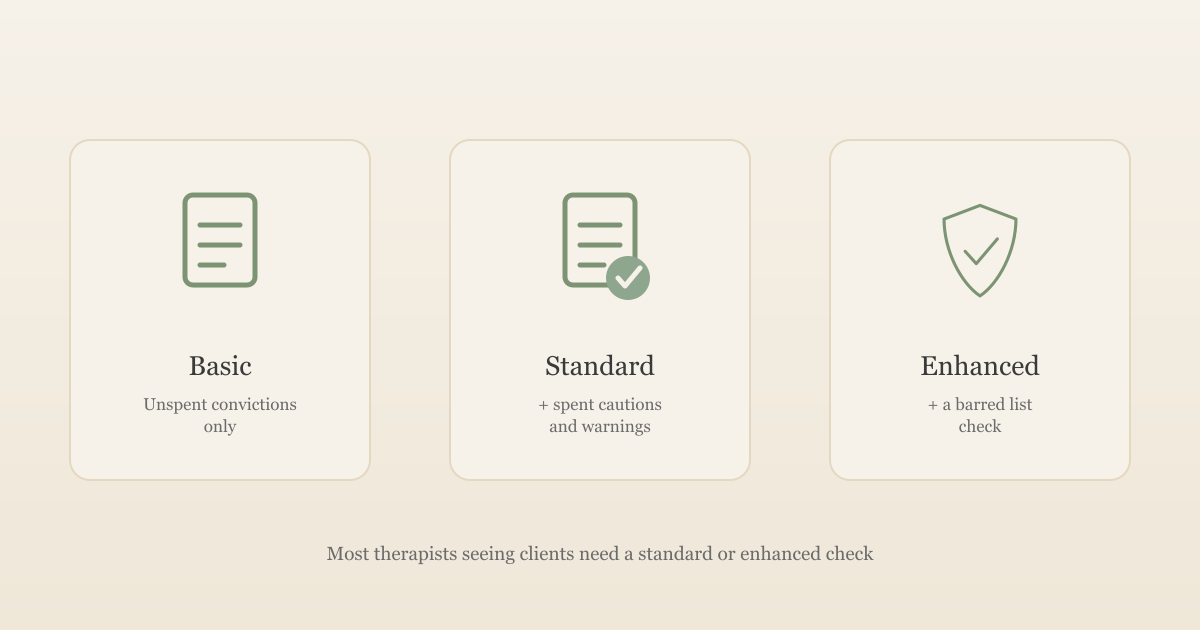
Do UK therapists need a DBS check? What basic, standard and enhanced checks actually cover, how self-employed therapists can now apply for one, and what it costs.
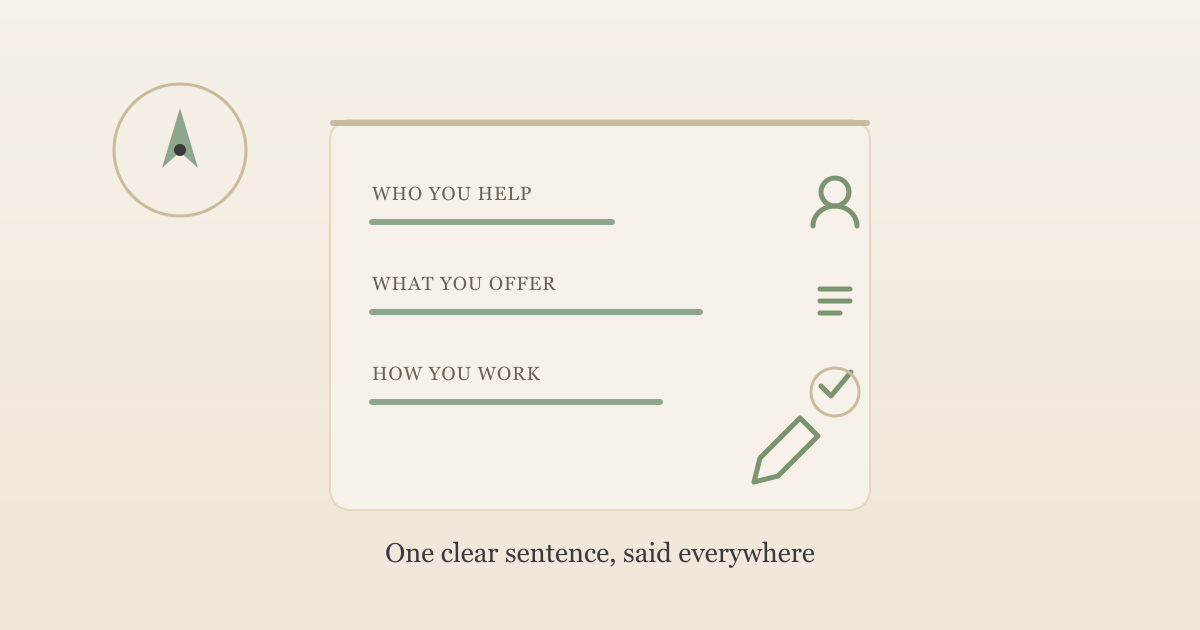
A practical, ethics-first guide to marketing yourself as a therapist in the UK: positioning, professional body rules, and a realistic weekly routine.
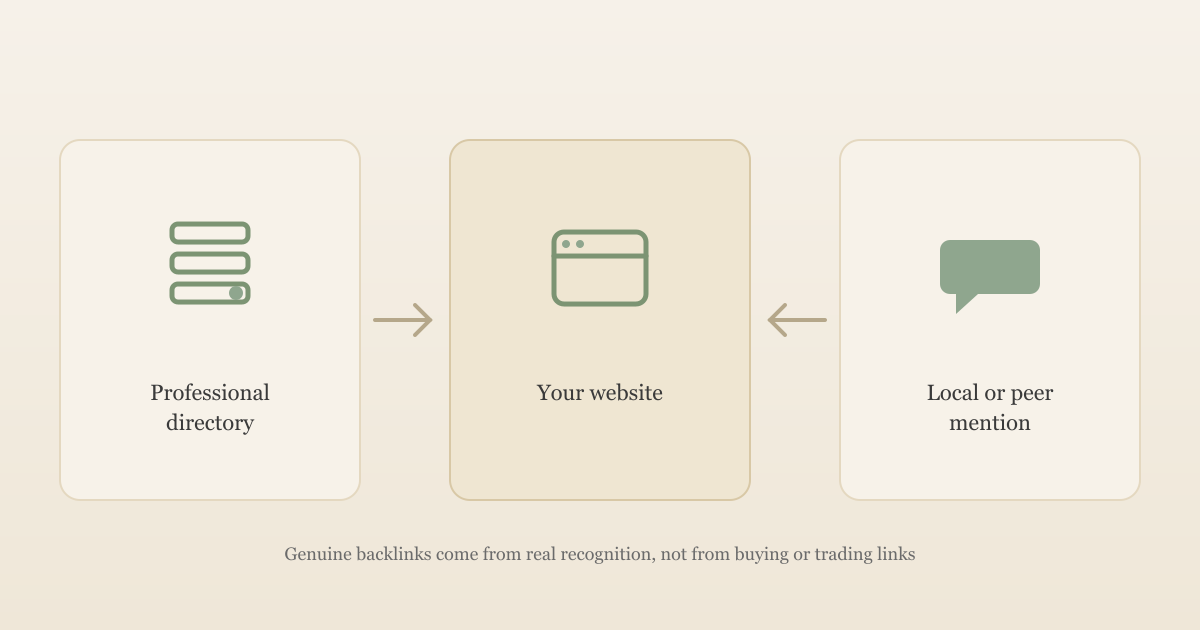
Where legitimate backlinks for therapists actually come from, what Google calls a link scheme, and two realistic ones worth pursuing this month.
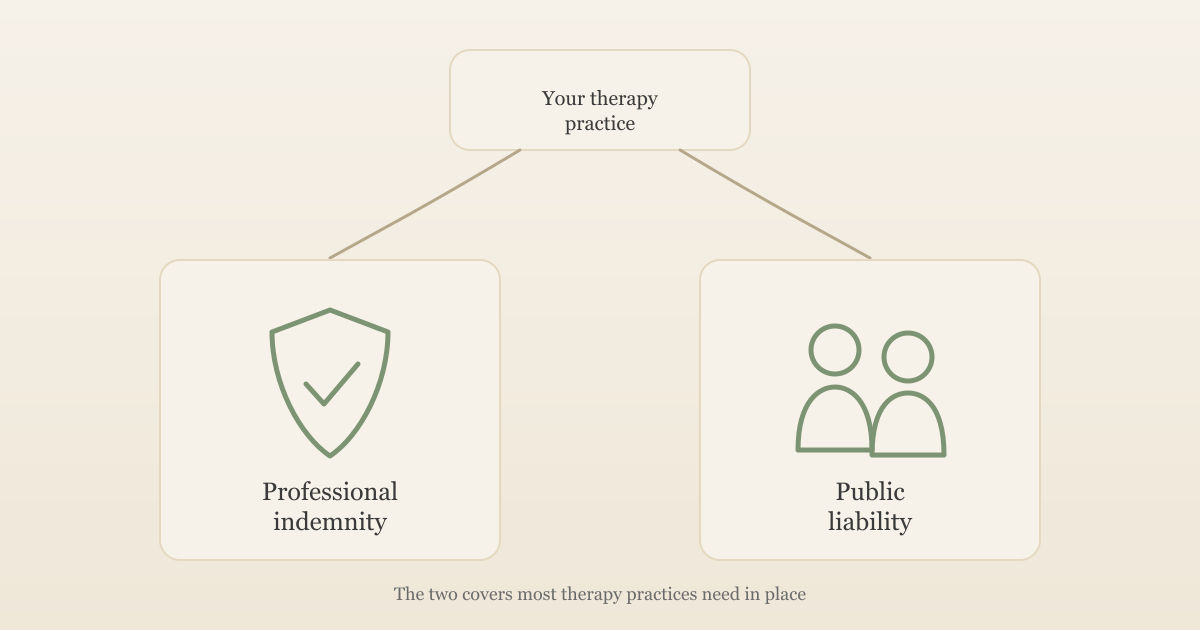
What professional indemnity insurance actually covers for UK therapists, how it differs from public liability, what registration bodies require, and typical costs.
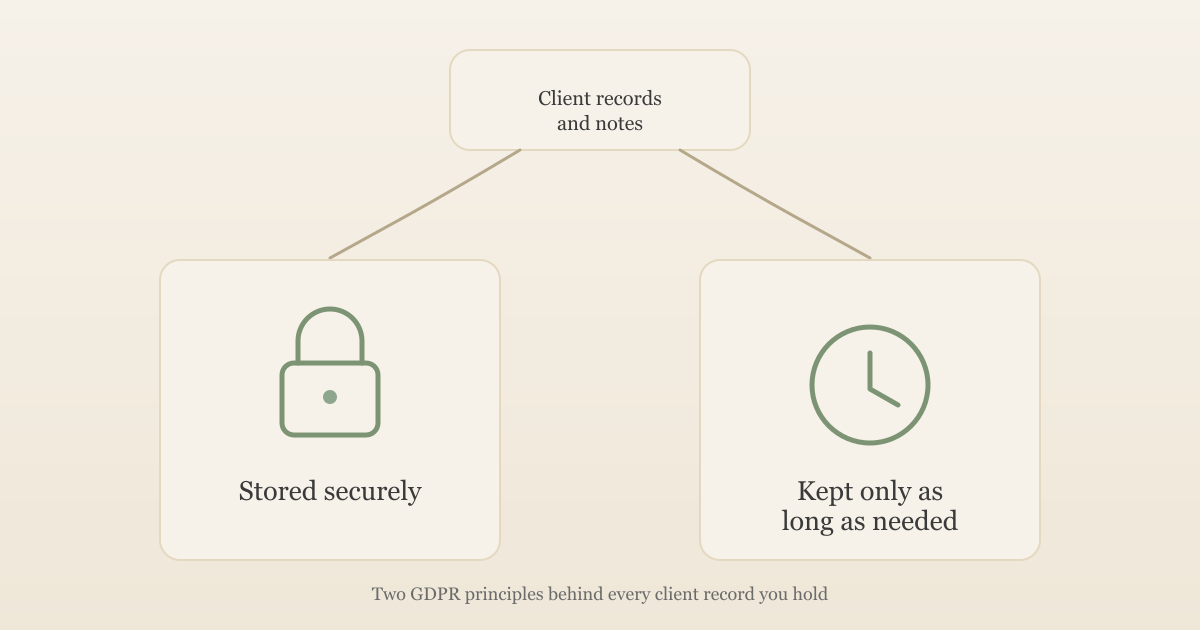
A practical guide to UK GDPR for therapists: whether you need to register with the ICO, what counts as special category data, how long to keep records, and what to do if something goes wrong.
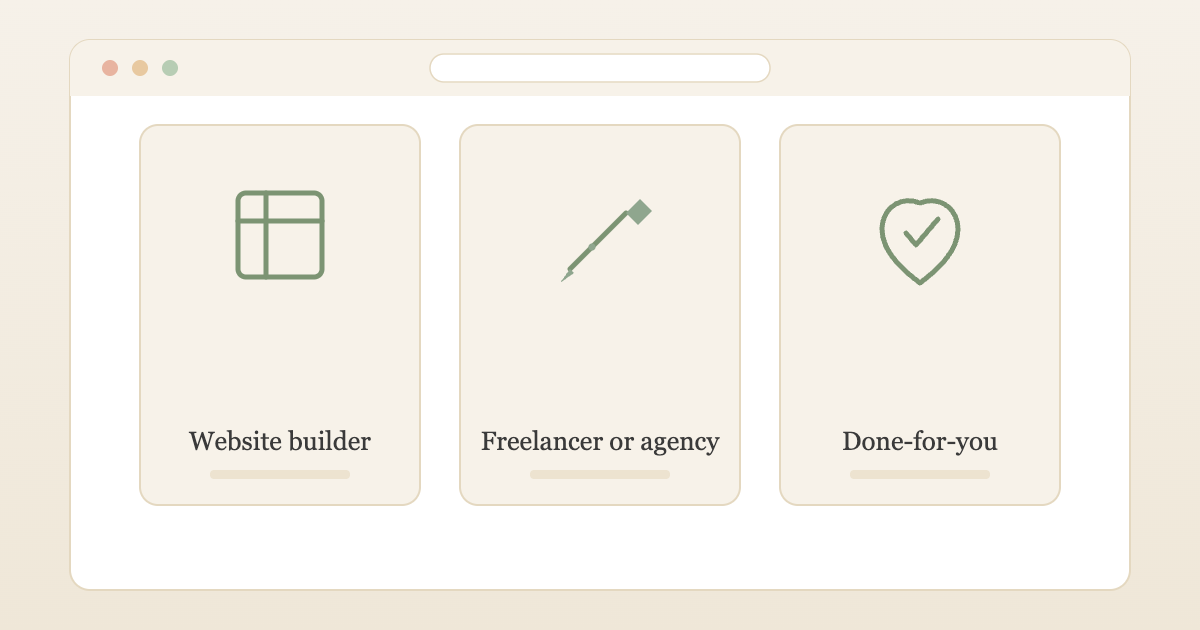
A website builder like Wix or Squarespace looks like the obvious choice for a therapist website, but it isn't always the right fit. A clear way to decide.
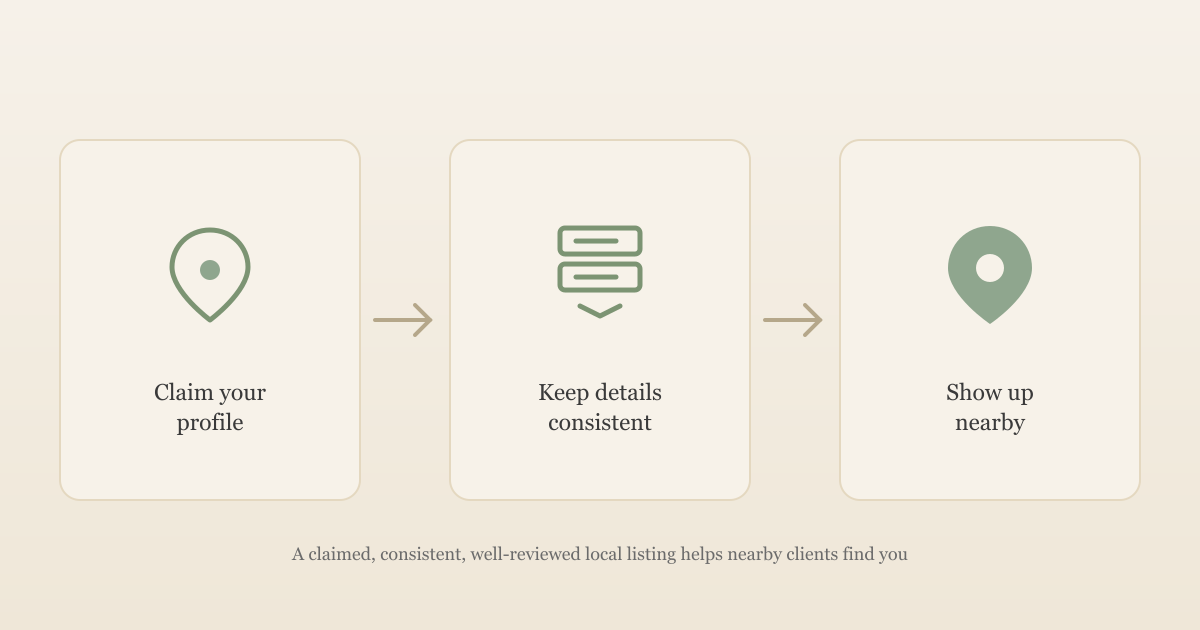
A practical guide to local SEO for therapists: set up your Google Business Profile, choose between an address and a service area, and get genuine reviews.
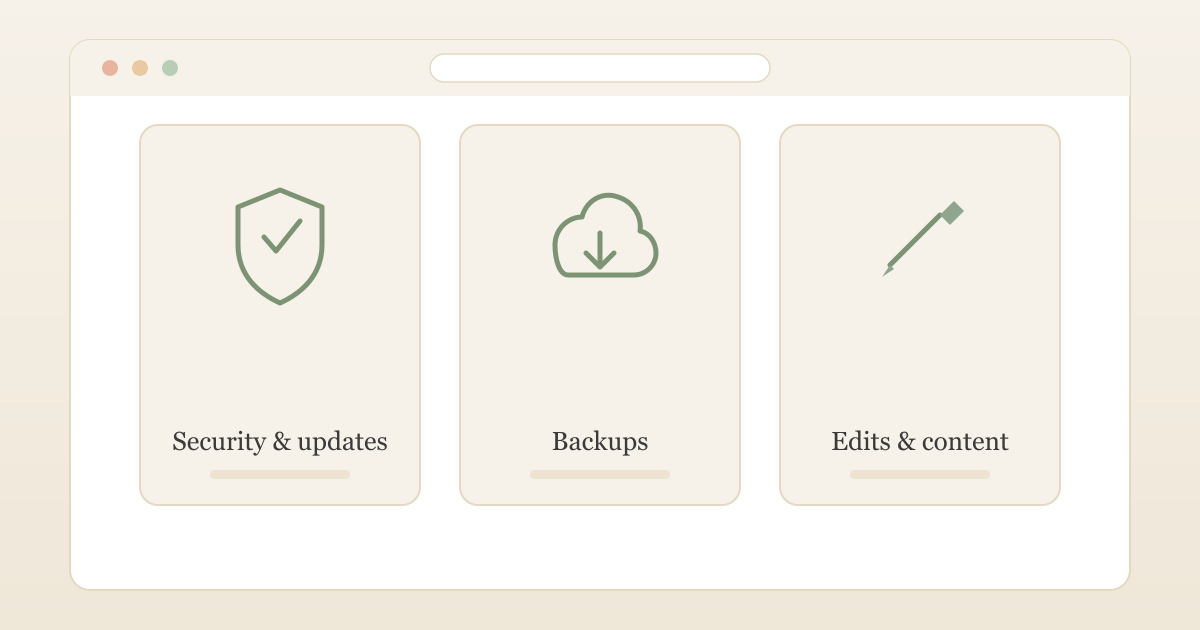
What website maintenance really involves for a therapist website, what it costs across DIY, freelance and done-for-you routes, and what happens if you skip it.
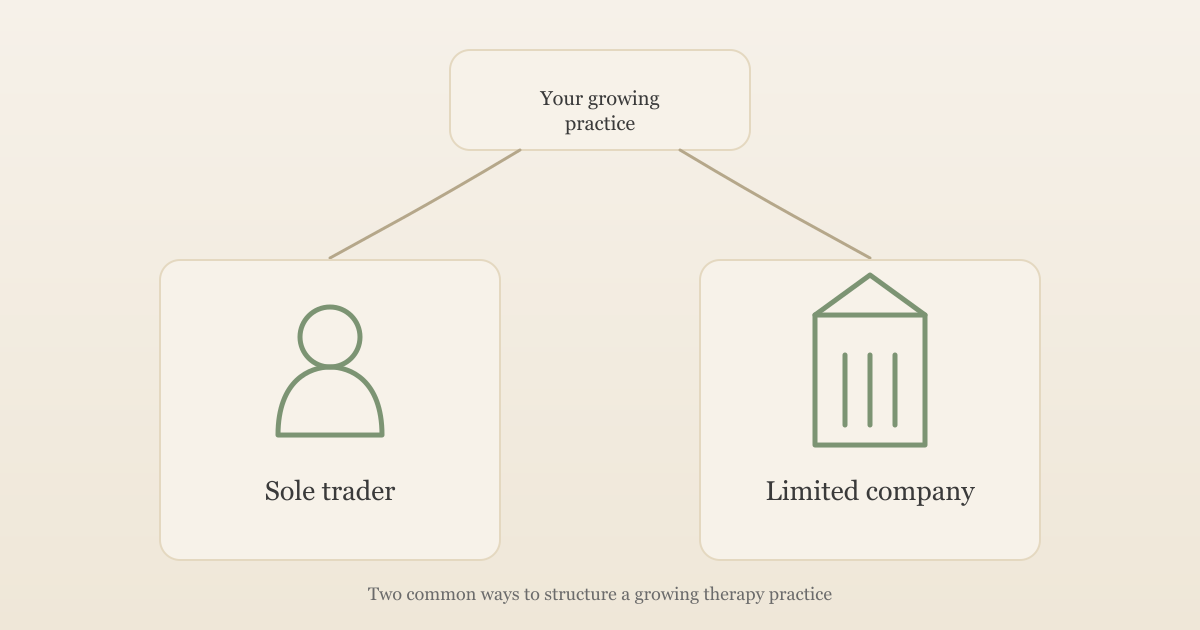
How UK therapists can compare sole trader status with a limited company: liability, tax, Companies House costs, and a simple way to decide which fits.
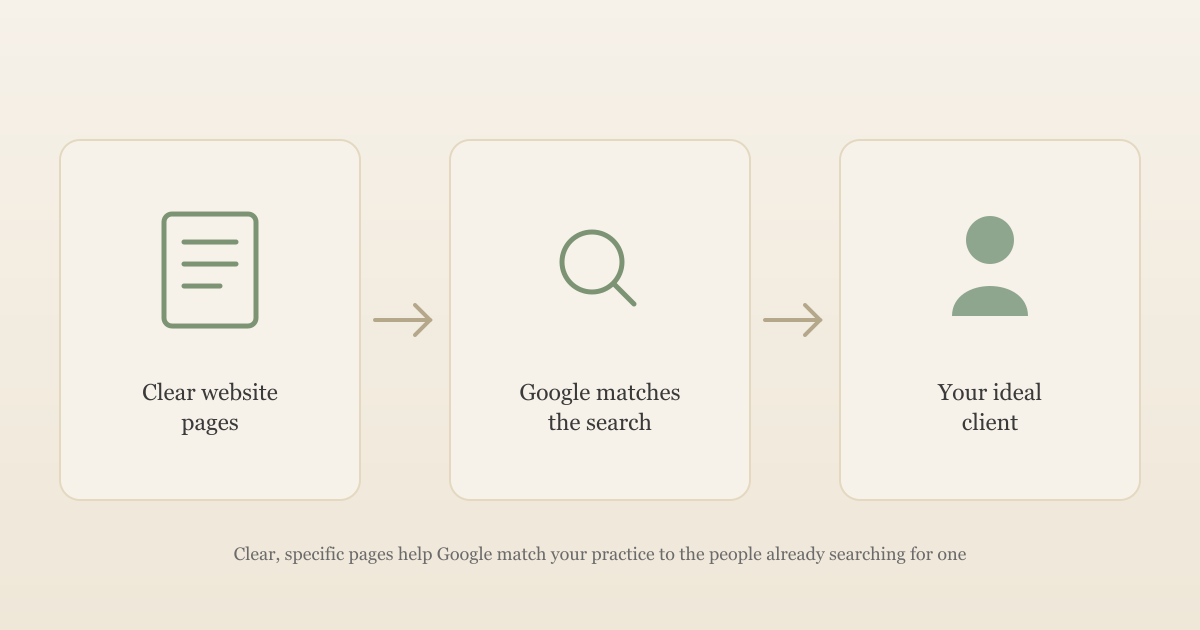
How search engine optimisation actually works for a therapist or counsellor website, explained without jargon, plus the on-page and local SEO basics worth doing first.
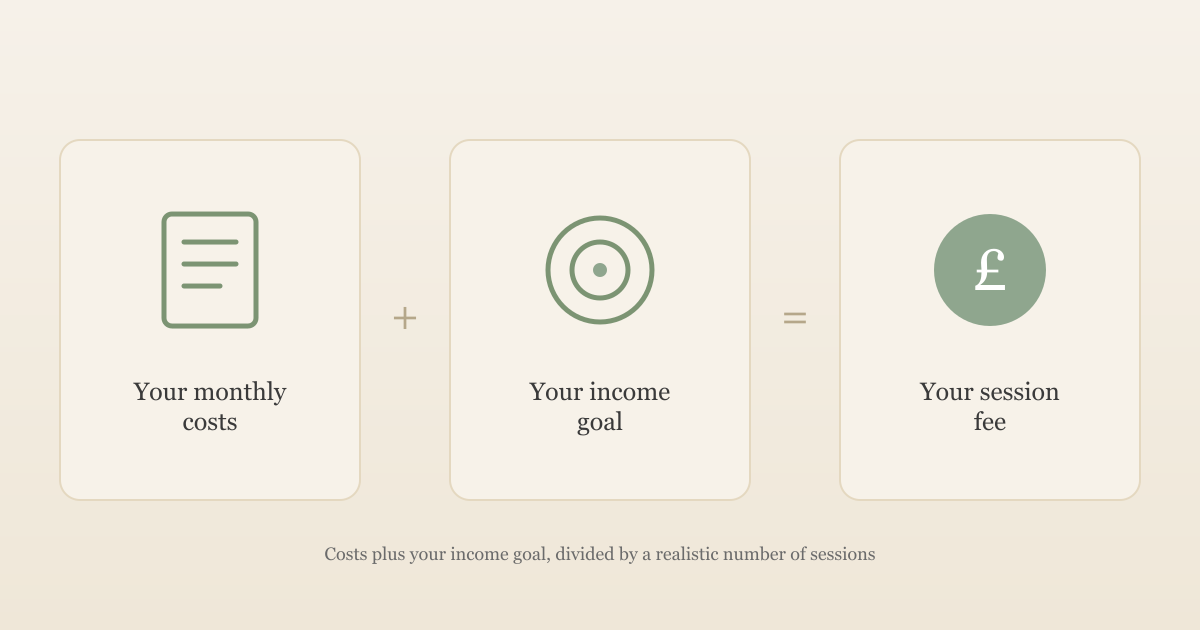
A step-by-step way to work out how much to charge for counselling, starting from your real costs and income goal rather than a guess or a competitor's price.
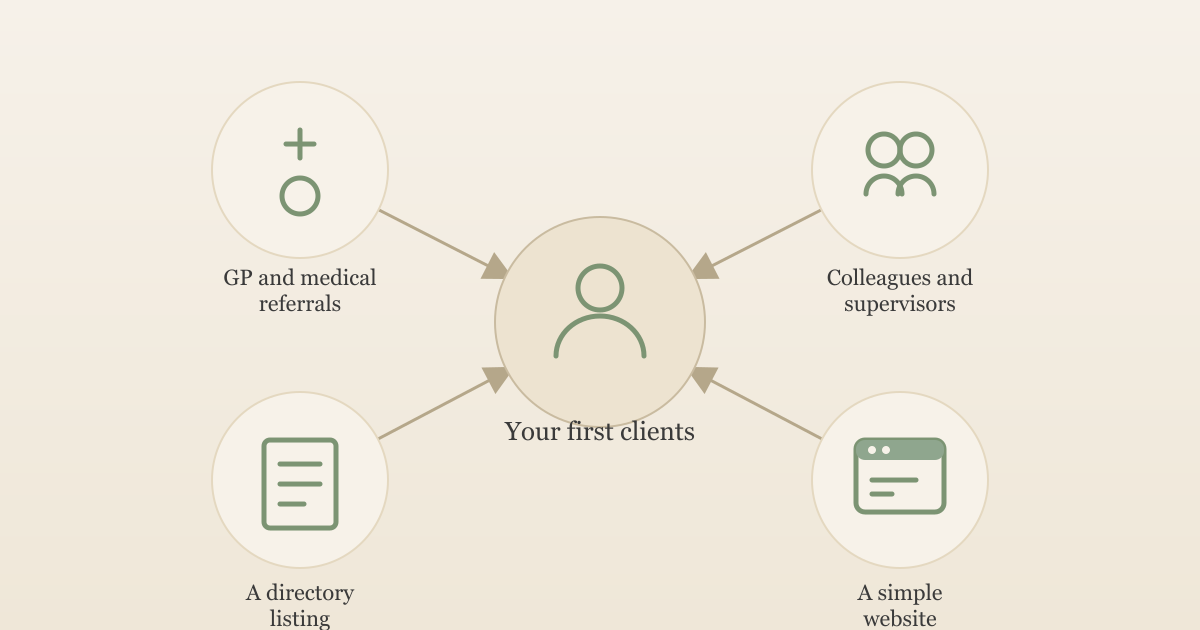
Referrals, a directory listing, a simple website and tracking what converts: a realistic guide to finding your first counselling clients in the UK.
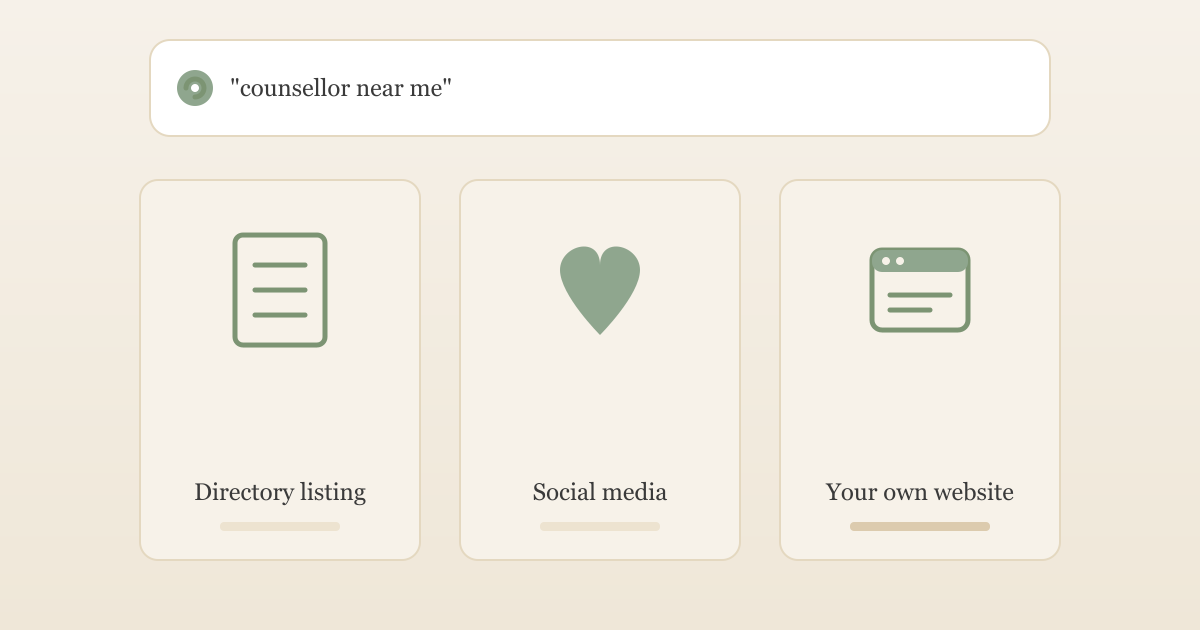
Directory listings and social media get you found, but only a website you own shows your fees, policies and FAQs in full. What each gives you, and when to wait.
A plain-English breakdown of what a therapist website actually costs: DIY builders, freelancers and agencies, and what's included versus billed separately.
The pages, trust signals and practical details a therapist or counsellor website needs, from your homepage and fees to accessibility and GDPR.

A practical guide to setting up a private therapy practice in the UK: qualifications, insurance, fees, client records, marketing and getting found online.