Therapist websites
How Much Does a Therapist Website Cost in the UK?
A plain-English breakdown of what a therapist website actually costs: DIY builders, freelancers and agencies, and what's included versus billed separately.
On this page11 sections
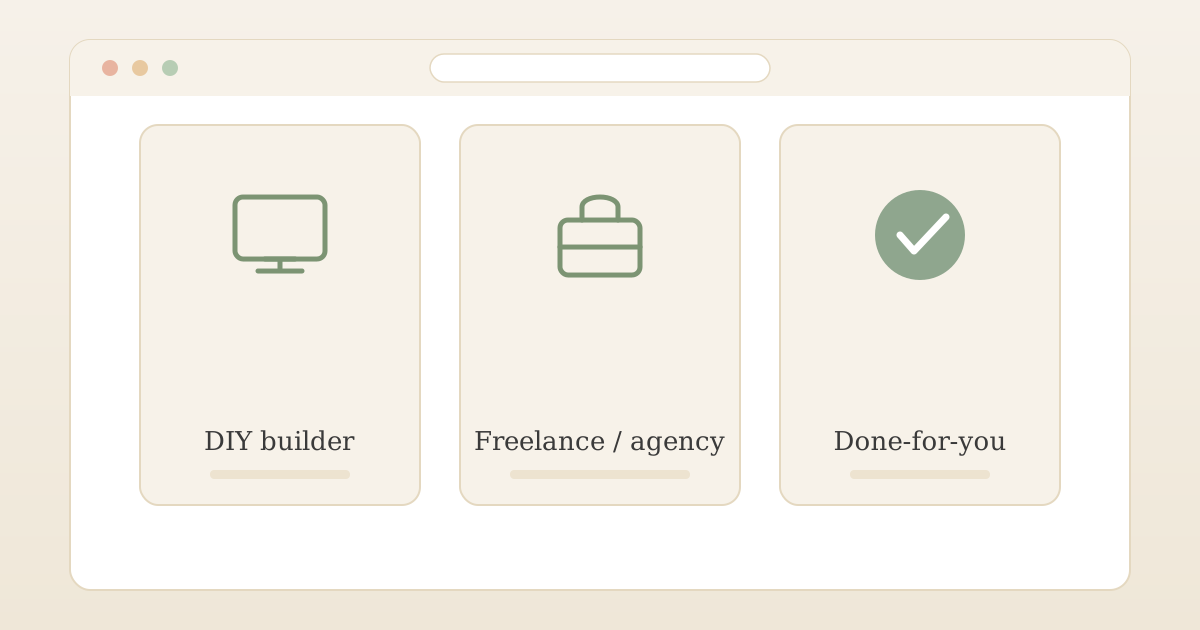
"How much does a website cost?" doesn't have one honest answer, because it depends which of three quite different routes you take: building it yourself, paying a freelancer or agency, or using a done-for-you service. Each has a different price shape, not just a different price.
This guide breaks down what each route typically costs in the UK, what's usually included versus billed as an extra, and the ongoing costs that outlast the initial build.
Key takeaways:
- DIY builders advertise their cheapest price for paying a year upfront; pay month to month with no lock-in instead and it typically costs more, roughly £15–£30 a month, and you're also paying with your own time to design, write and maintain it.
- A freelancer or agency usually charges £800–£3,000+ upfront, plus separate ongoing hosting and per-edit or per-hour fees.
- A done-for-you service like UpTopWeb folds design, hosting and edits into one monthly fee, often with no upfront cost.
- Whichever route you choose, budget for the ongoing costs (domain, hosting, email, maintenance) that continue for as long as the site is live.
- For what the site itself needs to include once it's built, see our guide to what a therapist website should include.
- For the full picture — design, SEO and AI search, real examples and pricing in one place — see our complete guide to websites for therapists.
The short answer: three routes, three price shapes
| Route | Typical upfront cost | Typical ongoing cost | Your time |
|---|---|---|---|
| DIY builder | £0 | ~£15–£30/month paid monthly, less if paid annually upfront | High: design, copywriting and edits are on you |
| Freelancer or agency | £800–£3,000+ | Hosting and maintenance, often billed separately | Low once briefed, but a wait of several weeks |
| UpTopWeb | £0 | £19.99/month, or £15.99/month paid annually, hosting and edits included | Low: you review and approve rather than build |
The DIY and freelancer/agency figures are typical ranges, not quotes, since prices shift over time and by provider; treat them as a starting point for comparing quotes, not a guarantee of what you'll pay. The UpTopWeb figures are our own current prices, checked August 2026.
1. Building it yourself with a website builder
Platforms such as Wix and Squarespace let you build and host a site on one plan. Watch how the headline price is billed, and how openly each one shows you the alternative. Squarespace is upfront about it: its pricing page has a plain "pay annually" / "pay monthly" toggle, showing £12 a month paid annually against £16 a month paid monthly with no lock-in, a difference of around a third. Wix isn't: its public pricing page only ever shows the annual-prepay rate, with no monthly toggle, so the real pay-monthly figure, roughly £15 a month or more, doesn't surface until you're partway through checkout and have already picked a plan. Prices rise further from there for higher tiers with ecommerce features most therapists don't need. A free plan usually exists too, but it comes with the builder's branding and no custom domain, so most therapists move to the cheapest paid tier fairly quickly.
What that monthly fee doesn't cover is your own time: choosing a template, writing every page, sourcing photos, learning enough of the platform to avoid a clunky result, and coming back to update it as your practice changes. For a therapist balancing this against a full client diary, that time cost is often the real price of the DIY route, not the figure on the pricing page.
2. Hiring a freelance web designer or agency
A UK freelance web designer typically charges somewhere in the £800–£3,000+ range for a straightforward small-business site, or works on an hourly or day rate instead of a fixed quote. Larger agencies, more custom design work, or built-in booking and payment systems generally sit at the higher end of that range, and sometimes above it. Expect a build timeline of several weeks from initial brief to launch, rather than days.
That upfront fee usually covers the design and build only. Hosting, domain registration, and ongoing changes after launch are commonly billed separately, whether as a recurring hosting fee, an hourly rate for edits, or both. Ask exactly what's included in the quote and what counts as a chargeable extra before you sign anything, since this is where freelance and agency costs most often creep upward after the initial number.
3. What actually drives the price up or down
Whichever route you're comparing, the same handful of factors explain most of the price difference between a cheap quote and an expensive one:
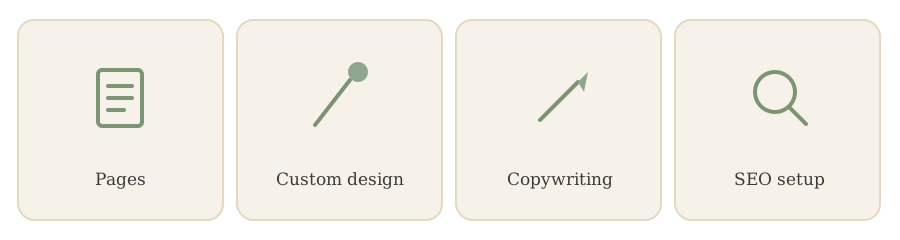
- Number of pages: a homepage, about page, one service page and a contact page costs less to build than ten specialism pages.
- Custom design versus a template: a bespoke layout costs more than adapting an existing template to your colours and content.
- Copywriting: whether you write the words yourself or pay for professional copywriting.
- SEO and AI search setup: basic technical structure so search engines and AI tools can understand and surface your site.
- Booking or payment integration: connecting a calendar, enquiry form or online payment system adds build time.
A quote that looks cheap but excludes copywriting, SEO setup or a booking system isn't necessarily cheaper than one that includes them; it's just deferring that cost to later, or to your own time.
4. The ongoing costs that catch people out
Almost every route has costs that continue for as long as the site is live, separate from however much the initial build cost:
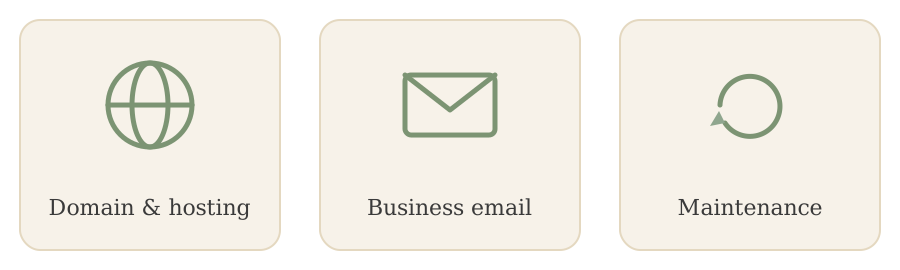
- Domain renewal: usually an annual fee to keep yourname.co.uk (or .com) registered to you.
- Hosting: keeping the site online, fast and secure, whether that's bundled into a builder plan or billed separately by a freelancer.
- Business email: a professional address at your own domain, rather than a free personal email account.
- Paid apps or plugins: booking systems, forms or analytics tools that some builders charge for separately.
- Maintenance and updates: software updates, security patches, and the time or budget to keep content current as your practice changes. See our guide to website maintenance for therapists for what that typically involves and costs.
Ask any provider, DIY platform included, to lay out these costs for a full year, not just the headline monthly or upfront figure.
5. Is a therapist website cost tax-deductible?
For most self-employed therapists, website and hosting costs count as an allowable business expense. HMRC's guidance on marketing, advertising and subscription costs specifically lists "advertising or marketing, for example website costs" as an example of what you can claim, provided the expense is wholly and exclusively for your business. This is general guidance rather than advice for your specific circumstances, so check with an accountant if you're unsure how it applies to you, particularly if you use the site for anything beyond the practice itself.
If you're still working out your wider practice costs and how they feed into your fees, our guide to setting up a private therapy practice in the UK covers budgeting for insurance, supervision and other overheads alongside the website itself.
6. Where a done-for-you service fits
A done-for-you service sits between the other two: someone else designs, builds and hosts the site, but instead of a large upfront fee, the cost is folded into one ongoing monthly payment. At UpTopWeb, for example, the design and build are free, with a single £19.99 a month fee covering hosting, support and unlimited edits (or £15.99 a month if paid annually), and a 10-day trial to review the site before billing starts. The trade-off compared with a bespoke freelance build is less scope for a fully custom design; the trade-off compared with DIY is that you're reviewing and approving rather than building it yourself.
Whatever provider you compare this against, ask the same questions: what's included in the monthly fee, what counts as an extra, and what happens to the site (and your content) if you ever want to leave.
7. Which route actually suits you
There's no universally "best" option, only a best fit for your time, budget and how hands-on you want to be:
- Choose DIY if you have more time than budget, you're comfortable learning a new tool, and you're happy to write your own copy.
- Choose a freelancer or agency if you want a fully bespoke design, have a clear budget for an upfront fee, and can wait several weeks for the build.
- Choose done-for-you if you want a professional result without a large upfront cost or the time investment of building it yourself.
Questions to ask before you pay for a therapist website
Whichever route you're comparing, ask each provider the same set of questions so quotes are genuinely comparable:
- What's included in the price, and what's billed separately?
- Is hosting included, and if not, how much does it cost?
- How much does a change or edit cost after launch, and how is it billed?
- Is copywriting included, or do I need to supply all the text myself?
- Is basic SEO setup included?
- What happens to my content and domain if I want to leave later?
Frequently asked questions
How much does a therapist website cost in the UK?
It depends on the route. DIY builders advertise their lowest price for paying a year upfront; paying month to month with no lock-in typically costs more, from around £15 a month including VAT (Squarespace's entry plan, for example, is £12 a month paid annually versus £16 a month paid monthly). A freelancer or agency usually charges an £800 to £3,000+ upfront project fee, plus separate ongoing hosting. A done-for-you service folds the build and hosting into one monthly fee, often with no upfront cost at all; UpTopWeb, for example, charges £19.99 a month with no upfront fee, or £15.99 a month if paid annually.
Is a free website builder good enough for a therapist website?
A free plan can work for testing an idea, but it usually comes with builder branding, no custom domain, and limits on pages or storage. Most therapists move to a paid plan once they want a professional domain (yourname.co.uk) and to remove the builder's branding.
What ongoing costs does a therapist website have, beyond the build?
Budget for domain renewal (usually yearly), hosting, a business email address, any paid apps or plugins, and time or budget for maintenance and content updates. These continue for as long as the site is live, regardless of which route you chose to build it.
Is a therapist website a tax-deductible business expense?
For most self-employed therapists, website and hosting costs count as an allowable business expense if they're wholly and exclusively for the practice, per HMRC's guidance on marketing and advertising costs. Check with an accountant for your specific situation, since personal circumstances vary.
Compare like for like, then decide
The cheapest headline price isn't always the cheapest overall once your own time, ongoing fees and missing extras are added back in. Compare quotes against the same list of what's included, not just the number at the top, and once you've picked a route, our guide to what a therapist website should include covers the pages and trust signals worth building in from the start. And if you're still weighing up whether a website beats a directory listing or social media at your current stage, see do therapists need a website?
Get a professional website with no upfront cost
UpTopWeb designs and builds your therapist website for free, with one simple monthly fee covering hosting, support and unlimited edits.
Get a free website