Therapist websites
Do Therapists Need a Website?
Directory listings and social media get you found, but only a website you own shows your fees, policies and FAQs in full. What each gives you, and when to wait.
On this page7 sections
Short answer: not immediately, but most private practices outgrow a directory listing or social media alone fairly quickly. The real question isn't "website or nothing", it's which combination of a directory listing, social media and your own website earns its place at the stage your practice is at now.
Key takeaways:
- A directory listing (BACP's Therapist Directory, Counselling Directory) is a reasonable place to start, but you're working inside someone else's format, rules and subscription.
- Social media builds visibility, but algorithms control who sees it, and there's nowhere to put your fees, policies or a full FAQ.
- A website is the only option you fully own: full control over content, and it's what a prospective client finds when they search your name directly.
- Only 26% of people who've seen a therapist checked their qualifications or registration first, according to a 2026 BACP survey. A website is where that information sits for the clients who do look, and quietly reassures the ones who don't.
- It's genuinely fine to hold off in the very early stage of a practice. See below for when that applies, and for what to budget when you're ready, our breakdown of therapist website costs.
- Ready to make the move? Our complete guide to websites for therapists covers types of practice, what to include, pricing and real examples in one place.
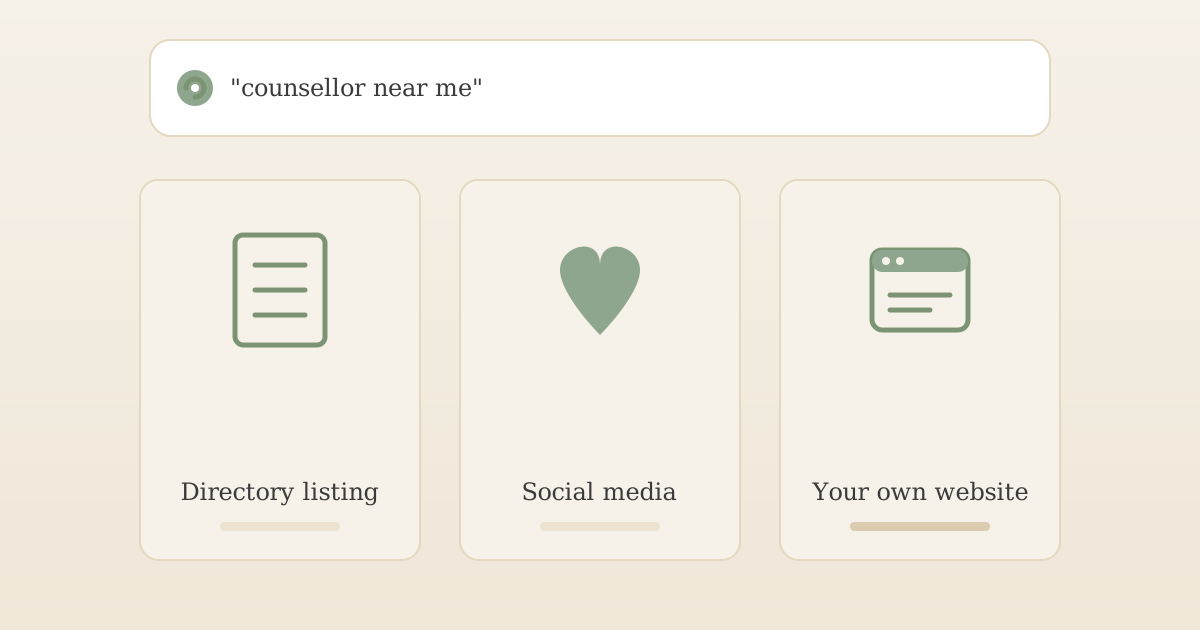
Comparing your three main options
Before deciding whether you need a website, it helps to see what a directory listing and social media actually give you, and don't.
| Directory listing | Social media | Your own website | |
|---|---|---|---|
| Who owns it | The directory | The platform | You |
| Content control | Limited to their profile format | Limited to the platform's format and algorithm | Full control |
| Survives if you cancel or the platform changes | No, listing disappears | No, following and reach can disappear overnight | Yes, it's yours |
| Shows fees, policies and a full FAQ | Rarely, space is limited | No | Yes |
| Found under your own name in Google | Sometimes, inside the directory's own SEO | Rarely | Yes, directly |
| Typical cost | A paid subscription, e.g. Counselling Directory from £24.50 a month | Free | See our therapist website cost guide |
None of these are mutually exclusive. Plenty of established practices keep a directory listing and a social media presence going alongside their own website; each does a slightly different job. If you're deciding whether a directory listing specifically is worth its subscription, our guide to whether therapy directories are worth it looks at the cost and the return in more detail.
What only a website gives you
A directory listing puts you in front of people already browsing that platform. Social media builds warmth and visibility over time. Neither replaces the one thing a website does: give a prospective client, who has already found you (through a referral, a search, a directory listing, or a friend's recommendation) somewhere to go and read everything they need before they decide to make contact.
That includes your full fees, your approach, your specialisms, your policies on cancellations and confidentiality, and a proper FAQ, none of which comfortably fits inside a directory profile's fixed fields or a social media bio. It's also the one place a search engine indexes fully under your own name, rather than as one listing among hundreds on someone else's domain. For what a website should actually include once you decide to build one, see our guide to what a therapist website should include.
Why this matters more than it used to
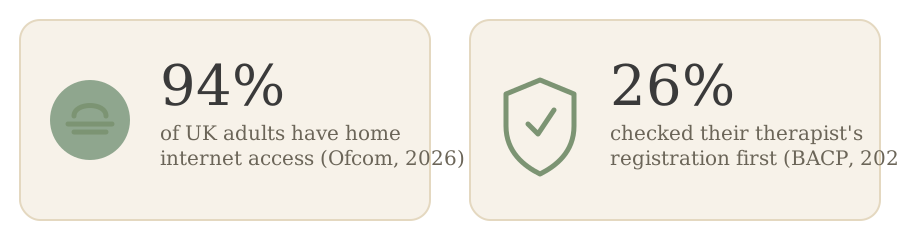
Two data points make the case for having somewhere clients can find and check you. First, being online is no longer optional for the people looking for you: 94% of UK adults have home internet access, according to Ofcom's 2026 Adults' Media Use and Attitudes report, based on a survey of 7,533 UK adults. Whatever route someone takes to find a therapist, checking online is now close to the default.
Second, BACP's 2026 Public Perceptions Survey (5,058 UK adults surveyed) found only 26% of people who saw a therapist checked their qualifications or registration with a professional body beforehand. That cuts both ways: it means most clients won't go looking for proof of your credentials, but it also means the ones who do can't check what isn't published anywhere. A website that plainly states your qualifications, registration body and insurance costs you nothing extra to include, and closes that gap either way.
From November 2026, BACP's updated Ethical Framework makes this more than good practice. It requires members to be honest about their work and give "clear, accurate information about services offered, our level of qualification, experience and our competence to undertake that work", becoming mandatory from 3 November 2026. A website is the most straightforward place to put that information somewhere a client can actually find it, rather than relying on it coming up in the first session.
Important: This is a practical overview, not legal, professional or regulatory advice. Advertising and directory rules vary by professional body and can change over time. Check the current guidance from your own registering body before publishing your site.
When it's genuinely fine to wait
A website isn't always the next thing to build. It's reasonable to hold off if:
- You're still finishing the basics of setting up your practice, such as insurance, supervision and your fee structure. Our guide to setting up a private therapy practice in the UK covers what to sort out first.
- Your caseload is already full through referrals, supervision networks or word of mouth, and you're not actively seeking new clients.
- You're testing a specialism or way of working before committing to how you'll present it publicly.
- You genuinely can't commit any budget or time to it yet, and a free directory listing or social profile is covering the gap for now.
None of these are permanent. Most therapists in this position build a website once their circumstances change, not because a website suddenly became essential, but because the case for one was there the whole time and the timing finally caught up.
What it takes to actually get one
The two practical objections to a website are usually cost and effort. On cost, routes range from a free-to-build done-for-you service through to a several-thousand-pound bespoke agency build; our full cost breakdown compares DIY builders, freelancers and done-for-you options like by like. On effort, that depends entirely on the route: a DIY builder asks a lot of your own time, while a done-for-you service is closer to reviewing and approving a draft than building one. A website is only one piece of becoming visible to new clients; see our guide to getting your first counselling clients for how it fits alongside referrals and a directory listing.
Frequently asked questions
Do therapists need a website?
Not on day one, but most private practices benefit from one fairly quickly. A directory listing or social media profile can get you started, but only a website you own gives you full control over your content, your fees, your FAQs and how you show up in a Google search under your own name rather than inside someone else's platform.
Is a directory listing like BACP's Therapist Directory or Counselling Directory enough on its own?
It can work as a starting point, especially while you're building your caseload. The trade-off is that you're working inside their format and their rules, you don't control the layout or the questions asked, and if you ever stop paying the subscription your listing disappears. Many therapists use a directory listing alongside their own website rather than instead of it.
Is social media a substitute for a therapist website?
Not really. Social platforms are good for visibility and warmth, but algorithms decide who sees your posts, older content is hard to find, and there's nowhere for a prospective client to read your fees, policies or a full FAQ in one place. A website gives that content a permanent, searchable home that a social profile can't.
How do clients check a therapist's qualifications or registration?
Inconsistently, in practice. BACP's 2026 Public Perceptions Survey found only 26% of people who saw a therapist checked their qualifications or registration with a professional body beforehand. A website that clearly states your qualifications, registration and insurance makes that information easy to find for the clients who do check, and reassures the ones who don't think to ask.
Start where you are, not where you think you should be
There's no single right moment to build a website, only a right fit for where your practice is now. If you're actively seeking new clients and rely on people finding you independently, the case for one is strong. If your diary is full through referrals, it can genuinely wait. Either way, when you're ready, our guide to what a therapist website should include covers exactly what to put on it.
Get a website with no upfront cost
UpTopWeb designs and builds your therapist website for free, with one simple monthly fee covering hosting, support and unlimited edits.
Get a free website