Starting a practice
How to Set Up a Private Therapy Practice in the UK
A practical guide to setting up a private therapy practice in the UK: qualifications, insurance, fees, client records, marketing and getting found online.
On this page17 sections
Starting a private therapy practice gives you more control over your work, your clients and the direction of your career. But before you begin seeing clients, you need the right professional foundations, clear systems and a way for people to find and contact you.
This guide explains the key steps to starting a private counselling or therapy practice in the UK, from qualifications and insurance to fees, client records, marketing and building a therapist website.
Key takeaways:
- Confirm your qualifications, professional body registration and clinical supervision requirements before seeing clients.
- Decide whether you'll work in person, online or both, and price sessions to cover tax, insurance, supervision and overheads, not just your take-home pay.
- Arrange professional indemnity and public liability insurance, and put secure, GDPR-compliant systems in place for client records.
- Build a clear therapist website and Google Business Profile so the right clients can find, understand and contact you — see our complete guide to websites for therapists for what that involves and what it costs.

Important: This is a practical overview, not legal, tax, regulatory or professional advice. Requirements vary by profession, qualification, professional body and the work you undertake. Check the guidance that applies to your own practice.
| The foundation | What it helps you do |
|---|---|
| Professional practice | Work ethically, safely and within your competence |
| Practical systems | Manage sessions, fees and client information confidently |
| Clear visibility | Help the right clients find and contact you |
1. Check your qualifications and professional requirements
Before offering private therapy, make sure your training and experience are appropriate for the services you plan to provide. For counsellors and psychotherapists, this will usually mean a recognised qualification, plus any further training needed for your approach, client group or specialism.
Review the expectations of your professional body and make sure you understand:
- The qualifications and registration relevant to your role
- Professional membership requirements
- Continuing professional development (CPD)
- Clinical supervision requirements
- Ethical standards and professional conduct
- Any additional training for your specialism
For example, working with children and young people can involve different training, consent and safeguarding considerations from working solely with adults. Many referral routes and directories also expect a current DBS check before they'll work with you; see our guide to DBS checks for therapists for which level applies and how self-employed practitioners now apply for one. If you're wondering whether your own training clears the bar, see our guide to whether a Level 4 Diploma is enough for private practice for what BACP's minimum standard actually requires.
2. Define who you help and the therapy you offer
You do not need to limit yourself to one niche, but clients should be able to quickly understand who you work with and what you can help with. You might support adults, couples, families, children or young people, and focus on areas such as anxiety, relationships, bereavement, trauma, addiction or workplace stress.
Being clear about your practice makes it easier to write your website, choose the right directories and appear in relevant searches, for example anxiety therapist in Leeds or couples counselling in Manchester.
3. Choose how and where you will see clients
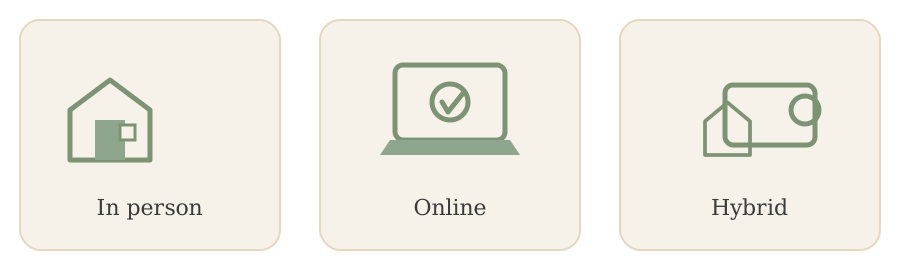
Many therapists work in one of three ways:
- In person: renting a room in a therapy centre, clinic, shared office or dedicated practice space.
- Online: offering sessions remotely through a suitable video platform.
- Hybrid: combining online and in-person appointments.
If you offer face-to-face therapy, consider transport links, parking, accessibility, privacy, the feel of the building, room availability and cost. For online work, think about privacy, client consent, your technology and whether remote therapy is suitable for the clients you plan to see.
| Model | Best for | Main consideration |
|---|---|---|
| In person | Local clients who value face-to-face sessions | Room availability and ongoing hire costs |
| Online | Flexible UK-wide work with lower overheads | Privacy, technology and client suitability |
| Hybrid | Offering clients more choice | Managing two sets of systems and availability |
4. Set therapy fees that work for your practice
There is no single correct price for a therapy session. Your fee may depend on your qualifications, experience, location, specialism, session length, room costs and whether you work online or in person.
Research comparable therapists in your area, then work backwards from the income you need. Remember that your session fee is not your take-home pay: account for tax, insurance, supervision, room hire, software, memberships, CPD and marketing.
You may also want to decide whether to offer reduced-fee spaces, how payment is collected and what happens when a client cancels late or does not attend.
A useful pricing check: calculate your monthly practice costs, add the income you need, then divide by a realistic number of paid sessions, not your ideal maximum diary capacity.
For a fuller walkthrough of this calculation, including a worked example and typical UK fee ranges by qualification, see our guide to how much counsellors should charge.
5. Arrange appropriate insurance
Insurance is an essential part of setting up a private therapy practice. Depending on your profession and circumstances, you may need or want professional indemnity insurance, public liability insurance and other relevant cover.
Check your professional body's requirements and make sure your policy covers the way you work, including online therapy if you provide it. For a fuller look at what each type of cover protects against, what BACP, UKCP and HCPC actually require, and typical costs, see our guide to professional indemnity insurance for therapists.
6. Set up the business side of your practice
Many therapists begin as sole traders, since it needs no separate registration beyond Self Assessment once your income passes £1,000 in a tax year. Others operate through a limited company, a separate legal entity that must be registered with Companies House before you trade through it. The two are taxed differently: a sole trader's profit is taxed once, as personal Income Tax and National Insurance, while a limited company's profit is taxed as Corporation Tax first and then taxed again on whatever you draw out as salary or dividends. Neither is automatically better, so the right choice depends on your profit level, other income and plans, and professional accounting or tax advice can be useful. For a fuller comparison, including liability and ongoing admin, see our guide to sole trader versus limited company for therapists.
Put simple financial systems in place from the start. Keep track of income, invoices, expenses and taxes, and consider using a separate account for practice finances. You should also understand any registration and record-keeping obligations that apply to you.
7. Protect client data and keep records securely
Therapy involves highly sensitive information. Plan how you will store and protect client contact details, notes, assessments, consent records, correspondence, appointment information and payment records.
Your responsibilities under UK data protection law apply to the systems you choose, including email, cloud storage, booking software and website contact forms. Do not use a tool simply because it is convenient; first check that it is suitable for handling professional client information. For a fuller walkthrough, including whether you need to register with the ICO and how long to keep records, see our guide to GDPR for therapists.
8. Put clear policies and procedures in place
Before your first client session, prepare the documents and processes that explain how your practice works. Depending on your services, these may cover:
- Privacy and data protection
- Confidentiality and its limits
- Fees, payment and cancellations
- Online therapy
- Safeguarding and emergency situations
- Complaints
- Boundaries and communication
Your supervisor and professional body can help you ensure that your policies are appropriate.
9. Find a clinical supervisor for private practice
For many counsellors and therapists, regular clinical supervision is a professional requirement and an important source of support. A good supervisor gives you space to reflect on your work, ethical questions, professional development and challenges that arise in private practice.
Confirm the supervision requirements relevant to your profession and membership before you launch.
10. Build a clear, professional online presence
Your online presence should help a potential client answer a few simple questions: Who are you? Who do you help? What is your approach? Where do you work? What do sessions cost? How can they get started?
Start with the essentials:
- Your name and professional title
- Qualifications and relevant memberships
- Who you work with and your areas of practice
- Your approach to therapy
- Location and online availability
- Session length and fees
- Clear contact or booking details
Create a therapist website
A website is the home of your private practice online. People may find you through Google, a directory, social media or a personal recommendation; your website gives them a calm, clear place to decide whether to contact you.
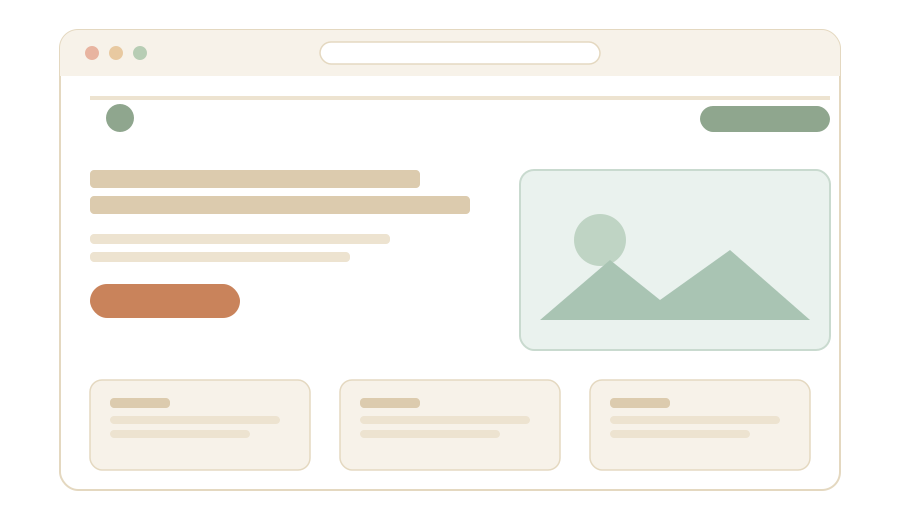
Include a focused homepage, an about page, service pages, fees, frequently asked questions and an easy way to enquire or book. Keep the language warm and straightforward. A potential client should not have to search for the basics. For a fuller breakdown of the pages and trust signals to include, see what a therapist website should include, and for a breakdown of typical costs across DIY builders, freelancers and done-for-you services, see how much a therapist website costs.
Make your website easier to find on Google
Search engine optimisation (SEO) helps search engines understand what you offer and where you work. Use natural, specific language on your site (for example, "integrative therapist in Bristol" or "online anxiety counselling across the UK") where it accurately describes your practice.
Avoid trying to rank for every possible therapy term. Helpful pages that clearly explain your services, locations and approach are more useful to both clients and search engines than thin, repetitive content. For the fuller picture, including page titles, meta descriptions and local SEO, see our guide to SEO for therapists.
| Website page | Purpose for prospective clients | SEO opportunity |
|---|---|---|
| Homepage | Explains who you help and how to begin | Your core service and location |
| About page | Builds trust in your experience and approach | Your name, credentials and therapeutic approach |
| Service pages | Answers questions about specific support | Relevant therapy types and client needs |
| Contact page | Makes the next step feel simple | Location, service area and contact details |
11. Set up your Google Business Profile
If you see clients in person and are eligible, a Google Business Profile can help your practice appear in local search results. Keep your practice name, address or service area, opening hours, website and contact information accurate and consistent with your website.
12. Use relevant therapy directories
Directory profiles can help new practices become visible to people already looking for a therapist. They work best as part of a wider approach rather than as your only source of enquiries.
Your own website gives you more control over how you present your practice and lets prospective clients learn more before they make contact.
13. Market your therapy practice without trying to do everything
You do not need to be on every social platform or publish a new article every week. Start with a few channels that suit your practice and are sustainable to maintain:
- Google and local SEO for people actively looking for therapy
- Therapy directories for targeted visibility
- Professional referrals from GPs, therapists, healthcare professionals and local organisations
- Social media where it fits your audience and boundaries
- Helpful content that answers genuine client questions
Over time, track where your enquiries come from and focus on the channels that are working. For a fuller look at combining referrals, directories and a simple website in those early months, see our guide to getting your first counselling clients.
14. Make it easy to take the first step
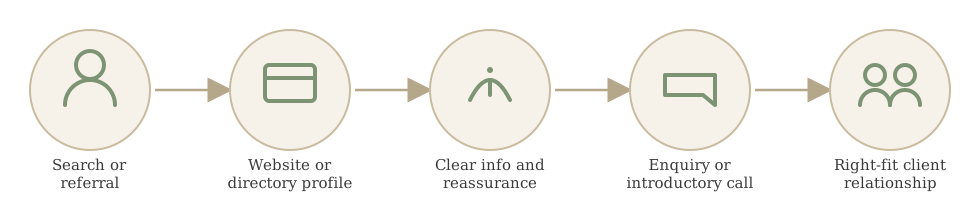
Contacting a therapist can feel significant. Make the next step as clear and low-friction as possible by offering an obvious route to enquire, call, email or book.
If you provide a free introductory call, explain what it involves, how long it lasts and whether there is any charge. Clear expectations can make it easier for the right client to reach out.
Private therapy practice checklist
Before you launch, check that you have:
- Appropriate qualifications and training
- Registration or professional membership where relevant
- Regular supervision
- Appropriate insurance
- A clear fee structure
- A suitable place or platform for sessions
- Secure systems for appointments and client records
- Relevant policies and procedures
- A professional email address
- A therapist website
- A Google Business Profile, where appropriate
- Relevant directory profiles
- A plan for attracting your first clients
- A clear way for clients to contact or book with you
Frequently asked questions
How much does it cost to start a private therapy practice in the UK?
Costs vary widely. An online-only practice may have lower overheads than one renting a dedicated therapy room. Typical costs can include insurance, supervision, professional membership, room hire, website hosting, a domain name, email, booking software, accounting, marketing and CPD. Calculate your expected monthly costs before setting your fees.
How do new therapists get clients?
Most new practitioners benefit from being visible in more than one place: their own website, Google, relevant directories, professional referrals and carefully chosen content or social media. Review which sources bring the most suitable enquiries, then invest more effort there.
Do I need a website for my private therapy practice?
You can begin without one, but a professional website is a valuable long-term asset. It lets potential clients understand your approach, fees, availability and contact process, and it gives you a foundation for being found through Google.
Start with the essentials
Setting up a private therapy practice can feel like a lot to organise. Start with a safe, professional foundation: appropriate training and support, secure systems, clear policies, a workable fee structure and a straightforward way for clients to find and contact you.
You can refine your website, marketing and processes as your practice grows; our guide to marketing yourself as a therapist covers how to do that consistently once the basics are in place. The most important thing is that someone looking for help can quickly understand who you are, what you offer and how to take the next step.
Get a free website for your therapy practice
UpTopWeb creates calm, professional websites for counsellors, therapists and therapy practices, designed to help the right clients find you and get in touch.
Get a free website