Marketing
How to Market Yourself as a Therapist
A practical, ethics-first guide to marketing yourself as a therapist in the UK: positioning, professional body rules, and a realistic weekly routine.
On this page8 sections
Most therapists didn't train to become marketers, and it shows: "marketing" can feel at odds with the humility and confidentiality that good clinical practice asks for. This guide is about how to market yourself as a therapist in a way that still feels honest, specifically for UK counsellors and psychotherapists already in (or about to start) private practice, rather than a hard sell you'd wince at recommending to a client.
Key takeaways:
- Marketing yourself well doesn't mean advertising harder, it means being clear and consistent about who you help, so the right client recognises themselves in your website, listing and profile before they contact you.
- BACP and UKCP don't agree on client testimonials in advertising, check your own professional body's current rules before using any.
- A single, honest positioning sentence, repeated everywhere you show up, does more than a dozen scattered marketing tactics.
- Consistency across your website, directory listing and Google Business Profile matters more than being active on every channel.
- A modest, repeatable weekly routine (well under an hour) is enough to keep marketing moving without it taking over your practice.
How to market yourself as a therapist without it feeling like selling
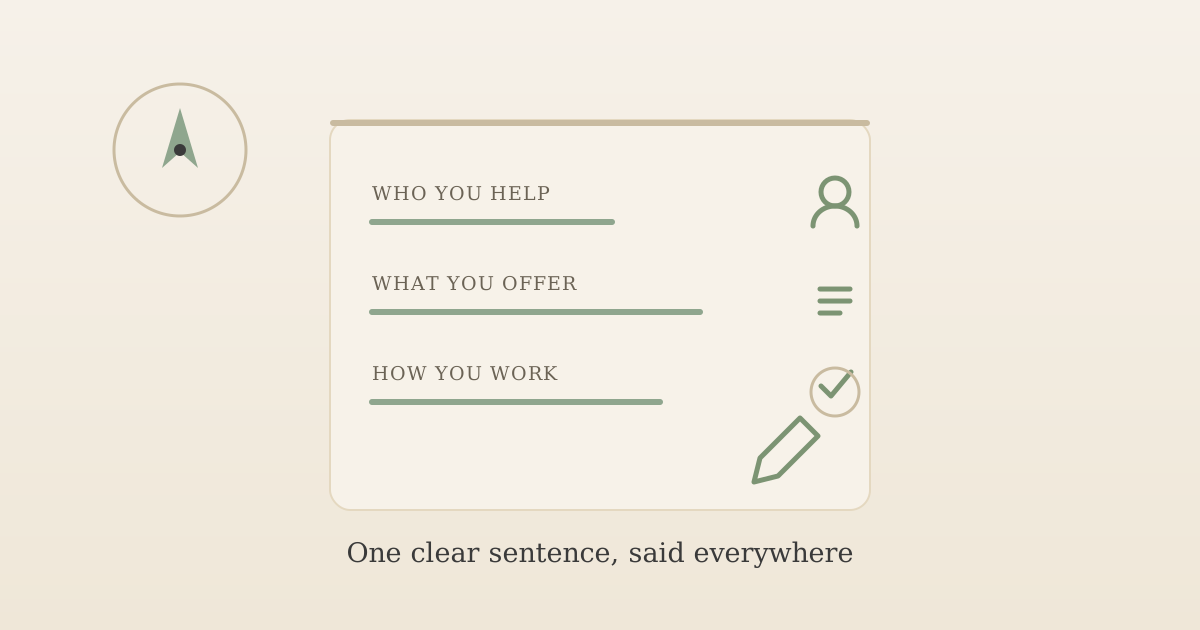
The discomfort a lot of therapists feel about marketing usually comes from picturing the wrong thing: a salesperson chasing conversions. That's not what this is. For a therapy practice, marketing is closer to being legible, making it easy for someone who's already looking for help like yours to recognise, from your website or listing, that you're a good fit before they ever pick up the phone.
That reframe matters because it changes what "good marketing" looks like. It's not louder claims or more channels, it's clarity: a clear description of who you work with, what you offer, and how sessions work, said the same way everywhere a prospective client might find you. If you're newly qualified and still building your first caseload, our guide to getting your first counselling clients covers the specific channels (referrals, a directory listing, a simple website) worth prioritising first. This guide picks up from there: once you have some visibility, how do you make the most of it honestly and sustainably?
Check your professional body's rules before you start
Important: This is a practical overview, not legal, tax, regulatory or professional advice. Professional-body advertising and ethics rules can vary by registration and change over time. Check the guidance that applies to your own registration before publishing any marketing material.
Before writing a word of marketing copy, it's worth knowing where the lines are. Professional bodies don't fully agree on this, which catches out therapists who assume one body's rule applies to all. UKCP's Code of Ethics and Professional Practice is explicit: clause 13 states members must "not make any claims which you cannot demonstrate to be true or include testimonials from clients in any advertising." BACP's Ethical Framework doesn't set an equivalent outright ban on testimonials, but does require confidentiality, client autonomy and trust to be protected in anything you publish.
The Advertising Standards Authority's guidance on health therapies applies on top of your professional body's rules, and is worth reading regardless of registration: it warns against efficacy claims you can't substantiate, a common trap when marketing copy tries to sound reassuring. Its guidance on testimonials and endorsements is the general advertising-law backdrop behind why professional bodies are cautious about them in the first place. Whichever body you're registered with, check its current position before including a testimonial or a specific claim about outcomes, and when in doubt, leave it out rather than risk a complaint.
Get clear on who you actually help
Before any channel or tactic, get one sentence right: who do you help, with what, and how? A simple structure that works for most solo practices is "I help [audience] with [issue], using [approach]", for example "I help new parents with postnatal anxiety, using integrative talking therapy." It doesn't need to be clever. It needs to be specific enough that the right person reading it thinks "that's me", and general enough that it still reflects the real range of clients you see.
This matters more than it sounds like it should, because a vague "I work with a wide range of issues" description does the opposite of what marketing is meant to do: it asks the reader to do the work of figuring out if you're relevant to them, and most people won't bother. If you're still working out your specialism or service boundaries, our guide to setting up a private therapy practice in the UK covers deciding on those foundations before you start marketing around them.
Say it the same way everywhere
Once you have a positioning sentence, the highest-value marketing work is simply repeating it consistently: the same description of who you help, in roughly the same words, on your website's homepage, your directory listing, and your Google Business Profile if you see clients in person. Our guide to what a therapist website should include covers the specific pages and trust signals worth having so a visitor can act on that positioning once they find it. For local visibility specifically, our local SEO checklist for therapists walks through keeping your Google Business Profile accurate, which matters more for marketing consistency than most therapists expect: a mismatched name, area or specialism between your website and your listing quietly undermines the trust you're trying to build.
Social media is optional on top of this, not a substitute for it. It can build warmth and recognition over time, particularly for therapists who enjoy writing or recording short-form content, but there's no evidence it converts better than a clear, consistent website and listing, and an algorithm decides who sees each post rather than you. Treat it as something you add because it suits you, not a box every therapist has to tick. If you do use it, our guide to social media boundaries and ethics for therapists covers what BACP and UKCP expect around client boundaries and confidentiality.
Write about what you actually know
The most sustainable form of therapist marketing isn't a campaign, it's a small, steady habit of writing short, genuinely useful answers to the questions prospective clients already ask you: what a first session involves, how long people typically work with you, what your specialism does and doesn't cover. This builds trust before contact in a way a generic "About Me" page can't, because it demonstrates how you think rather than just asserting that you're experienced.
Keep two boundaries in mind when you do this. First, never write about identifiable client material, even anonymised, without being confident it can't be traced back to a real person; general patterns and non-identifying examples are safer ground. Second, keep the tone informational rather than persuasive, a short, honest answer to a real question reads as trustworthy; the same content dressed up with urgency or before-and-after claims reads as exactly the kind of marketing that makes people distrust therapists' websites.
A realistic weekly time budget
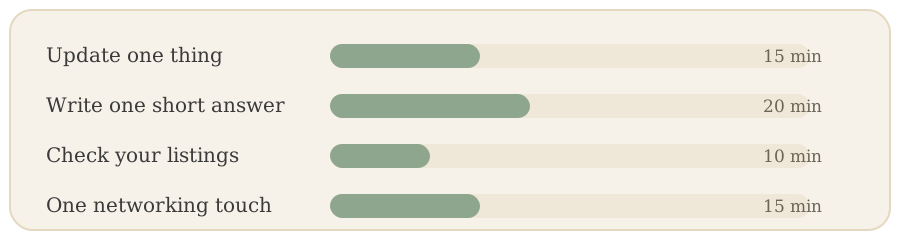
Marketing yourself shouldn't compete meaningfully with client work, and it doesn't need to. A sustainable routine for an established solo practice is well under an hour a week: a small website update, one short piece of writing, a quick check that your listings are still accurate, and one small networking touch, a message to a colleague, supervisor or local GP practice. That's a realistic weekly total, not a daily commitment. It'll need more time up front if you're newly qualified, launching a new specialism, or haven't touched your website or listings in a while, but the ongoing routine, once things are set up properly, is genuinely small.
Frequently asked questions
Is it OK for therapists to market themselves?
Yes. Marketing isn't the same as pushy advertising, it's making it easy for the right client to find and trust you before they ever get in touch. What matters is how you do it: stay honest about what you offer, avoid claims you can't support, and follow your professional body's advertising and confidentiality rules.
Can therapists use client testimonials to market their practice?
Check your professional body first, because they don't agree. UKCP's Code of Ethics and Professional Practice explicitly bans including client testimonials in any advertising material. BACP's Ethical Framework doesn't set an equivalent outright ban, but does require confidentiality, client autonomy and trust to be protected in anything you publish. Whichever body you're registered with, never publish a testimonial without explicit, informed consent.
How much time should a therapist spend on marketing each week?
There's no fixed number, but 45 to 60 minutes a week is a realistic, sustainable routine for most established solo practices, split across a small website update, one short piece of writing, and checking your listings are accurate. A brand-new practice, or one launching a new specialism, usually needs more time up front.
Do therapists need to be on social media to market themselves?
No, it's optional. Social media can build warmth and recognition over time, but a consistent, accurate website plus a directory listing and (if you see clients in person) a Google Business Profile is enough of a foundation on its own. Add social media later if it genuinely suits how you like to work, not because it feels compulsory.
Start with one honest sentence
You don't need a marketing plan, a content calendar or a presence on every platform to market yourself well as a therapist. Start with one honest sentence about who you help, say it consistently on your website, your listing and your Google Business Profile, and build outward from there as your practice grows.
A website that says the same honest thing, everywhere
UpTopWeb designs and builds your therapist website for free, with one simple monthly fee covering hosting, support and unlimited edits.
Get a free website