Blogging & content
Blogging for Therapists: A Complete Guide
A practical guide to blogging as a UK therapist: what to write about, the confidentiality line to hold, and a realistic posting routine that works.
On this page9 sections
Blogging for therapists is one of the few marketing tools that lets a prospective client get a genuine sense of how you think before they ever get in touch. Done well, it's also one of the lowest-pressure ways to be found: a clear, specific answer to a question someone is already searching for does more work than a generic "About Me" page ever will. This guide covers what to actually blog about as a UK counsellor or therapist, the confidentiality line to hold before you publish anything, how to structure a post so it's genuinely useful, and a realistic posting rhythm that won't compete with client work.
Important: This is a practical overview, not legal, regulatory or professional advice. Confidentiality and advertising rules vary by registration body and can change over time. Check the current guidance from your own professional body before publishing anything that touches client work.
Why blogging for therapists is worth the effort
Most therapist websites are built around a handful of static pages: home, about, services, fees, contact. Those pages tell a visitor what you offer. A blog does something different: it shows them how you think, in your own words, on the specific questions they actually have. A prospective client reading a clear, honest answer to "what does a first session actually involve" gets a much stronger sense of fit than they would from a paragraph of qualifications and approach names.
There's a practical side to this too: each blog post is a new, specific page Google (and increasingly, AI search tools) can match to a real search in a way your homepage never could. It's a slow channel, not a fast one, so treat it as something you build steadily alongside the faster routes covered in our guide to getting your first counselling clients, not a replacement for them. The "Blogging and SEO for therapists" section below covers exactly how to write a post that actually benefits from this.
What to blog about
The best source of topics isn't a content calendar template, it's your own inbox and intake calls. Every question a prospective client has asked before booking is a candidate blog post. A few categories that consistently work well for a therapy practice:
- Logistics and practicalities. What a first session involves, how long people typically work with you, whether you offer online or in-person sessions, how fees and cancellations work. These are the questions people are often too shy to ask directly but will happily read about first.
- What your specialism does and doesn't cover. If you work with a specific issue or approach, a plain-English explanation of who it's a good fit for (and who it isn't) builds trust faster than a list of modality names, and it pre-qualifies enquiries so fewer end up being the wrong fit.
- Common misconceptions. Gently correcting a widespread misunderstanding about therapy, or about your specific approach, is genuinely useful content and tends to be the kind of thing people search for by name.
- Practical, non-clinical guidance. General, non-identifiable advice on things like managing a difficult conversation or building a small daily habit sits comfortably alongside your other content, as long as it reads as general guidance rather than a diagnosis or a treatment plan for a specific reader.
What to avoid is content that reads as clinical advice aimed at a stranger reading it out of context, rather than something grounded in the relationship you'd actually have with a client. If a post could reasonably be mistaken for a diagnosis, a treatment recommendation or advice on stopping medication, it belongs in supervision or a professional forum, not a public blog post.
Two boundaries worth holding before you publish
Confidentiality first, always. Never write about identifiable client material, even anonymised, even years later, even if you're confident the details are disguised. The BACP Ethical Framework commits members to "protecting client confidentiality and privacy", and that commitment doesn't loosen just because the medium is a blog post rather than a case note. If a real client's situation genuinely inspired a topic, write about the general pattern rather than their specific circumstances, the same discipline you'd already use describing a case in supervision.
Stay general, not clinical. A blog post reaches a stranger with no context about their situation, so keep the tone informational rather than prescriptive. "Here's a general pattern I often see, and one way to think about it" reads as trustworthy and safe. "Here's what you should do about your anxiety" reads as advice given without an assessment, which is a different (and riskier) thing to publish. Our guide to social media boundaries and ethics for therapists covers the same underlying principle for platforms beyond your own website, since the confidentiality line doesn't move depending on where you're publishing.
Blogging and SEO for therapists
A blog post that genuinely helps a reader and one that performs well in search tend to be the same post, because both reward the same thing: a clear, specific answer to a real question. You don't need a separate "SEO strategy" for your blog, just a few habits worth making automatic:
- Answer the actual question early. If the title is "How long does counselling usually take?", the first couple of sentences should give a real answer, not build up to one three paragraphs in. This matters for a human skimming the page, and for how Google and AI tools identify what a page is actually about.
- Use one topic per post. A post trying to cover "anxiety, depression and how therapy works" ends up saying little about any of them. Narrow, specific posts are easier for both a reader and a search engine to match to a specific question, the same "one clear page per topic" principle covered in our guide to SEO for therapists.
- Write the way people actually search, not in clinical or academic language. "Does online counselling actually work?" is how someone searches; "the efficacy of remote therapeutic modalities" isn't. Work your genuine keyword naturally into the title, one heading and the opening paragraph rather than repeating it throughout the post; Google's own guidance on creating helpful content treats obvious keyword stuffing as something its systems work against, not a ranking tactic.
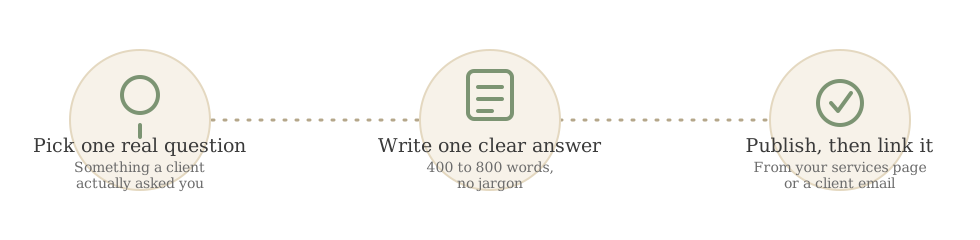
- Match the length to the question, not a target number. 400 to 800 words comfortably answers most single-topic questions. Padding a thin answer to hit a word count reads as thin either way, to a person and to a search engine, and a genuinely thorough answer to a bigger question is allowed to run longer.
- Add one relevant image, captioned properly. A photo, a simple diagram or even a calming stock image breaks up long text and gives you a real, descriptive caption to write, a minor but genuine relevance signal for image search on top of making the post itself more inviting to read.
- Link it to something real. Link a new post from a relevant services page, or mention it in a welcome email, and link back to your own related posts and pages from within it. This helps a reader go deeper, and helps Google understand how your pages relate to each other.
None of this means writing differently "for AI." Our dedicated guide to AI search for therapists covers Google's own guidance in full: no special writing style, chunking format or markup is required to be cited by AI Overviews or tools like ChatGPT, the same fundamentals above are what these systems draw on too. If you want the specific technical checklist behind that, see our guide to making your therapist website ready for AI search.
The side benefits are worth knowing about too. A well-structured post can occasionally get pulled into an AI Overview or cited by a tool like ChatGPT even without ranking first on a traditional results page, since these systems tend to favour the same clear, specific answers Google's helpful-content guidance rewards. Beyond search, a small back-catalogue of genuinely useful posts is content you can reuse: a shorter version for social media, a link in a welcome email, or an answer you can point a prospective client to directly instead of retyping it each time you're asked.
A realistic posting rhythm
Blogging doesn't need to be frequent to work. Once a month, or even once every six weeks, is a genuinely sustainable rhythm for a solo practice, and a small number of well-written posts that actually answer a real question outperforms a burst of thin ones written to hit a schedule. If you're weighing this up against everything else on your plate, our guide to marketing yourself as a therapist covers a realistic weekly time budget for marketing generally, of which a blog post is usually one small, occasional part rather than a weekly commitment.
It's fine to go quiet for a few months and come back to it. An older post that's still accurate keeps doing its job whether or not you're actively adding new ones. The only real maintenance is a periodic check that nothing you've written has gone out of date, particularly anything mentioning fees, availability or a specific service you no longer offer.
Where blogging fits with everything else
A blog post works best as part of a wider, already-consistent presence, not as a standalone effort. If you're active on social media, a new post is a natural, low-effort thing to mention there. If you see clients locally, a post genuinely relevant to your area (a local resource, a common local concern) can support the same local SEO work as your Google Business Profile. And if your website doesn't yet have the foundational pages a blog should point back to, our guide to what a therapist website should include covers what to get in place first.
Ten starting blog ideas
If a blank page is the hardest part, here's a genuinely usable starting list:
- What happens in a first session
- A round-up of local support and resources in [your area]
- How long counselling usually takes
- What [your specialism] actually involves, in plain English
- A common misconception about [your approach]
- Questions to ask before choosing a therapist
- What online therapy is actually like
- How fees and cancellations typically work
- Signs it might be time to look for support
- What makes a good fit between a client and a therapist
Frequently asked questions
What should a therapist blog about?
Start with the questions clients already ask you before their first session: what a session actually involves, how long people typically work with you, what your specialism does and doesn't cover, and practical logistics like fees or how online sessions work. These are safer, more useful topics than general mental health advice, and they answer exactly what a prospective client is trying to work out.
Is it safe for therapists to blog about client issues?
Only in general terms, never with identifiable detail, even anonymised. The BACP Ethical Framework's commitment to protecting client confidentiality and privacy applies to a blog post exactly as it applies anywhere else you might describe your work. Write about patterns and general approaches you'd be comfortable discussing openly in supervision, not a specific person's story, however disguised.
How often should a therapist publish a blog post?
Once a month is a realistic, sustainable rhythm for most solo practices, and a handful of genuinely useful posts beats a burst of ten thin ones. Search engines and readers both respond better to one clear, well-written answer to a real question than to frequent, rushed posts that don't say much.
Does blogging actually help a therapist show up on Google?
It can, but not on its own and not quickly. A blog post is one more page Google can match to a specific search, and answering the actual questions clients type in is exactly the kind of genuinely helpful content Google's own guidance says its systems are built to reward. The same clear, specific writing can occasionally get picked up by AI search tools too, without needing a different writing style for them. It's a slow, compounding channel, not a substitute for the core pages on your website.
Start with one real question
You don't need a content calendar, a publishing schedule or a backlog of fifty ideas to start blogging as a therapist. Pick one question a client has genuinely asked you, answer it clearly and honestly in a few hundred words, and publish it somewhere it'll actually be read. Everything else, the rhythm, the topic list, the structure, gets easier once you've done that once.
A website built to hold what you write
UpTopWeb designs and builds your therapist website for free, with blog pages included, so every post you write has somewhere proper to live.
Get a free website