Starting a practice
How to Get Your First Counselling Clients
Referrals, a directory listing, a simple website and tracking what converts: a realistic guide to finding your first counselling clients in the UK.
On this page11 sections
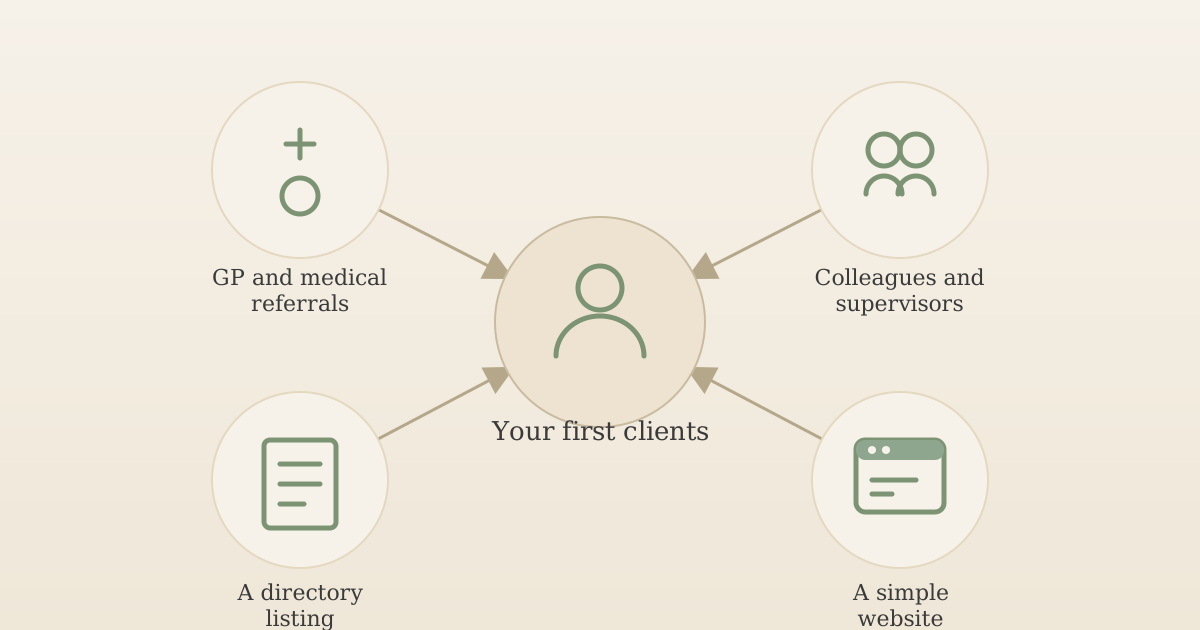
Every new counsellor or therapist runs into the same early question: how do you get your first counselling clients when nobody knows your name yet? The honest answer is that first clients rarely come from one place. They tend to arrive through a mix of professional referrals, a directory listing, a simple website and word of mouth, in whatever combination is realistic for your specialism, location and budget right now.
Key takeaways:
- Referrals are still the single biggest channel: 34% of people who saw a therapist said they were advised to by a medical professional such as a GP, according to BACP's 2026 Public Perceptions Survey.
- A directory listing is a fast, relatively low-cost way to become findable while everything else is still being built.
- A simple website beats no website. It doesn't need every page from day one, just enough to answer who you are, what you offer and how to get in touch — see our complete guide to counsellor website design for what that involves.
- Ask every new enquiry how they found you, and track it. Guessing which channel is working wastes time and, often, money.
- Expect weeks rather than days for a first enquiry, and longer for a full caseload. That's normal, not a sign something's wrong.
Why your first clients rarely come from just one place
It's tempting to treat "getting clients" as a single problem with a single fix, usually whichever channel feels most within reach: build a website, or join a directory, or post on social media. In practice, new practices that get their first enquiries fastest are usually visible in more than one place at once, because different prospective clients discover therapists in different ways. Someone referred by their GP behaves differently to someone searching Google at 11pm, and each channel reaches a different slice of the people looking for you.
Before working through the channels below, it's worth having the basics in place: appropriate qualifications, insurance and supervision. Our guide to setting up a private therapy practice in the UK covers those foundations if you haven't confirmed them yet.
Referrals: the channel most new therapists underestimate
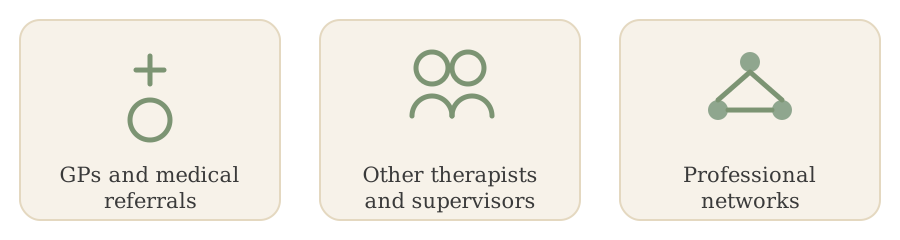
Referrals are, by some distance, the channel most likely to have already brought someone to therapy. Just over a third (34%) of people who saw a therapist in BACP's 2026 Public Perceptions Survey said they were advised to by a medical professional such as a GP. That makes a good relationship with local GP practices worth building early, even if it's as simple as introducing yourself and leaving a professional profile they can point patients to.
Other therapists are a second, often overlooked source. A colleague whose diary is full, who doesn't work with a particular specialism, or who has a client better suited to your approach, is a realistic referral source once they know you and your work. Supervisors, in particular, often hear about capacity and specialism gaps across their supervisees. BACP's Private Practice division exists partly for this reason, describing "networking" and "combating isolation" among its core aims for members working independently; joining a professional network like this is a reasonable step for building the relationships that later turn into referrals.
Important: if anyone offers you a formal referral arrangement involving a fee or commission, check your professional body's current ethical framework and advertising guidance before agreeing. Rules on financial referral arrangements vary by body and this isn't legal or regulatory advice.
A directory listing: quick visibility while you build everything else
A directory listing is usually the fastest way to become findable to people already searching for a therapist, and it doesn't require you to have a website first. BACP's own Therapist Directory costs £76 a year (open only to BACP registered and accredited members) and covers up to six separate listings, including supervision or training services if you offer them. Independent directories like Counselling Directory are also worth considering, with subscriptions from around £24.50 a month.
A directory listing has real limits, though: you're working inside someone else's format, and the listing disappears if you stop paying. For a fuller comparison of what a directory listing, social media and your own website each give you, see our guide to whether therapists need a website. If you're specifically weighing up whether the subscription itself is worth the cost, our guide to whether therapy directories are worth it covers what UK therapists actually say once they've tried one.
A simple website beats no website
You don't need a polished, ten-page website to start getting enquiries. A single clear page that states who you are, your qualifications, what you help with, your fees and how to get in touch already does most of the job a much bigger site would. Add to it as your practice grows. If you haven't settled on a fee yet, our guide to how much counsellors should charge works through a practical way to calculate one.
When you're ready to build it properly, our guide to what a therapist website should include covers the pages and trust signals worth having, and our breakdown of therapist website costs compares DIY builders, freelancers and done-for-you options so you can budget realistically.
Google, local search and your Google Business Profile
Being found on Google is a slower-burn channel than referrals or a directory listing; it rarely produces a first enquiry in week one. Still, setting up a Google Business Profile if you see clients in person, and keeping your name, location and services consistent across your website and listings, is worth doing early so it has time to work in the background while your other channels bring in enquiries sooner.
Social media: useful for warmth, not a shortcut
Social media can build warmth and recognition over time, and plenty of therapists use Instagram or LinkedIn to put a human face on their practice before anyone searches for their name directly. It's rarely where a first client comes from on its own, though: an algorithm decides who sees each post, older content becomes hard to find, and there's nowhere on a profile for a full explanation of your fees, approach or policies. Treat it as a slow-building trust channel that supports referrals, a directory listing and your website, not a replacement for any of them. If you do post about client work or common issues, keep confidentiality and your professional body's guidance on client examples and self-disclosure in mind; see our guide to social media boundaries and ethics for therapists for what BACP and UKCP actually say.
Paid ads: possible, but rarely a first-client shortcut
Pay-per-click advertising on Google or social platforms can generate visibility quickly for a well-targeted campaign, and it's an option once you know your ideal client and specialism well. For a brand-new solo practice, though, it's usually the most expensive channel per enquiry, and results depend heavily on budget, targeting and how competitive your specialism and location are. It's rarely the first channel worth the time and money while you're still building a track record; most new therapists get more return, sooner, from referrals, a directory listing and their own website. If you do consider paid ads later, check your professional body's current advertising and claims guidance first, since rules on testimonials and claims in paid advertising can be stricter than for organic content.
Track where your enquiries actually come from
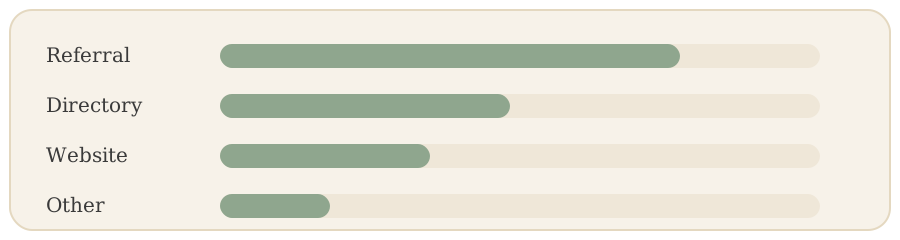
Once enquiries start arriving, the single most useful habit is asking each person how they found you and writing it down, even a basic spreadsheet with date, source and outcome is enough. After a few weeks, a pattern usually emerges: one or two channels bring in most of your enquiries, and the rest can be scaled back or dropped. Without tracking, it's easy to keep investing time in a channel that feels productive but isn't, simply because it's the one you enjoy.
A realistic timeline: what "first client" usually looks like
There's no reliable formula for how long it takes to get a first client, and treat anyone who promises you a specific number of weeks with caution. What's typical is a gap of some weeks between putting yourself out there and the first enquiry landing, and longer again before your diary feels comfortably full. That gap depends heavily on your specialism, location, existing professional network, and how many of the channels above you're actually visible on. A quiet first month is common, not a sign your practice or approach is wrong.
Frequently asked questions
How do I get my first counselling clients?
Most new practitioners get their first clients through a mix of channels rather than one silver bullet: professional referrals (from GPs, other therapists or supervisors), a directory listing, a simple website, and word of mouth. Start visible in two or three of these at once, ask every new enquiry how they found you, and put more effort into whichever channel is actually converting.
Do I have to pay other therapists or professionals for referrals?
Not usually, and you should be cautious if asked to. Many referral relationships between therapists, supervisors and other professionals are informal and unpaid, built on trust in your work rather than a fee. Formal paid referral or fee-splitting arrangements can raise ethical and advertising questions depending on your professional body, so check your body's current ethical framework before agreeing to anything with a financial arrangement attached.
How long does it usually take to build a full caseload as a new therapist?
There's no fixed timeline, and anyone who guarantees you one is guessing. It commonly takes weeks rather than days for the first enquiry to arrive, and longer still to reach a full diary, depending on your specialism, location, existing network and how many channels you're visible on. Treat the early months as building foundations, not underperforming against a target.
Should I join a directory before I have a website?
Yes, that's a reasonable order if budget or time is tight. A directory listing can get you in front of people actively searching sooner than building a full website. Most therapists add their own website once they're ready, since it gives them a permanent home a directory listing can't; see our comparison of directories, social media and a website of your own.
Start with what's already in reach
You don't need every channel running at once to get your first counselling clients. Start with what's already closest to hand, a professional introduction, a directory listing, or a simple website, track what brings enquiries in, and build out from there as your practice grows. Once enquiries are coming in more steadily, our guide to marketing yourself as a therapist covers how to stay consistent and visible without it feeling like a hard sell.
Get a website that's ready for your first enquiry
UpTopWeb designs and builds your therapist website for free, with one simple monthly fee covering hosting, support and unlimited edits.
Get a free website