Starting a practice
Therapy Contracts for UK Counsellors: What to Include and What's Fair
What to put in a counselling contract with private clients, how BACP and UKCP expect you to agree terms, and the consumer law most cancellation clauses miss.
On this page8 sections
A therapy contract is the agreement you make with each private client about how you'll work together: fees, cancellations, confidentiality and its limits, how sessions run and how they end. Every counsellor in private practice needs one in some form, because BACP and UKCP both expect terms to be agreed clearly at the outset. What fewer counselling contracts reflect is that a private client is also a consumer, so UK consumer law has a say in what's fair, especially around cancellation fees and terms agreed by email or online.
This guide is for UK counsellors and psychotherapists in private practice, and it reflects the sources as checked on 30 September 2026. It walks through what to include clause by clause, where the professional bodies set expectations, and the two pieces of consumer law that most templates skip. It isn't a template to copy, because the right wording depends on how you work.
Key takeaways:
- BACP's Ethical Framework (good practice point 31) and UKCP's Code (clauses 14 and 15) both expect you to agree terms clearly at the start. UKCP doesn't require a written contract, but a written one protects both of you.
- The limits of confidentiality belong in the contract itself, not only in a conversation: BACP asks you to state clearly when confidential information may be shared.
- A cancellation fee has to be fair under the Consumer Rights Act 2015. Terms requiring a "disproportionately high sum" for services not supplied are on the Act's list of terms that may be unfair.
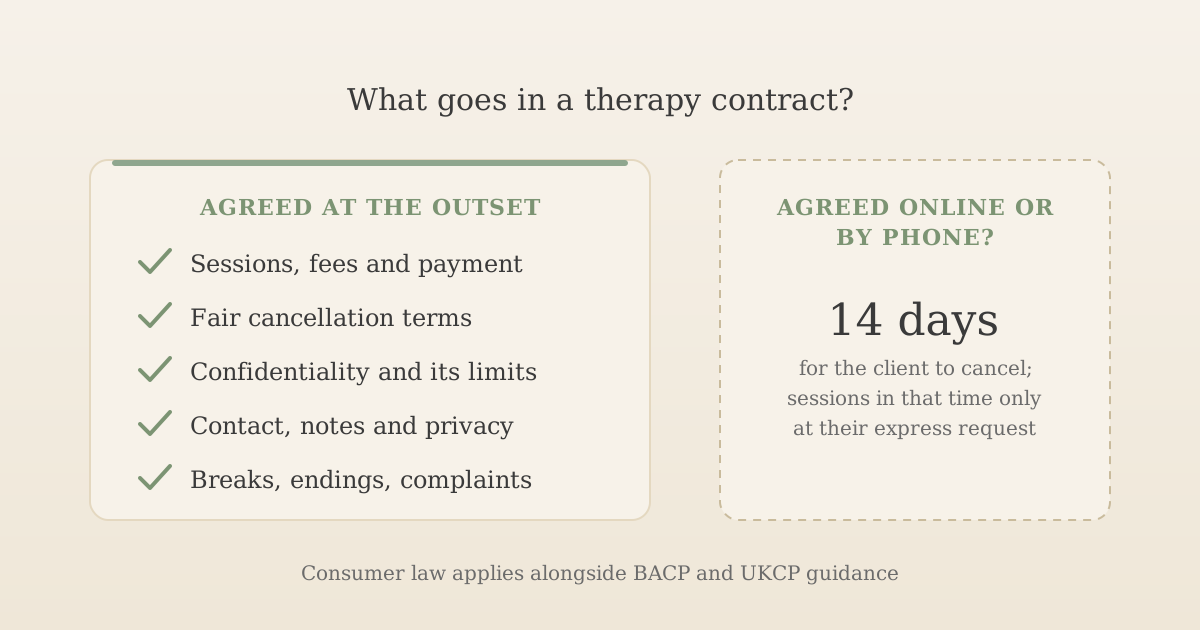
- If you agree terms by email, online booking or phone, the Consumer Contracts Regulations 2013 likely give the client 14 days to cancel. Starting sessions in that window needs their express request.
- Your fees, session length and cancellation terms should also be on your website, so clients know them before they get in touch.
Important: This is a practical overview, not legal or professional advice. Consumer law and professional-body guidance can change, and how they apply depends on how and where you agree terms with clients. If you're unsure about a specific clause, take legal advice, and check your professional body's current guidance.
Do you need a written therapy contract?
Neither professional body treats agreeing terms as optional. BACP's Ethical Framework for the Counselling Professions says, at good practice point 31, that practitioners "will contract with them about the terms on which our services will be provided". It then lists what that involves, including communicating terms "in ways easily understood by the client", stating how confidentiality will be protected and when it might not be, and "providing the client with a record or easy access to a record of what has been agreed".
UKCP's Code of Ethics and Professional Practice is similar. Clause 14 asks you to explain your "terms, fees and conditions" along with the likely length of therapy, complaints and arrangements for ending. Clause 15 asks you to confirm consent "through a clear contract at the outset of therapy", and adds: "We do not specify a written contract but in the case of any conflict a clear written contract supports both the client and yourself."
So the honest answer is that a written contract isn't strictly required by either body, but a written record of what was agreed is expected by BACP and recommended by UKCP. In practice, a short written agreement the client keeps a copy of is the simplest way to meet both. BACP's framework is being replaced by a new version that becomes mandatory on 3 November 2026, so recheck the wording then.
What to put in a therapy contract, clause by clause
Here's what a private practice therapy contract typically covers, and why each part is there. The sections after the table go into the clauses where people most often go wrong.
| Clause | What to state | Why it matters |
|---|---|---|
| Who you are | Your name, professional body and registration or membership number | Lets clients check your registration and know where to complain |
| Sessions | Length, frequency, location or platform, and any agreed number of sessions | BACP asks you to tell clients about fixed limits on duration or number of sessions when contracting (point 38) |
| Fees and payment | The fee per session, any concessions, when payment is due and how | Clients should know the cost before they commit |
| Cancellations | Your notice period, what's charged for late cancellation or missed sessions, and what happens if you cancel | Has to be fair under consumer law (see below) |
| Confidentiality | What stays confidential, and when you might share information | BACP asks you to state this clearly (point 31c) |
| Supervision | That you discuss your work in supervision without identifying clients | Clients often don't know this happens |
| Contact between sessions | How clients can reach you, response times, and that you're not an emergency service | Prevents clients relying on you in a crisis you can't respond to |
| Notes and data | What records you keep, for how long, and a link to your privacy notice | UK GDPR transparency; keeps the contract readable |
| Breaks and endings | Holiday notice, how either of you can end the work, a final session | BACP and UKCP both expect endings to be discussed |
| Complaints | How to raise a concern with you, and your professional body's complaints route | UKCP clause 14 lists complaints processes explicitly |
Fees, payment and when payment is due
State the fee per session, whether it differs for evenings, couples or online sessions, and any concessions you offer. Say when payment is due (before the session, on the day, or by invoice) and how clients pay. If you sell blocks of sessions paid in advance, say what happens to unused sessions if the work ends early, because keeping payment for sessions that were never delivered is exactly the kind of term consumer law looks at (see the next section). Our guide to how much counsellors should charge covers setting the fee itself.
Cancellations and missed sessions
This is the clause most likely to cause a dispute, and the one where consumer law matters most. Under the Consumer Rights Act 2015, an unfair term in a consumer contract isn't binding on the consumer, and Schedule 2 lists terms that may be regarded as unfair. Two are directly relevant to therapy:
- A term requiring a consumer who decides not to go ahead to pay "a disproportionately high sum in compensation or for services which have not been supplied".
- A term letting the trader keep money the consumer has paid when the consumer cancels, without the consumer getting equivalent compensation when the trader is the one who cancels.
That doesn't mean a late-cancellation fee is unfair. It means the fee should be clear, agreed in advance and proportionate to your real loss. In practice, a fairer cancellation term tends to:
- State a notice window upfront, such as 48 hours, rather than leaving it to your discretion afterwards.
- Reflect your genuine loss. Charging for a slot you can't realistically refill at short notice is easier to justify than charging when a client gave a week's notice.
- Allow discretion for genuine emergencies or illness, and say so.
- Work both ways. If you cancel at short notice, say what the client gets, such as a replacement session at no charge. This speaks directly to the second term on the list above.
Confidentiality and its limits
Clients should know before they start what you will and won't keep confidential. BACP's good practice point 31(c) asks you to state "clearly how a client's confidentiality and privacy will be protected and any circumstances in which confidential or private information will be communicated to others". Typical limits include a serious risk of harm to the client or someone else, safeguarding concerns about a child or adult at risk, and situations where the law requires disclosure. Say whether you would try to discuss it with the client first where that's possible.
Keep the wording plain. "I'll keep what you tell me confidential, with a few exceptions" followed by a short list is easier to understand than a paragraph of legal phrasing, and BACP asks for terms that are easily understood.
Online and telephone sessions
If you work online or by phone, add what platform you use, that the client should be somewhere private, what happens if the connection drops, and where the client will be during sessions. Check that your professional indemnity insurance covers online work and the places your clients are based, especially if any of them live outside the UK.
Notes, records and your privacy notice
State what records you keep and how long you keep them, then point to your privacy notice for the detail. Don't fold the whole privacy notice into the contract: the contract is what you both agree, while the privacy notice tells the client how you use their data. Our guide to GDPR for therapists covers retention periods and the privacy notice itself.
The 14-day cooling-off rule most counselling contracts miss
This is the part almost no counselling contract template mentions. The Consumer Contracts Regulations 2013 give consumers a right to cancel a "distance contract", which the regulations define as one concluded "without the simultaneous physical presence of the trader and the consumer", under an organised distance sales or service-provision scheme. If you agree terms and take bookings by email, an online booking form, video call or phone, as most private practices now do, your client contracts are likely to fall into that category. The regulations' health-related exclusions cover medicines and products supplied through the NHS, not private talking therapy.
For a service contract, the consequences are:
- The cancellation period is 14 days from the day the contract is entered into.
- You mustn't begin sessions within those 14 days unless the client makes an express request. Many clients want to start next week, so ask them to confirm in writing (an email reply is enough to keep a record) that they want sessions to begin within the cancellation period.
- If they then cancel within the 14 days, they pay a proportionate amount for sessions already provided, but only if you gave them the required information about the right to cancel and about paying for early sessions. If you didn't, they bear no cost for those sessions.
- If you don't give the cancellation information at all, the cancellation period doesn't end after 14 days. It extends until 14 days after you do provide it, up to a maximum of 12 months.
The practical fix is small. In the email where you confirm terms, include a short paragraph explaining the 14-day right to cancel and how to use it, that sessions within those 14 days start only at the client's request, and that if they cancel they'll pay for sessions they've already had. Schedule 3 of the regulations includes model wording for explaining the right to cancel.
This doesn't apply in the same way if you agree terms face to face at your own practice premises before any booking is made, because that isn't a distance or off-premises contract. But if the contract was already agreed by email before the first session, handing over a paper copy in the room doesn't change how it was made. How the regulations apply to your own booking process is a question for a solicitor if you're in any doubt.
A worked example: rewriting a cancellation clause
Here's a clause of the kind that's common in counselling contracts, and a fairer version. The second one is an illustration of the principles above, not guaranteed wording.
Before:
Sessions cancelled with less than 48 hours' notice will be charged in full. Block bookings are non-refundable.
After:
If you need to cancel or move a session, please let me know at least 48 hours in advance and there's no charge. If you cancel with less notice, or miss a session, the full fee is payable, unless I'm able to offer the time to someone else. I'll use discretion for genuine emergencies. If I need to cancel with less than 48 hours' notice, I'll offer you a replacement session at no charge. If you've paid for a block of sessions and we end our work early, I'll refund any sessions you haven't used.
The "after" version keeps the same notice window and the same charge, but it adds the parts that make it proportionate and reciprocal, and it removes the blanket "non-refundable" block, which is the term most exposed under the Consumer Rights Act.
Put the key terms on your website as well
A contract is signed after someone has decided to contact you. By then, the questions that decide whether they get in touch at all (what it costs, how long sessions are, what happens if they need to cancel) should already have been answered. That's why our guide to what a therapist website should include puts fees and practicalities on their own page, and why how to write therapist website copy treats the fees page as one of the most important on the site.
Keep the website and the contract consistent. If your website says 48 hours' notice and your contract says 72, a client who relied on the website has a fair grievance, and it looks careless either way. When you change your fees or policy, update both on the same day.
If you're still setting up, the contract sits alongside insurance, supervision and data protection in our guide to setting up a private therapy practice in the UK. Your contract with your own supervisor is a separate agreement, covered in our guide to clinical supervision for counsellors.
Common mistakes in therapy contracts
- Copying a template without checking it fits how you work, such as an in-person template used for online clients.
- Leaving out the limits of confidentiality, or burying them where the client won't read them.
- Blanket "non-refundable" terms for block bookings or deposits.
- No mention of the 14-day cancellation right when terms are agreed by email or online.
- Writing in legal language the client can't follow, which works against BACP's "easily understood" expectation.
- Not keeping a copy of what each client agreed, including any later changes, which BACP's point 31(e) asks you to record.
Frequently asked questions
Do counsellors legally need a written contract with clients?
There's no single legal requirement for a written counselling contract, and UKCP's Code of Ethics says it doesn't specify a written one. But both BACP and UKCP expect you to agree terms clearly with each client at the outset, and BACP's Ethical Framework asks you to give clients a record, or easy access to a record, of what was agreed. A short written agreement is the simplest way to show you did that, and UKCP notes it supports both you and the client if there's ever a disagreement.
Can I charge the full fee for a late cancellation?
Many private practitioners do, and a clear, proportionate late-cancellation fee agreed in advance is common. But under the Consumer Rights Act 2015, a term isn't binding on a client if it's unfair, and the Act's list of terms that may be unfair includes requiring a disproportionately high sum for services that weren't supplied. A notice window stated upfront, a fee that reflects your genuine loss, discretion for emergencies and an equivalent promise about what happens if you cancel all make a cancellation term easier to defend. If you're unsure, take legal advice.
Does the 14-day cooling-off period apply to counselling?
It can. The Consumer Contracts Regulations 2013 give consumers 14 days to cancel a service contract agreed at a distance, for example by email, online booking or phone, and the regulations have no general exemption for private therapy. You shouldn't start sessions within those 14 days unless the client expressly asks you to, and if you don't give the required cancellation information, the cancellation period can extend by up to 12 months. Contracts agreed face to face at your own practice premises aren't covered by this cancellation right.
Should my privacy notice be part of my therapy contract?
Keep them separate but linked. The contract covers what you and the client agree to; the privacy notice explains how you use their personal data, which UK GDPR requires you to tell them whatever they agree to. Refer to the privacy notice in the contract and give the client both at the start.
The short version
A therapy contract is where you and a private client agree how you'll work together, and both BACP and UKCP expect that agreement to be clear and made at the outset. Cover sessions, fees, cancellations, confidentiality and its limits, contact between sessions, notes, endings and complaints. Then check two things most templates miss: that your cancellation terms are proportionate and work both ways under the Consumer Rights Act, and that, if you agree terms by email, online or by phone, you've explained the 14-day right to cancel and asked the client whether they want to start within it. Put the same key terms on your website, so clients know them before they ever get in touch.
Fees and policies clients can find before they call
UpTopWeb builds clear websites for counsellors and therapists, with fees, session details and cancellation terms set out plainly, so enquiries come from people who already know how you work.
Get a free website