Starting a practice
BACP Ethical Framework 2026: A Private Practice Checklist
The new BACP Ethical Framework is mandatory from 3 November 2026. What's changed since 2018, and what to check in your private practice and website first.
On this page7 sections
The BACP Ethical Framework 2026 replaces the 2018 framework at midday on Tuesday 3 November 2026. If you're a BACP member in private practice, you have a few weeks to read it and check that your practice matches it. This guide is for UK counsellors, psychotherapists and coaches who work for themselves. It covers what has actually changed since 2018, a checklist of what to look at before 3 November, and the parts that land on your website, which most summaries skip. It reflects the framework and BACP's FAQs as checked on 6 October 2026.
The short answer: most of what the framework asks for isn't new in spirit, but it's now written as plain "we must" statements, and a few duties are much more specific than before. The ones most likely to need action in a private practice are AI and digital tools, your privacy notice, your fee and safeguarding information, your clinical will, and being able to explain the reasons behind your decisions.
Important: This is a practical overview, not legal, regulatory or professional advice. It summarises BACP's published framework and FAQs; the framework itself is the authority, and BACP is publishing further guidance from November 2026. Read the full text, and talk anything you're unsure about through with your supervisor or BACP's ethics service.
Key takeaways:
- The Ethical Framework for the Counselling Professions 2026 is mandatory from midday on 3 November 2026. Until then, you keep working to the 2018 framework.
- It has three sections: working ethically within relationships, ethical principles and core responsibilities. BACP says all three need to be used together.
- You must be able to explain the reasoning behind your ethical decisions, and work collaboratively with clients where that's possible and appropriate.
- New, specific duties cover AI and digital tools, privacy notices, fee information, tax, access to safeguarding policies, cross-border work and a clinical will with an appointed executor.
- Several of these show up on your website: what you say about your qualifications and competence, your fees page, your privacy notice and your safeguarding information.
When the BACP Ethical Framework 2026 applies
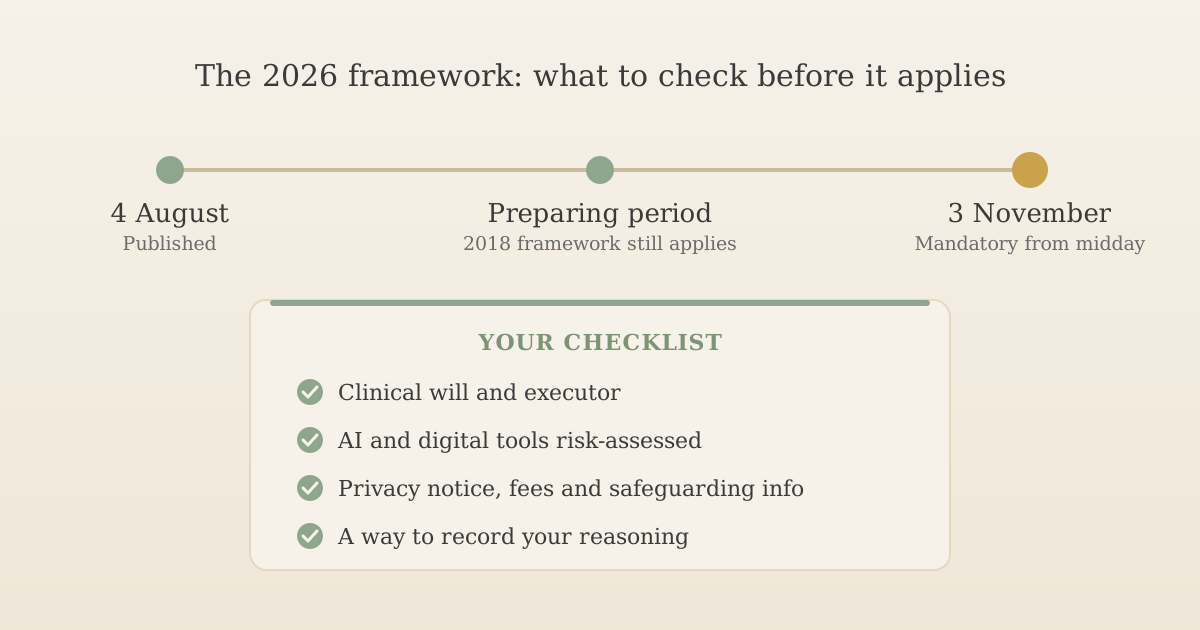
BACP published the new framework on 4 August 2026. Its FAQs call the three months until it becomes mandatory a "preparing period": you should get to know the new framework, but carry on working to the 2018 one until midday on Tuesday 3 November 2026.
It applies to every BACP member at every membership level, including coaches, supervisors, trainers and people using counselling skills in another role. BACP's Professional Conduct panels use it as the reference point when they consider complaints, so after 3 November a complaint about your practice will be judged against the 2026 wording, not the 2018 one.
If you're registered with a different body, the framework doesn't bind you. Several items in it are legal duties for every UK practitioner anyway, though: data protection law, safeguarding law, equality law and tax. Those apply whichever body you belong to.
What's actually new compared with 2018
The 2026 framework is shorter (around 4,000 words, against nearly 7,000 for the 2018 framework) and it's written differently. The 2018 version leaned on values and principles you interpreted; the 2026 version sets out "we must" statements under each core responsibility. Here's what changes in practice:
| Area | 2018 framework | 2026 framework |
|---|---|---|
| Structure | Commitments, values, principles and numbered good practice points | Three sections used together: A, working ethically within relationships; B, ethical principles; C, core responsibilities |
| Ethical decision-making | Encouraged using an ethical problem-solving model | You must be able to give a rationale for decisions, built around six questions (section A) |
| Collaboration | A commitment to working in partnership with clients | A principle and a step-by-step process, with recorded reasons where collaboration isn't possible |
| Principles | Being trustworthy, autonomy, beneficence, non-maleficence, justice, self-respect | Plain-English principles, adding compassion and anti-oppression |
| AI and digital tools | Not mentioned | Assess the risk of any AI tool, digital tool or online platform before use, with informed consent before entering client data (2.1) |
| Privacy notice | Not mentioned by name | A clear, accessible privacy notice, including tools that may monitor or collect data (3.1) |
| Fees | Communicate "benefits, costs and commitments" | Clear information on fees, when and how to pay, and how and when fees will be reviewed (3.4) |
| Safeguarding | Overriding confidentiality to prevent serious harm | Training, policies and procedures, and clients able to see your safeguarding policy details and who to contact (2.4) |
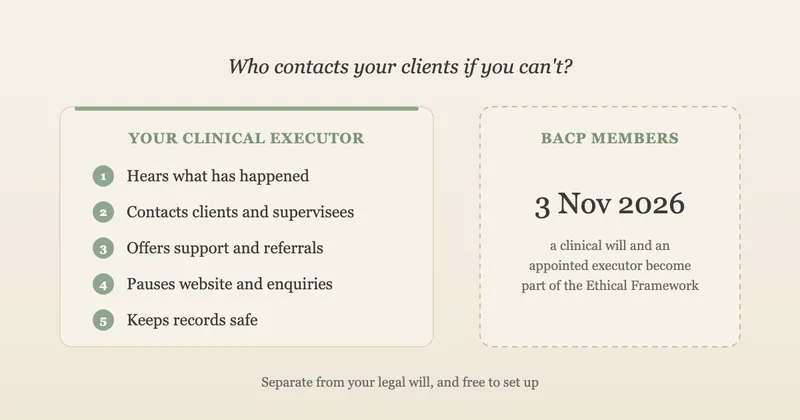
| Ending through death or illness | Appoint someone to contact clients (point 42) | Have a clinical will and an appointed executor (4.5) |
| Tax | Not mentioned | Know and meet your tax obligations, including reporting, in the country where you work (3.4) |
| Working across borders | Not addressed directly | Know the law in your country and the client's, and have insurance covering every country involved (3.3, 4.1, 4.2) |
| Social media | Take reasonable care to separate personal and professional presence | Ensure a clear boundary, and that all public communications reflect the framework's principles (1.3) |
One other change is worth knowing: record keeping now explicitly includes "all communications" relating to a client, which in practice means emails and text messages, not just session notes (3.2). Some commitments carry over in new wording rather than being new, such as not trying to change or suppress a client's sexual orientation or gender identity (2.4), which the 2018 framework also included.
BACP also says its existing Good Practice in Action resources will be archived in November 2026 and replaced by new Ethics Essentials, Ethics in Practice and Legal Resources. If your policies or contract refer to a specific GPiA, check the reference after November.
Your private practice checklist before 3 November
These are the duties most likely to need a change in a one-person private practice. The section numbers refer to the core responsibilities in the 2026 framework.
| Check | What the framework asks | What to do |
|---|---|---|
| Clinical will (4.5) | A clinical will and an appointed executor who can contact clients if you can't, or if you die | Write one, name an executor and give them access to what they'd need. Our clinical will guide and free template walks through it |
| AI and digital tools (2.1) | Assess the risk before use, understand how data are handled, be open with clients, get informed consent before entering their personal data, and don't hand decisions to AI | List every tool you use (note-taking, transcription, booking, video, any AI writing help). For each, note what data it sees, where it's stored, and whether clients know |
| Privacy notice (3.1) | Clear and accessible, covering how data are collected, used, stored and protected, people's rights, limits to confidentiality, and tools that may monitor or collect data | Name the actual tools and providers you use (notes software, video platform, email, payments, any AI) rather than "third-party services", and make it easy to find. Separately from the framework, data protection law has required a way for people to complain to you about how you handle their data since 19 June 2026, so check that's in there too |
| Working agreement (1.2) | Give each client a record of your working agreement | Check your contract mentions fee reviews, any AI or digital tools and how you ask for consent, where to find your safeguarding policy and privacy notice. Our guide to what to include in a therapy contract has a clause-by-clause list |
| Fees (3.4) | Clear fee information, including when and how payments are made, and how and when fees will be reviewed | Add a line on fee reviews to your contract and fees page, for example how much notice you give before a change |
| Tax (3.4) | Know and meet your tax obligations, including reporting | If your self-employment and property turnover was over £50,000 in 2024 to 2025, Making Tax Digital for Income Tax has applied since 6 April 2026. The threshold drops to £30,000 from April 2027 and £20,000 from April 2028 |
| Safeguarding (2.4) | Adequate training, policies and procedures, and clients able to access your policy details and who to contact | Write or update a short safeguarding policy and tell clients where to find it |
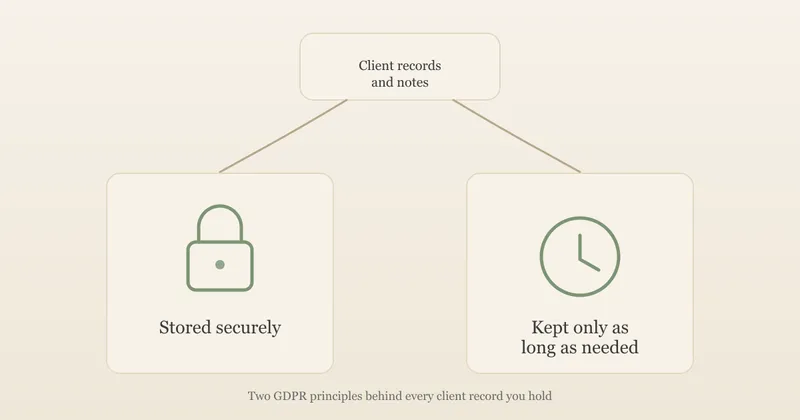
| Records (3.2) | Records include all communications, notes and other information about a client | Decide how emails, texts and messages are kept with the client record, securely |
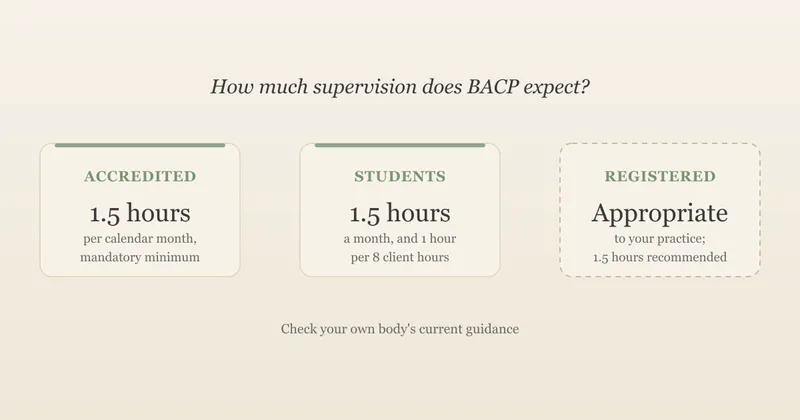
| Supervision (4.3) | Confirm your supervisor's qualifications, experience and competence; agree who holds key responsibilities for clients | Have that conversation and note it in your supervision contract. Our clinical supervision guide covers contracts and records |
| Clients abroad (3.2, 3.3, 4.1, 4.2) | Know your legal obligations in your country and the client's, store records in line with the data protection rules where they're held, and have insurance covering every country involved unless BACP has approved otherwise | If you see anyone outside the UK online, get written confirmation that your insurer covers it, and check where your notes and video tools store data. See our guide to seeing clients outside the UK |
| Limits and breaks (4.5) | Tell clients about any limit on the number of sessions, and give reasonable notice of planned breaks and endings | Check your contract states any session limits and your notice for breaks |
| Your reasoning (section A, 1.4) | Be able to explain the reasons behind ethical decisions, recorded with confidentiality in mind | Choose where you'll record it (see below) |
If you've been working closely to the 2018 framework, many of these will be a matter of writing down what you already do. The ones most often missing in a small practice are the AI and digital tools assessment, the fee review wording and an accessible safeguarding policy.
The AI and digital tools row deserves a closer look if you use anything that listens to, transcribes or summarises sessions. The framework asks you to be open about the benefits and risks, and to have informed consent before any client data goes into the tool. A clause buried in your booking terms is unlikely to show that the client understood what they were agreeing to. A short conversation at the start of work is easier to defend: what the tool does, where the data goes, how long it's kept, and that the client can say no. Note that conversation in your records. If a client says no, the framework doesn't say what happens next, so decide in advance how you'll work with them without the tool.
A practical way to get through it: set aside part of a supervision session before 3 November to go through this list with your supervisor. Section 1.4 already asks you to consult your supervisor regularly about ethical challenges, and a second pair of eyes on your contract, privacy notice and tools list catches things you'd skim past on your own.
What the new framework means for your website
The framework doesn't mention websites by name. But your website is where most clients first get information about you, so several duties are easiest to meet, and easiest to fall short on, there. Here's what that can look like on a fees page and footer:
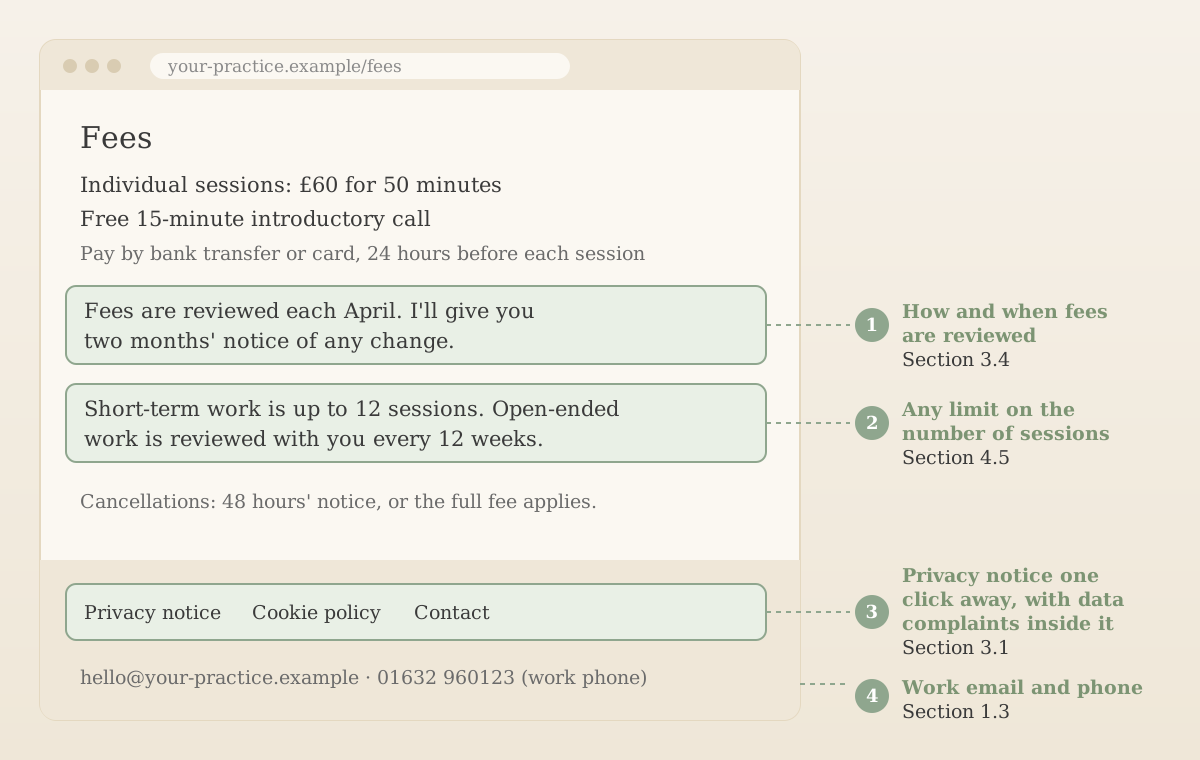
In more detail:
- Accurate information about you and what you offer. You must give "clear, accurate information" about your services, qualifications, experience and competence (1.2), and set out clearly the services you have competence to offer (4.4). An issues list that includes things you rarely work with now sits awkwardly against that. Our guide to writing therapist website copy shows how to describe your work without overclaiming.
- Fees and fee reviews. A fees page that shows prices but says nothing about when fees change only covers part of 3.4. A single sentence on how and when you review fees is enough. Our guide to how much counsellors charge covers setting and presenting them.
- A privacy notice people can find. "Clear and accessible" is hard to meet if your privacy notice is a PDF nobody can find. Link it from your contact form and footer, and make sure it mentions the tools your website uses, such as analytics, a booking system or a chat widget. The ICO's guidance on the right to be informed sets out what a privacy notice needs to contain. Your data protection complaints process can sit inside the privacy notice rather than on a separate page, along with a line explaining that you'd share information to protect someone at risk of serious harm.
- Safeguarding information. Clients need access to your safeguarding policy details and who to contact if they have concerns (2.4). The framework doesn't say this has to be on your website, and it doesn't need its own page: a short section in your FAQs or your contract, with the full policy available on request, is enough.
- Session limits. If you offer a fixed number of sessions (an EAP-style block, or short-term work only), say so before someone books (4.5).
- Public communications and separate accounts. Section 1.3 asks for a clear boundary between personal and professional social media and digital accounts, and covers all public communications, personal or professional. In practice that means a work email address and ideally a work phone number on your website, rather than personal ones, and remembering that your blog and social posts count too. Our guide to social media for therapists covers the boundary between personal and professional accounts.
- Your clinical will and your website. If your executor has to tell clients you can't work, they'll need to update or take down your website, email and directory profiles. Put the access details in your clinical will.
Recording the reasons behind your decisions
The biggest shift in style is section A. You must be able to give a rationale for your ethical decisions, covering:
- What the ethical issues are.
- How you'll involve the person affected (a client, supervisee or trainee, for example), and if you won't, why not.
- The internal factors you considered, such as the client's circumstances, the context and what you agreed.
- The external factors, such as legal duties, other people involved and any organisation's requirements.
- What you decided and did, what happened, and whether it fitted the framework.
- How you reviewed it, and with whom.
This doesn't mean writing an essay after every session. It applies when an ethical issue comes up: a request to break a boundary, a safeguarding concern, a client you're not sure you're competent to work with. The framework says the rationale can support discussions with your supervisor, and that when you record it you must keep confidentiality and data protection in mind. A short note in the client record, or in your supervision notes, using those six headings is a sensible starting point.
Where collaboration with a client isn't possible, for example in a safeguarding situation where you have a legal duty to report, the framework asks you to record the reasons clearly.
What's still to come from BACP
BACP says the full range of formats (including BSL, audio and Welsh versions) and further supporting resources will be available in November 2026, along with the new Ethics Essentials, Ethics in Practice and Legal Resources that replace the Good Practice in Action series. We'll update this guide when those are published. Until then, the framework text, BACP's FAQs and your supervisor are the places to go.
The framework sits alongside your other obligations rather than replacing them. Data protection law, your insurer's terms and your contract with each client all still apply, which is why our guide to setting up a private therapy practice in the UK treats ethics, insurance and data protection together.
When does the BACP Ethical Framework 2026 come into force?
It becomes mandatory for all BACP members from midday on Tuesday 3 November 2026. BACP published it on 4 August 2026 and called the time until then a preparing period, during which members keep working to the 2018 framework.
What are the main changes in the BACP Ethical Framework 2026?
It's shorter and organised into three sections: working ethically within relationships, ethical principles and core responsibilities. It asks you to be able to give a rationale for your ethical decisions and to work collaboratively with clients where possible. It adds compassion and anti-oppression as principles, and spells out duties on AI and digital tools, privacy notices, fee information, tax, safeguarding policies, cross-border work and having a clinical will with an executor.
Does the new BACP Ethical Framework ban using AI?
No. It asks you to assess the risk of any AI tool, digital tool or online platform before using it, understand how it handles data, be open with clients about using it, get informed consent before putting their personal data into it, and stay responsible for any decision you make. It doesn't list approved or banned tools.
Do I need to change my website for the new BACP Ethical Framework?
The framework doesn't mention websites by name, but several duties are easiest to meet there: accurate information about your qualifications, experience and the services you're competent to offer, clear fee information including how and when fees are reviewed, and an accessible privacy notice, which can also hold your data complaints process. Safeguarding details don't need their own page: a short FAQ section or a line in your contract, with the policy available on request, is enough. It's worth checking those pages before 3 November.
The short version
The BACP Ethical Framework 2026 is mandatory from midday on 3 November 2026. It's shorter and more direct than the 2018 version, asks you to be able to explain your ethical reasoning, and adds specific duties on AI and digital tools, privacy notices, fees, safeguarding information, cross-border work and clinical wills. Use the preparing period to read it, work through the checklist above, and check the pages clients see first: what your website says about your qualifications and competence, your fees, your privacy notice and your safeguarding information.
Is your website ready for 3 November?
UpTopWeb builds therapist websites with clear fees, an easy-to-find privacy notice and accurate, plain-English descriptions of your work, and makes changes for you when your policies change.
Get a free websiteFurther reading
Related articles
Starting a practice14 minute read
Clinical Will for Therapists: Free UK Template and Guide
Starting a practice11 minute read
Clinical Supervision for Counsellors in Private Practice: A UK Guide
Starting a practice13 minute read
GDPR for Therapists: A Guide to Client Records and Data Protection