Training & CPD
Level 4 Diploma in Counselling: Is It Enough for Private Practice?
A Level 4 Diploma can get you BACP registered and seeing private clients, but it has real limits. What it actually covers, and what SCoPEd changes.
On this page7 sections
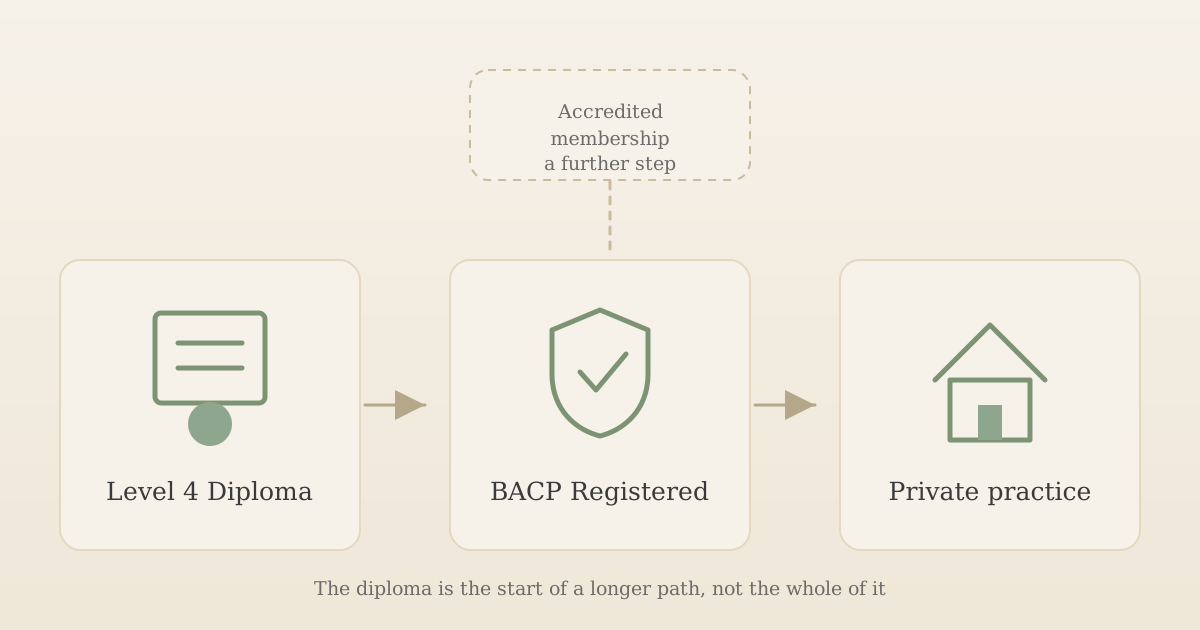
Is a Level 4 Diploma enough for private practice? Short answer: yes, in most cases. A Level 4 Diploma in Counselling (or an equivalent qualification) from a BACP-accredited course is enough, by itself, to register with BACP and start legitimately seeing clients in private practice. What it doesn't do is put you on equal footing with more advanced routes for the rest of your career, and the SCoPEd reforms reshaping the profession right now are changing what some employed roles expect in ways that make private practice, rather than employed work, the more open path for a lot of Level 4-qualified therapists at the moment.
This guide covers what a Level 4 Diploma actually qualifies you to do under BACP's own published rules, where SCoPEd genuinely does and doesn't change things, and what else you need in place before you can responsibly start seeing clients. It's UK-focused and centred on BACP specifically, since that's the professional body most Level 4 graduates register with; UKCP, NCPS and BPS run their own broadly similar but not identical routes, so check your own body's guidance if you're registered elsewhere.
Key takeaways:
- BACP's own minimum standard for practitioner training is a Level 4 Diploma (or equivalent), at least two years of study with a minimum 300 guided learning hours, and a supervised placement of at least 100 client hours.
- Graduating from a BACP-accredited Level 4 course, such as CPCAB's Level 4 Diploma in Therapeutic Counselling, lets you apply directly for BACP Registered membership. A non-accredited course meeting the same standard means sitting BACP's Certificate of Proficiency first.
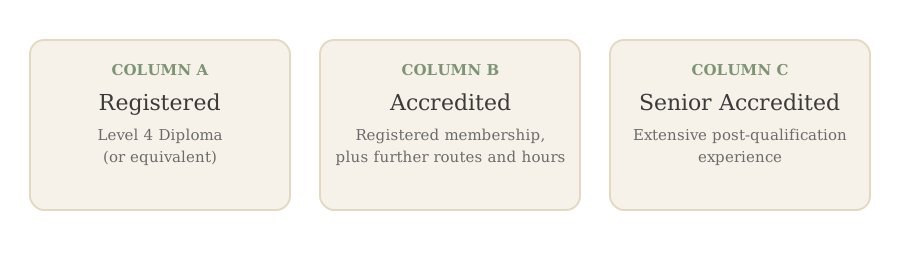
- SCoPEd maps Registered, Accredited and Senior Accredited membership to Columns A, B and C. BACP is explicit that the framework doesn't remove what a member can already do.
- The real shift is in the employed job market, not registration rules: some NHS and organisational roles increasingly ask for a higher SCoPEd column, which is part of why many Level 4 practitioners lean toward private practice.
- A Level 4 Diploma gets you to Registered membership, not Accredited status. Accreditation has its own separate routes and post-qualification requirements on top of the diploma.
- The qualification is only one piece: registration, insurance, supervision and (where relevant) a DBS check all need to be in place before you see your first private client.
Important: This is a practical overview, not professional, regulatory or careers advice. Requirements vary by professional body, training route and individual circumstances, and guidance can change over time. Check the current guidance from your own registering body before making training or practice decisions.
Is a Level 4 Diploma enough? What it actually qualifies you to do
BACP publishes a clear minimum standard for the training it expects before someone starts practising. Its own guide to training as a therapist describes this as "a minimum Level 4 Diploma (or equivalent), involving at least two years classroom based tuition (whether full or part time) with a minimum 300 guided learning hours", alongside "a supervised placement of at least 100 client hours". That's the baseline a Level 4 course is built to meet, and it's genuinely enough training, in BACP's own terms, to start practising.
Whether you can actually register with BACP once you've qualified depends on the course itself. CPCAB, the awarding body behind one of the most common routes, confirms that "BACP recognises CPCAB's Level 4 Diploma (TC-L4) as an appropriate qualification to gain BACP membership", which means a graduate of that specific course can apply straight to become a Registered Member. If your course meets the same 300-hour, two-year minimum but isn't itself BACP-accredited, BACP's registered membership guidance says you'll need to pass its Certificate of Proficiency first before you can progress to registration. It's worth checking this specifically for your own course before you assume either path applies.
Registration isn't a one-off event either. The same BACP guidance sets out what stays required for as long as you're registered: "ensuring that you have adequate supervision in place", "keeping your knowledge and skills up-to-date through continuing professional development (CPD)", and "having adequate, current and ongoing professional indemnity insurance", with evidence of all three available for audit. A Level 4 Diploma gets you to the start line; supervision, CPD and insurance are what keep you eligible to practise afterwards, not extras you can defer once you're registered.
What SCoPEd changes, and what it doesn't
SCoPEd (the Scope of Practice and Education framework, now run through a body called PCPB) is the profession's attempt to set consistent standards across BACP, UKCP, BPS and other bodies for what different levels of training and experience actually qualify someone to do. BACP's own SCoPEd explainer maps it directly onto its existing membership tiers: Column A corresponds to Registered membership, Column B to Accredited membership, and Column C to Senior Accredited membership. A Level 4-qualified Registered Member sits in Column A.
The part worth reading carefully, because forum discussion among UK practitioners often overstates it, is what BACP itself says SCoPEd does to existing members: it confirms members can "provide the services you currently do" and may "practise competences in other SCoPEd columns providing you have the right skills, knowledge, training and experience to do so". In other words, SCoPEd doesn't retroactively narrow what a Column A, Level 4-qualified therapist is allowed to do in private practice. It's a shared reference framework, not a new restriction on registration.
What's genuinely shifting is on the employed side of the job market, not the registration rules. In discussion among UK practitioners, including threads in the r/UKTherapists community, a recurring theme is that NHS talking therapies services and some larger organisations are increasingly writing job descriptions around Column B or higher, even where a Column A practitioner would previously have been considered. That's a real, practical trend worth knowing about if you're weighing up employed work, and it's a genuine part of why private practice, where you set your own scope rather than meeting an employer's specification, currently looks like the more open route for a lot of Level 4-qualified therapists. It's a shift in hiring preferences, though, not a rule stopping a Column A therapist from registering or practising privately.
The accreditation ceiling: Level 4 alone doesn't get you to Accredited status
It's worth being specific about what a Level 4 Diploma doesn't include, because it's a common source of confusion. Registered membership (Column A) is what the diploma and BACP's Certificate of Proficiency route lead to directly. Accredited membership (Column B) sits a level above it, with its own separate application routes for registered members who can "demonstrate high standards of competent and ethical practice" over time, each with their own post-qualification experience requirements on top of the initial training. A Level 4 Diploma is the qualification that starts you on the Registered membership path; it isn't, by itself, sufficient for Accredited status.
In practice, this matters commercially as much as professionally. Some directories and clients specifically look for "BACP Accredited" as a trust signal, and a genuinely competent, fully registered Level 4 practitioner in private practice can't yet use that specific title, even while working entirely within their competence and registration. That's not a reason to hold off starting a private practice while Level 4-qualified and Registered; it's a reason to be accurate about your current status in how you describe yourself, and to have a realistic view of accreditation as a later milestone rather than something the initial diploma already gave you.
What you still need before you see your first private client
A Level 4 Diploma and BACP registration are the professional foundation, not the whole checklist. Before you responsibly start seeing private clients, you'll also need:
- Professional indemnity insurance, current and adequate for how you work (including online sessions if you offer them). See our guide to professional indemnity insurance for therapists for what it covers and typical costs.
- A supervision arrangement in place, as required by BACP's ongoing membership conditions, not just something you plan to sort out later.
- A DBS check, where your client group or setting requires one. Our guide to DBS checks for therapists covers when this applies and how the process works.
- The practical and business side sorted, from how you'll register as self-employed to your fees and client records. Our fuller guide to setting up a private therapy practice in the UK walks through each step.
None of these are things a directory or an employer checks for you the way a job application would. They're your own responsibility to have genuinely in place, not just planned, before your first session.
Getting started once you're ready
Once your registration, insurance and supervision are in place, the practical work of actually becoming visible to clients starts. Our guide to getting your first counselling clients covers where referrals, directories and a simple website each fit in those early months, and our guide to marketing yourself as a therapist covers positioning yourself honestly as a newly qualified, Level 4-registered practitioner rather than overstating your experience. When you're ready to think about an online presence specifically, do therapists need a website? is a reasonable next read.
Frequently asked questions
Is a Level 4 Diploma enough to register with BACP?
Yes, provided it's from a BACP-accredited course, such as CPCAB's Level 4 Diploma in Therapeutic Counselling, which BACP recognises directly. Graduates of an accredited course can apply straight to become a BACP Registered Member. If your course isn't BACP-accredited but meets the same minimum standard, you'll need to pass BACP's Certificate of Proficiency first before you can register.
Does SCoPEd stop Level 4 practitioners working in private practice?
No. BACP's own SCoPEd guidance is explicit that the framework doesn't take away what a member can already do, and members keep providing the services they currently offer. What's genuinely changing is that some employed roles, particularly in the NHS and larger organisations, increasingly specify a higher SCoPEd column in their job descriptions, which is a hiring-market shift rather than a restriction on registration or private practice itself.
What do I need beyond a Level 4 Diploma to become BACP Accredited?
BACP Accredited membership (SCoPEd Column B) sits above Registered membership and has its own separate application routes with their own post-qualification experience requirements, on top of the Level 4 training itself. A bare Level 4 Diploma qualifies you for Registered membership; Accredited status is a further step most therapists work toward over time, not something the diploma alone confers.
What do I still need before I can see private clients?
Registration with your professional body, adequate and current professional indemnity insurance, a supervision arrangement, and (depending on your client group and work setting) a DBS check are the practical essentials on top of the qualification itself. None of these are optional extras: BACP's own membership requirements explicitly cover supervision, CPD and insurance as ongoing conditions of registration, not one-off boxes to tick.
The short version
A Level 4 Diploma from a BACP-accredited course, paired with proper registration, is genuinely enough to start a private practice: it's the standard BACP itself sets, not a shortcut around it. What it doesn't give you is Accredited status, which needs further routes and experience on top, and it sits at Column A in a profession where some employed roles are asking for more. For most people weighing this up, that's less a reason to delay starting and more a reason to be accurate about where you are now, insured and supervised properly, and realistic that accreditation is a milestone to work toward, not something the initial diploma already covers.
Newly registered and ready to be found
UpTopWeb builds clear, professional websites for newly qualified counsellors and therapists, so clients can find and trust you from day one.
Get a free website