Training & CPD
IFS, CFT or DIT? Extra Therapy Training for Counsellors (UK)
Thinking about IFS, compassion focused therapy or DIT training? Who can apply in the UK, how long each takes, what it costs, and what you can say afterwards.
On this page10 sections
Once you're qualified and practising, short and medium-length trainings in a named model are often more appealing than another diploma: they add a way of working you can use with clients next month, and a name clients may recognise. This guide compares three kinds of extra therapy training for counsellors in the UK: Internal Family Systems (IFS), compassion focused therapy (CFT) and dynamic interpersonal therapy (DIT). For each, it covers who can apply, how long it takes, what it costs, what you can honestly say afterwards, and how it fits a private practice. Fees and dates were checked on the providers' own pages on 28 October 2026.
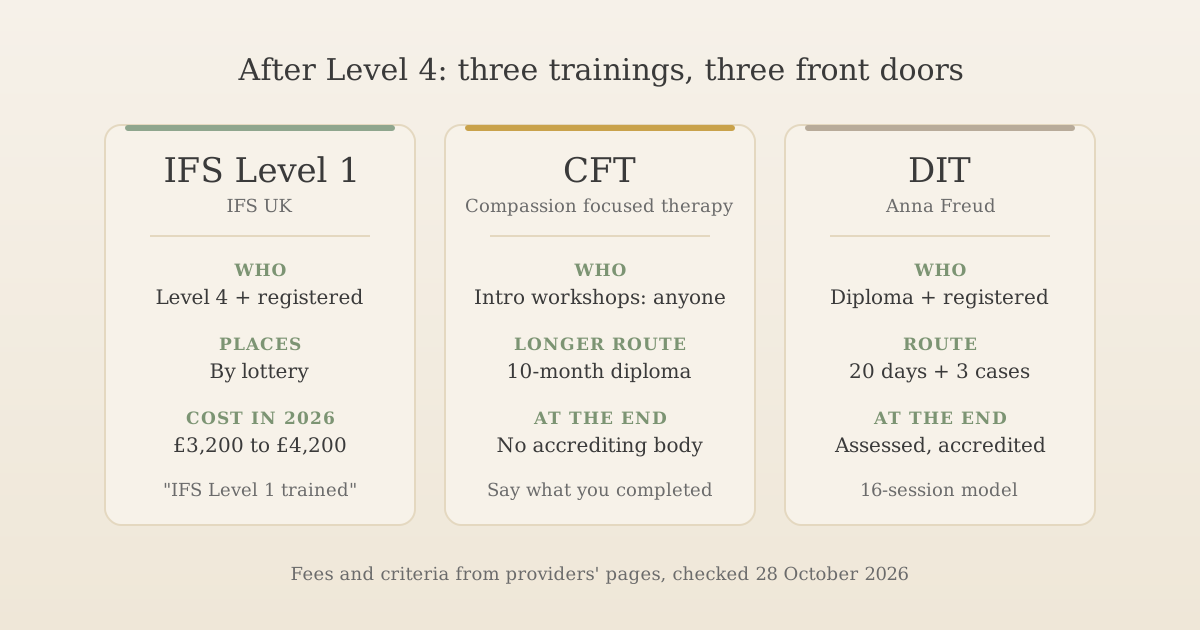
The short answer: these three look similar from the outside but have very different front doors. IFS Level 1 is open to Level 4 counsellors on an accredited register, but places go by lottery. CFT has no gatekeeper for introductory workshops and no accrediting body at the end. DIT has a 20-day route designed for counsellors without a psychodynamic background, with assessed, supervised cases built in.
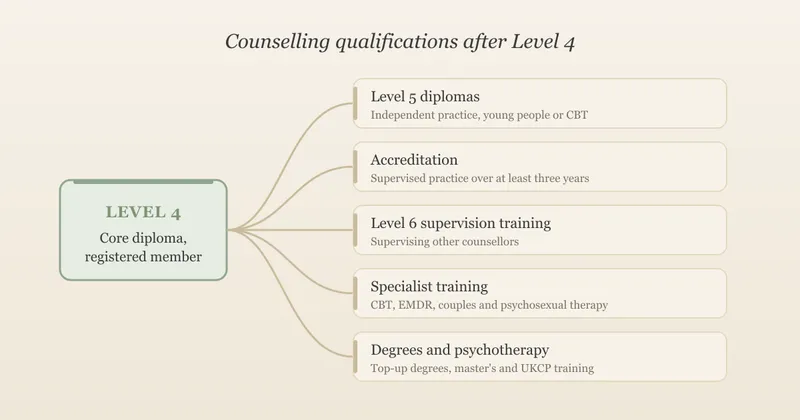
If you're earlier in your career and comparing longer routes, such as Level 5 diplomas, accreditation, CBT, EMDR or psychotherapy training, start with our guide to counselling qualifications after Level 4. This guide picks up the shorter add-on trainings it doesn't cover.
Key takeaways:
- IFS Level 1 (IFS UK): Level 4 plus membership of a register accredited by the Professional Standards Authority, places by lottery, about 89.5 hours, £3,200 to £4,200 in 2026. Afterwards you can say you're "IFS Level 1 trained".
- CFT (compassion focused therapy): introductory and skills workshops are open; the Compassionate Mind Foundation's ten-month diploma (£5,300) needs three years' post-qualifying experience. There's no accrediting body.
- DIT (dynamic interpersonal therapy, Anna Freud): a 16-session model for depression and anxiety. The 20-day route takes diploma-level counsellors without a psychodynamic background; the 5-day route needs one.
- None of these is a BACP accreditation route, and a one-day introduction to any of them isn't training to practise the model.
- Say exactly what you've completed on your website. Clients searching for a model will check.
Important: This is a practical overview, not careers or professional advice. Entry criteria, fees and dates change, and providers decide individual applications. Check the provider's current pages, and your professional body's requirements, before you apply or change how you describe your practice.
Extra therapy training for counsellors: what people actually search for
Before spending several thousand pounds on a model, it's worth knowing whether clients know its name. We looked at UK Google Trends data for the 52 weeks to 24 October 2026. Trends doesn't show search volumes, only how interest in each term rises and falls on its own 0 to 100 scale, so these figures say how consistently people search, not how many do:
| Search term | Weeks with measurable UK interest (of 52) | Direction over the year |
|---|---|---|
| internal family systems | 52 | Steady |
| compassion focused therapy | 32 | Rising |
| EMDR training (for comparison) | 35 | Flat |
| dynamic interpersonal therapy | 3 | Too small to measure |
| IFS training | 3 | Too small to measure |
Two things stand out. People search "internal family systems" almost every week, but hardly anyone searches "IFS training": most of that interest is likely to be people curious about the therapy itself, which matters if you'd use it to attract clients. And "dynamic interpersonal therapy" barely registers, probably because DIT is offered through services such as NHS Talking Therapies more than chosen by clients by name. That doesn't make DIT a poor training, but it does mean it's a way of working rather than a name to put in your headline.
The three trainings side by side
| IFS Level 1 | Compassion focused therapy | DIT | |
|---|---|---|---|
| Main UK provider | IFS UK (part of the US IFS Institute) | Compassionate Mind Foundation, plus other trainers | Anna Freud |
| Who can apply | Level 4 counsellors on a PSA-accredited register, mainly doing one-to-one work | Introductory workshops: open. Diploma: 3 years post-qualifying experience | 20-day: diploma-level counsellors, registered. 5-day: psychodynamic background |
| How places are given | Lottery | Booking or application | Application, including statements of support |
| Length | About 89.5 hours (75 to attend) | Workshops of a day or two; diploma ten months | 5 or 20 days, then supervised training cases |
| Cost (checked 28 Oct 2026) | £3,200 to £4,200 in 2026 | Diploma £5,300; workshops vary | 5-day route £4,725 including supervision; 20-day: ask |
| Assessed? | No formal assessment | Diploma is assessed | Yes: role play, recordings, case work |
| What you can say | "IFS Level 1 trained" | What you completed, with the provider | "Accredited DIT practitioner" once you've passed |
IFS Level 1: open to counsellors, but you need luck
IFS UK runs Level 1 training in the UK and Ireland on behalf of the US-based IFS Institute. Its admissions criteria (December 2024) are clearer than most, and good news for Level 4 counsellors. You need:
- training in counselling or psychotherapy to at least Level 4;
- membership of a professional body accredited by the Professional Standards Authority for Health and Social Care (PSA), which includes the BACP, UKCP and NCPS registers, or the HCPC;
- a significant part of your current role spent on one-to-one counselling or psychotherapy; and
- support in place, such as your supervisor or your own therapist, because the training is experiential.
The hard part is getting a place. IFS UK's Level 1 FAQs (updated February 2026) say demand outstrips supply, so places are allocated by lottery, and you apply separately for each training. A typical training has 36 participants. IFS UK says that from 2026 most applicants now get a place within a year of applying.
Length and cost. Most Level 1 trainings are 89.5 hours, and you need to attend 75 to get the Certificate of Completion. There are no formal written or oral assessments. The FAQs put 2026 Level 1 fees at £3,200 to £4,200 depending on format. As an example, the hybrid Level 1 training starting in February 2027 (online, then six days in Bristol) costs £3,910, with an £800 non-refundable deposit if you're successful in the lottery. Accommodation isn't included.
What it gives you. IFS UK recommends saying you're "IFS Level 1 trained" once you have the certificate, and integrating IFS "in a way that is appropriate to your individual professional standing". It recommends IFS consultation or supervision when you use it with clients. "IFS-informed", in its words, is for people who've done shorter courses, and "does not qualify you to use the IFS model with clients".
What it doesn't. IFS UK says the trainings are stand-alone: the hours can count as CPD, but they don't count towards initial BACP accreditation. The "Certified IFS Therapist" title comes from a separate IFS Institute certification process that needs Level 1 and Level 2 (or Level 1 plus assisting on another), at least two years and 200 hours of IFS practice, consultation hours and a reviewed session. IFS UK describes that title as a US distinction.
Compassion focused therapy: easy to start, no finish line
CFT was developed by Professor Paul Gilbert, who founded the Compassionate Mind Foundation with colleagues in 2006. It's built around helping clients who struggle with shame and self-criticism, which is why it appeals to many integrative and person-centred counsellors.
Starting is easy. The Foundation's training pathway has two main steps: an introduction to the theory and practice of CFT, then clinical skills training, which is aimed at people who've done the introduction and used CFT with clients for at least six months. The introductory workshops list no prerequisites, and other UK trainers run their own introductions too.
For a longer route, the Foundation's Diploma in Compassion Focused Therapy runs for ten months and costs £5,300. It asks for a core professional qualification, at least three years' post-qualifying experience as a counsellor or psychotherapist, and access to at least four clients. It's currently recruiting for September 2027, with applications up to 31 July.
The catch is what comes at the end. The Foundation says plainly that it "is not an accrediting body" and doesn't accredit individual therapists. APT (a UK training provider) offers registration levels in CFT tied to its own courses, exam and supervised practice, but says registration "does not in itself constitute a professional qualification or licence to practise". So with CFT, you describe what you've completed and with whom, rather than a protected title.
DIT: a structured route with assessment built in
DIT is, in Anna Freud's words, "a simple, 16-session individual therapy protocol for mood disorder", designed for depression and anxiety. It's offered in NHS Talking Therapies services, and Anna Freud says NHS Talking Therapies staff may qualify for funded training places. Anna Freud runs two training routes:
The 20-day programme is the one most counsellors will need. Its course page invites "counsellors, psychotherapists and those without a psychodynamic background" and asks for a diploma-level qualification in counselling ("not necessarily psychodynamic") and current registration with BPC, BACP, UKCP, HCPC or BABCP. Training includes three supervised training cases, 24 hours of supervision, rated recordings, a role play and clinical logs. The page didn't show a self-funding price when we checked, so ask Anna Freud directly. The deadline for the January 2027 cohort is 20 November 2026.
The 5-day course is for therapists who already have a psychodynamic background. Its entry requirements include at least a year's course in psychoanalytic theory, 150 hours of supervised psychodynamic work, a year of weekly personal psychodynamic therapy and two years working therapeutically with adults with mental health problems. The page lists £4,725 for training, 16 hours of supervision, tape ratings and the case study (although another part of the same page says supervision isn't included, so check). Applications for 2027 close on 26 February 2027.
Either way, you become an accredited DIT practitioner only after passing the assessed cases, and Anna Freud then expects one hour of DIT supervision for every 12 hours of DIT work in your first year. A half-day DIT workshop, such as those some counselling centres run as CPD, is a useful taster but doesn't qualify you to offer DIT.
Private practice fit. DIT's fixed 16 sessions suit clients who want a defined, time-limited piece of work, and that's easy to explain on a fees page. But because few clients search for it by name, describe what it offers ("a 16-session therapy focused on the relationship patterns behind low mood") rather than leading with the acronym.
Two more structured routes worth knowing
A few other models have formal UK pathways with supervised practice, which makes them closer to DIT than to CFT:
- Interpersonal psychotherapy (IPT): IPT UK says its recognised introductory courses give the training for "Level A", which prepares you for supervised practice towards practitioner level ("Level B").
- Schema therapy: the International Society of Schema Therapy's certification process needs full ISST membership, supervision hours, rated recordings and case conceptualisations, completed within three years of your training.
Neither showed measurable UK search interest by name, so treat them like DIT: training for how you work, not a marketing hook.
A three-question test before you book
- Will you use it with your current clients within six months? CFT's own advanced training assumes six months of using it, and IFS UK recommends consultation while you use the model. A training you won't practise fades.
- Do you need a gatekept, assessed outcome? If you want something you can point to with confidence, DIT's assessed route or IFS Level 1's certificate give clearer wording than a series of workshops.
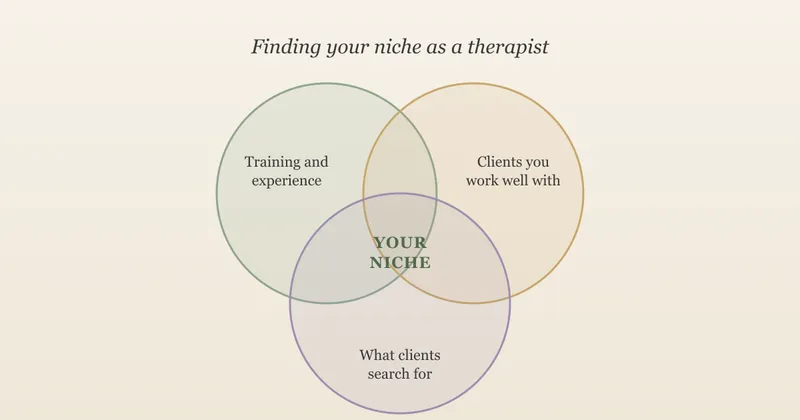
- Does it fit your niche? Our guide to finding your niche as a therapist argues for competence first: train in what you already find yourself drawn to, then advertise it.
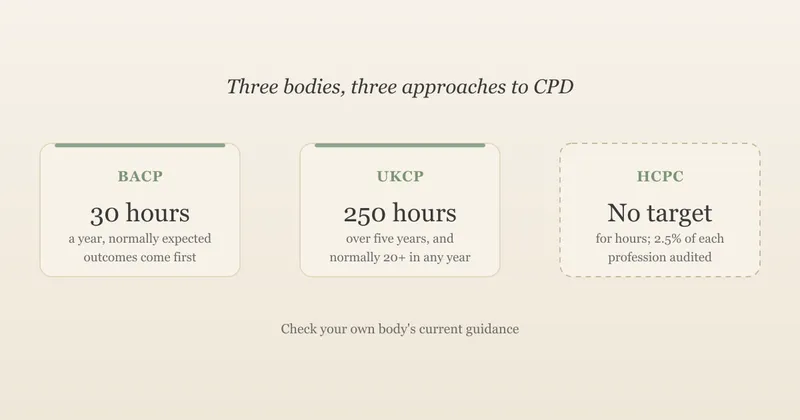
Count the hidden costs too: supervision or consultation, travel and accommodation for in-person days, and the sessions you won't be seeing clients. Training that builds on your existing work is usually an allowable expense for counsellors, and the hours count towards the CPD hours counsellors need.
How to describe your training on your website
The 2026 BACP Ethical Framework asks you to describe your services and competence accurately. Our BACP Ethical Framework 2026 checklist covers the detail. In practice:
- Use the provider's own wording: "IFS Level 1 trained (IFS UK, 2027)", "Accredited DIT practitioner (Anna Freud)", "Completed the Diploma in Compassion Focused Therapy (Compassionate Mind Foundation)".
- Don't upgrade the title. "Certified IFS therapist" isn't a UK title, a one-day CFT introduction isn't "trained in CFT", and "IFS-informed" doesn't mean you practise IFS.
- Label training in progress clearly, for example "currently training in DIT, completing 2027".
- Explain the model in plain words next to the name. Most clients won't know what DIT or CFT means, and some may have read about IFS online and want to know how you use it.
If a model becomes a big part of your work, it may deserve its own page. Our guide to therapist service pages covers when that's worth it, and our guide to therapist website copy has examples of explaining an approach without jargon.
Frequently asked questions
Can a counsellor with a Level 4 diploma do IFS Level 1 training in the UK?
Usually, yes. IFS UK's admissions criteria (December 2024) ask for training in counselling or psychotherapy to at least Level 4, membership of a professional body accredited by the Professional Standards Authority (such as BACP, UKCP or NCPS registers) or the HCPC, a significant part of your current role spent on one-to-one therapy, and support such as a supervisor or therapist in place. Places are then allocated by lottery.
Is there an accrediting body for compassion focused therapy in the UK?
Not in the way BACP accredits counsellors. The Compassionate Mind Foundation, which runs CFT training and a ten-month diploma, says it is not an accrediting body and does not accredit individual therapists. APT offers registration levels in CFT linked to its own courses and exam, but says these are not a professional qualification or licence to practise.
Can I train in DIT without a psychodynamic background?
Yes. The Anna Freud centre runs two routes. Its 5-day course is for therapists with a psychodynamic background, including 150 hours of supervised psychodynamic work. Its 20-day programme is for counsellors and psychotherapists without one, and asks for a diploma-level counselling qualification (not necessarily psychodynamic) and current registration with BACP, UKCP, BPC, HCPC or BABCP.
Can I call myself an IFS therapist after Level 1?
IFS UK recommends saying you are 'IFS Level 1 trained' once you have the Certificate of Completion. It says the titles 'Certified IFS Therapist' and 'Certified IFS Practitioner' are a US distinction, awarded by the IFS Institute after further training, practice hours, consultation and a session review.
The short version
If you want a widely recognised model and can wait for a place, IFS Level 1 is open to registered Level 4 counsellors. If you want to start this month and build up gradually, CFT workshops have no barrier, but no accreditation at the end. If you want a structured, assessed qualification in brief work, DIT's 20-day route was built for counsellors like you. Whichever you choose, say exactly what you've completed, and let your website explain what it means for clients.
Show clients how you work
UpTopWeb builds calm, professional websites for counsellors and therapists, with clear pages for each approach you offer and unlimited edits when your training changes, all for one monthly fee.
Further reading
Related articles
Training & CPD13 minute read
Counselling Qualifications After Level 4: Your UK Options
Marketing15 minute read
How to Find Your Niche as a Therapist (UK Guide)
Training & CPD7 minute read
How Many CPD Hours Do Counsellors Need in the UK?