Training & CPD
How Many CPD Hours Do Counsellors Need in the UK?
What BACP, UKCP and the HCPC actually expect for counsellor CPD: the hours, what counts, how audits work and a simple way to stay audit-ready.
On this page8 sections
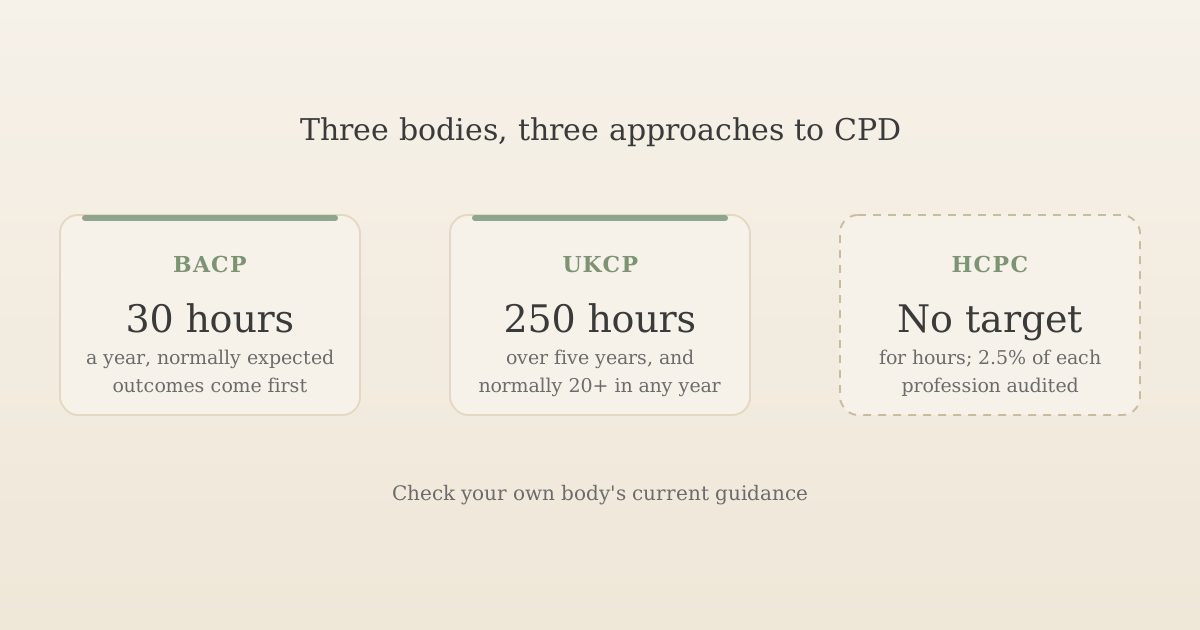
How many CPD hours do counsellors need? There isn't one UK-wide number, and the answer depends on which body you're registered with. BACP says it would normally expect registered members to do at least 30 hours a year. UKCP requires a minimum of 250 hours over a five-year period, and normally at least 20 in any single year. The HCPC, which regulates arts therapists and practitioner psychologists, doesn't set an hours target at all.
This guide compares the three, explains what counts as CPD and what doesn't, shows what an audit looks like, and suggests a simple way to keep your records in a state you won't dread opening. It's UK-focused, reflects each body's published guidance as checked on 21 September 2026, and covers BACP in the most detail because that's where most counsellors register. NCPS, BPS and other bodies set their own expectations, so check yours.
Key takeaways:
- There's no single figure. BACP normally expects at least 30 hours a year, UKCP requires 250 hours over five years, and the HCPC sets no hours target.
- BACP puts outcomes first: what you gained from your CPD matters more than the hours total.
- Supervision doesn't count as CPD for the BACP Register. It's a separate requirement with its own record.
- Audits are random. BACP audits 1.5% of eligible renewing members each month and gives around six weeks to send records, so keep your log current.
- CPD is one of three ongoing Register commitments, alongside supervision and insurance.
Important: This is a practical overview, not professional or regulatory advice. Requirements differ between bodies, colleges and membership levels, and they change. Check your own registering body's current guidance before relying on any figure here.
How many CPD hours do counsellors need? It depends on your professional body
Here's what each body publishes, side by side, drawn from BACP's guide to CPD, UKCP's CPD page and the HCPC's CPD page:
| Body | What it says about CPD hours | How it checks |
|---|---|---|
| BACP Register | Says it "would normally expect registered members to undertake at least 30 hours of CPD a year", with the focus "on outcomes, or what you have gained from your CPD" | A random audit every month of 1.5% of eligible members who are renewing |
| UKCP | A minimum of 250 hours over a five-year period, and normally at least 20 hours in any year; may be higher depending on your organisational member or college | CPD is one of the requirements for re-accreditation |
| HCPC | No hours target on its CPD page; CPD should be undertaken on a continuing basis | At each renewal, 2.5 per cent of each profession is randomly selected to submit a CPD profile |
Two practical points follow. First, a figure quoted in a forum thread or by a training provider may belong to a different body from yours. Second, if you hold more than one registration or membership, expect each body's expectations to apply separately, and check each one.
BACP registered members: what the 30 hours means
BACP's guide to CPD is careful with its wording: "The focus should be on outcomes, or what you have gained from your CPD. However, we would normally expect registered members to undertake at least 30 hours of CPD a year." So 30 hours is the benchmark BACP says it would normally expect, and the outcomes are what you're asked to show.
As a registered member, BACP asks you to keep an up-to-date and accurate record of your CPD, either within the BACP CPD hub or using its Register template, to record a range of activities relevant to your current or future practice, and to show how you've reflected on, planned, acted on and evaluated your development. A list of hours with no reflection attached doesn't meet that description, however long the list is.
CPD sits alongside supervision and insurance as an ongoing commitment of the Register. Our guide to a Level 4 Diploma and private practice explains how you get onto the Register in the first place.
What counts as CPD, and what doesn't
BACP's guide says that any activity that has an impact on your current or future professional practice can be included. Its examples include:
- Conferences, whether attending or giving presentations
- E-learning modules and workshops
- Formal education and in-service training
- Reading books, journals or internet articles
- Mentoring and peer support groups
- Work shadowing
- Writing articles or papers, and supervising research
- TV and radio programmes
BACP suggests including a mixture of learning activities in your record. The HCPC takes a similarly broad view: "CPD is not just formal courses, a CPD activity is any activity from which you learn and develop."
The main exclusion is supervision. BACP states that "Supervision is a separate Register requirement and so should not be submitted as CPD." Log your supervision on its own, and don't pad your CPD hours with it.
What an audit looks like
Audits are random, so the chance of being picked in any one renewal is low, but you can't know in advance. BACP's audit requirements say it carries out a random audit of registered members every month. Anyone who has been on the Register for more than a year is eligible when their membership is due for renewal, and BACP audits 1.5% of eligible members who are renewing. If you're selected, it contacts you by email and gives you around six weeks to provide your records of CPD, supervision and insurance.
The HCPC does something comparable, but by profession. On its CPD page, it says that during each renewal it randomly selects 2.5 per cent of each profession and asks them to submit their CPD profile.
The lesson is that six weeks is enough time only if your records already exist. Insurance evidence belongs in the same folder; our guide to professional indemnity insurance for therapists covers what to keep.
A simple system that keeps you audit-ready
This is our suggestion, not a requirement from any body:
- Log each activity the same week you do it. Note the date, the hours, what it was, and one line on what changed in your practice. That one line is what turns a list into outcomes.
- Use the format your body asks for. For BACP, that means the CPD hub or the Register template.
- Keep certificates and notes together. A single folder means a six-week deadline is a small job.
- Spread it across the year. A range of activities, taken over time, looks more like development than a renewal-week scramble.
- Keep supervision separate. Its own record, its own place.
- Use supervision and appraisals to spot gaps. BACP's guide points to supervisors and appraisals as useful places to discuss what CPD you need.
CPD alongside the rest of your first years in practice
CPD is one of three ongoing commitments that come with BACP's Register, with supervision and insurance. If you're setting up, it belongs on the same checklist as the rest of setting up a private therapy practice. Your website can also show your ongoing training, though listing it isn't required; our guide to what a therapist website should include covers how to present qualifications and memberships clearly.
Frequently asked questions
How many CPD hours do BACP registered members need each year?
BACP says it would normally expect registered members to undertake at least 30 hours of CPD a year, while stressing that the focus should be on outcomes, or what you have gained from your CPD. You also need to keep an up-to-date record, using the BACP CPD hub or its Register template, covering a range of activities relevant to your current or future practice.
Can I count supervision as CPD?
Not for the BACP Register. BACP says supervision is a separate Register requirement and so should not be submitted as CPD. Keep it as its own record alongside your CPD log.
How many CPD hours does UKCP require?
UKCP's CPD policy requires a minimum of 250 hours of CPD activity over a five-year period (the re-accreditation period), and normally a minimum of 20 hours in any year within that period. The figure may be higher depending on your organisational member or college, so check their policy as well.
What happens if I'm selected for a CPD audit?
For BACP, you're contacted by email and given around six weeks to provide your records of CPD, supervision and insurance. Selection is random: each month BACP audits 1.5% of eligible members who are renewing, and you become eligible once you've been on the Register for more than a year. The HCPC works in a similar way at renewal, randomly selecting 2.5 per cent of each profession to submit a CPD profile.
The short version
There's no single answer to how many CPD hours counsellors need. BACP says it would normally expect at least 30 hours a year, with the focus on outcomes; UKCP requires 250 hours over five years and normally at least 20 in any year; and the HCPC sets no hours target. Whichever body you're with, keep supervision separate from CPD, record what you learned and what changed rather than only the hours, and log as you go so an audit is a small job rather than a scramble.
Show your training clearly online
UpTopWeb builds clear, professional websites for counsellors and therapists, with room for your qualifications, memberships and ongoing training.
Get a free website