Therapist websites
Best Website Builder for Therapists: Squarespace, Wix or Airo?
Squarespace, Wix and GoDaddy Airo compared for UK therapists: cost in pounds, booking and AI copy, plus when a freelancer or done-for-you site suits you better.
On this page8 sections
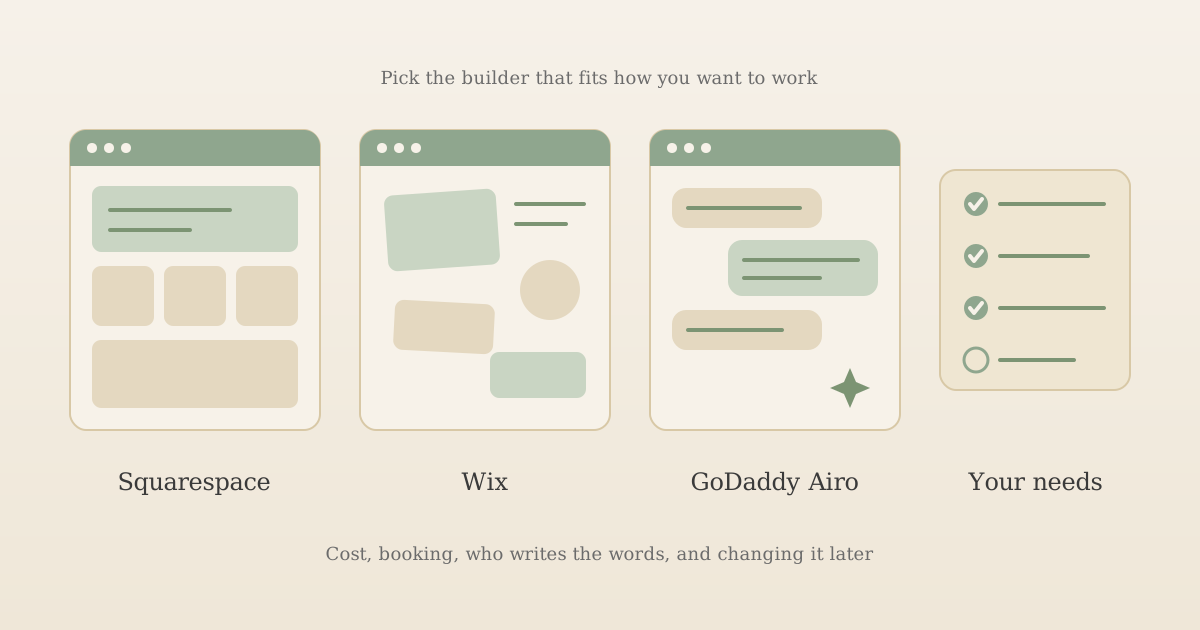
What's the best website builder for therapists? If you're a UK counsellor or psychotherapist building your own site, the three names you'll keep running into are Squarespace, Wix and GoDaddy's AI builder, Airo. Most "best of" lists are written for US therapists paying in dollars, or rank builders on features like online shops that a private practice never uses. This guide compares the three on what a UK therapy practice actually needs: what the first year really costs in pounds, whether online booking is included, how much of the writing is left to you, and what each one is like to live with once your practice starts to change.
Key takeaways:
- There's no single best builder. Squarespace is best for a calm, structured site you can restyle later, Wix for design freedom and a free plan to start on, and GoDaddy Airo for the lowest price and booking included from its cheapest paid plan.
- Listed first-year prices, paying yearly, run from about £90 (Airo Starter) to £144 (Squarespace Basic). Wix adds VAT to its prices; Squarespace and GoDaddy don't say either way on their pricing pages.
- AI builders will write your first draft, but every claim about your registration, training and the issues you work with still needs checking by you.
- None of the three sets up UK cookie consent, a privacy notice or a sensible enquiry form for you. Whichever you choose, that setup is your job.
- For a simple practice site, the words and practical details on your pages matter more than the platform.
Important: This is a practical overview, not legal, technical or professional advice. Prices and plan features are as shown on each platform's own UK pricing pages and help centres when we checked on 23 and 24 September 2026, and all three change them over time. Check the current pages before you buy. UpTopWeb has no connection with Squarespace, Wix or GoDaddy.
The short answer: which builder suits which therapist
Choose Squarespace if you want a site that looks calm and professional without much fiddling, and you expect to refresh the design as your practice grows. Every Squarespace site is built from the same structured sections, so it's hard to make a mess, and you can restyle the whole site later without starting again.
Choose Wix if you'd like to start on a free plan while you test private practice, or you enjoy designing and want to place things exactly where you picture them. Pick your template carefully, though: Wix says it's not possible to switch to a different template once your site is built. If you've narrowed it to those two, our Squarespace vs Wix comparison for therapists goes into more detail.
Choose GoDaddy Airo if the lowest price matters most and you want online booking from day one. Airo writes a first draft of your whole site from a short description, which is fast, but it means your main job becomes rewriting and checking what the AI produced.
Consider not building it yourself if the hours are the real cost for you. We cover that option at the end.
The three builders side by side
| Squarespace | Wix | GoDaddy Airo | |
|---|---|---|---|
| Entry plan for a practice site | Basic: £12/month paid yearly, £16 monthly | Light: £9/month paid yearly, plus VAT. Monthly price shown only at checkout | Starter: £7.49/month paid annually, £14.99 monthly |
| First year, paying yearly | £144 | £129.60 including VAT | £89.88 |
| Free option | 14-day free trial | Free plan with Wix branding and no custom domain | Free plan with 50 AI credits a month |
| How you build | Structured sections, from a template | Drag-and-drop from 2,000+ templates, or an AI-generated draft | AI generates the site; you refine it by chat or in the editor |
| Who writes the words | You, starting from template placeholder text | You, or Wix's AI as a starting point | Airo's AI drafts; you rewrite and check |
| Online booking | Acuity Scheduling, a separate subscription | Included on Core (£16/month paid yearly, plus VAT) and above | Included on Starter and above |
| Changing the design later | Restyle the whole site any time | Can't switch template on an existing site | Refine by chat or in the editor; AI edits use credits |
| Leaving later | Partial export, no design | No export; Wix sites have to run on Wix | GoDaddy says you can export your code at any time |
Squarespace figures are from its UK pricing page, GoDaddy's from its UK Website Builder page, both checked on 24 September 2026. Wix's UK prices are from its plans page, checked on 23 September 2026. Neither Squarespace's nor GoDaddy's pricing page says whether VAT is included, so check the total at checkout.
What actually matters for a therapy practice
Generic builder reviews score templates, app stores and online shop features. For a solo practice, five things matter much more.
What you'll pay after the first year
The headline prices on all three are yearly plans shown as a monthly figure. Airo's difference is the most striking of the ones we could see: £7.49 a month paid annually, but £14.99, double, paying month to month (Wix only shows its monthly prices at checkout). Free domains on all three are for the first year only and then renew at the normal price, and GoDaddy adds an annual ICANN fee per domain. Budget for year two, not just year one. For how these compare with hiring a freelancer or a done-for-you service, see our breakdown of how much a therapist website costs.
Who writes the words
This is the biggest practical difference between the three, and the one most comparisons skip. On Squarespace, you start from a template's placeholder text and write your own. Wix and Airo can both generate a first draft of the site for you, and Airo is built around doing exactly that.
A draft saves time, but for a therapist it isn't finished copy. AI-written text tends to sound like it could belong to any practice, and it can confidently state things that aren't true of yours. Your registration status, qualifications, the issues you work with and anything suggesting what therapy can achieve all carry professional body and UK advertising rules. Every sentence needs checking, then rewriting in your own voice. Our guide to writing therapist website copy shows what specific, trustworthy wording looks like.
Online booking, if you want it
Airo includes online booking, payments and deposits from its Starter plan. Wix includes scheduling and payments from Core, its second plan. Squarespace needs a separate Acuity Scheduling subscription.
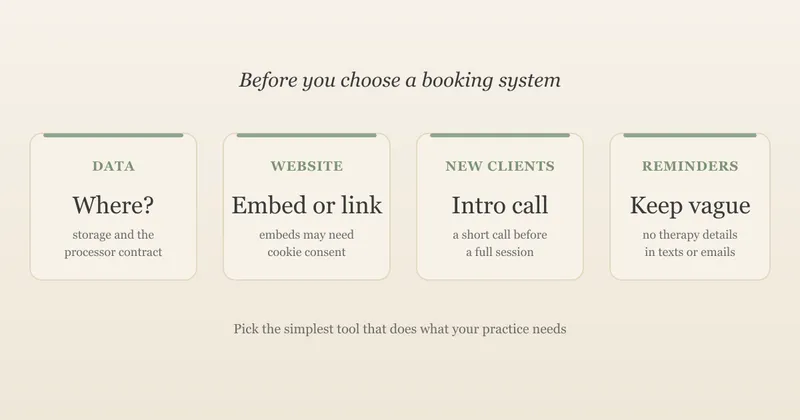
Before you pay extra for it, ask whether you want clients booking straight into your diary at all. Many therapists prefer a short introductory call or an enquiry first. A booking form also collects more personal information than a simple enquiry form, and the fact that someone is booking therapy can itself be sensitive, so if you add one, keep the questions to the minimum you need.
Cookies, privacy and your enquiry form
None of the three can make your site fit UK privacy rules on your behalf. You need consent before placing non-essential cookies, like analytics or embedded maps, on a visitor's device; the ICO's guidance on storage and access technologies explains what that involves. Squarespace and Wix both have built-in cookie consent settings, and whichever builder you use, it's on you to check consent is actually working, write your own privacy notice, and make sure your contact form doesn't invite clinical detail. Our GDPR compliant website checklist for therapists walks through each step, and it applies whichever builder you choose.
Living with it as your practice changes
Your practice will change: new specialisms, online sessions, new fees, or simply wanting a fresher look. Squarespace handles this best, because its template is only a starting point and you can restyle the whole site. Wix locks you into the template you started with, so a new look means a new site. Airo lets you ask for changes in plain English, but AI edits use credits (simple text and image edits don't), which reset each billing cycle and don't roll over.
Leaving is also worth knowing about on day one. Wix sites can't be exported at all, and Squarespace's export covers some content but none of the design. GoDaddy is the exception: it says you can export your site's code at any time. On all three, your domain name, words and photos can come with you.
Getting found: all three give you the same starting point
All three include basic SEO settings, such as page titles and descriptions, and GoDaddy advertises built-in SEO and AEO (answer engine optimisation, aimed at AI search) on its plans. None of them fills those settings in well for you, and none knows how a potential client in your area searches for a therapist. That part is down to your content. Our SEO for therapists guide covers the basics, and our guide to AI search for therapists explains what AEO, GEO and "AI search optimisation" do and don't mean in practice.
What about WordPress, or therapist-specific platforms?
WordPress (the free, self-hosted software from WordPress.org) is the other name you'll see. It's more flexible than any of these three, but you arrange your own hosting and take on updates, security and backups yourself, or pay someone to. That's a different kind of commitment; our guide to website maintenance for therapists covers what it involves.
Therapist-specific providers are the other route. Some UK companies build websites only for therapists, either as a DIY platform with therapy-focused templates or as a done-for-you service. We're one of the done-for-you ones, so we're not a neutral judge of that category. Whichever you look at, ask the same questions: what's the total cost in year one and year two, who writes the words, who makes changes, what's included for booking and email, and what happens to your site and domain if you leave.
Builder, freelancer or done-for-you?
Every builder here leaves the same work with you: writing each page, choosing photos, setting up cookie consent and SEO, and keeping your fees and availability current. For some therapists that's a satisfying project. For others it's weeks of evenings they'd rather give to clients or rest. So before choosing between the three, it's worth checking a builder is the right route at all. There are three ways to get a therapist website:
| Website builder (Squarespace, Wix, Airo) | Freelancer or agency | Done-for-you service | |
|---|---|---|---|
| How you pay | A plan fee, usually shown as a yearly rate paid upfront | A build fee, often plus a separate maintenance retainer | One ongoing fee, often with nothing upfront |
| Who builds and writes it | You | The freelancer, though writing is often left to you | The provider |
| Design | Limited to what the template allows | Built around your practice | Built around your practice |
| Hosting, security and updates | The platform | Often on you, or a separate contract | Included |
| Changes later | You make them | Paid per change or on retainer | Included, depending on the plan |
| Technical SEO and structured data | Often limited on entry plans | Full control | Handled for you |
| Leaving later | Usually a rebuild (except Airo's code export) | You normally own the site | Check what happens to your site and domain |
When a website builder is genuinely enough
A builder suits more practices than the marketing for "professional custom websites" suggests. It's a sound choice if:
- You're testing whether private practice suits you before committing to more
- Budget is tight and every pound matters more than flexibility
- Your needs are simple: a handful of pages and nothing a template doesn't already offer
- You're happy to log in and make small edits yourself as your practice changes
Plenty of established practices run happily on a builder for years.
Where builders tend to fall short
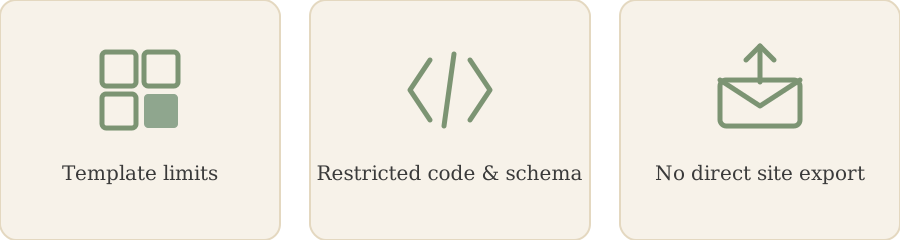
Beyond the template and export limits above, a few things catch therapists out later:
- Structured data and custom code. Many builders restrict custom code, and so custom structured data, to higher plans. Structured data helps search engines understand your site; Google's introduction to structured data explains what it does.
- Accessibility and sharing previews. You can usually only fix what the template's settings expose, whether that's an accessibility issue or the title and image shown when a page is shared on social media or WhatsApp. Our guide to website accessibility for therapists has a checklist to run on your own site.
- Your enquiry data is still your responsibility. A form built into a builder still makes you the data controller for what it collects, as the ICO's guide to controllers and processors explains.
- A domain bought through Wix stays managed through Wix. Moving it means unlocking it in your dashboard and waiting for a transfer code, and Wix's own support article says the transfer can take up to a week. Buying your domain from a separate registrar keeps it independent of your builder.
None of this rules a builder out. It's just worth knowing before you commit rather than two years in.
Freelancer or done-for-you: what's the difference?
The two terms get mixed up. A freelancer or agency build is usually a one-off project: they design and build your site and hand it over, and maintenance afterwards is either on you or covered by a paid retainer. Our guide to website maintenance for therapists covers what that involves. A done-for-you service is ongoing: the build, hosting, security and edits are covered by one fee, so there's no separate maintenance contract or bill for each change. Both remove a builder's template limits; only done-for-you also takes away the upkeep. Ask any provider whether writing and SEO are included or billed separately, since neither route guarantees them.
We're a done-for-you service, so weigh this accordingly. Our Essentials plan costs £191.90 a year paid annually. That's more than any of these three builders' entry plans, and it covers the design, writing, setup and ongoing edits you'd otherwise do yourself. It doesn't include online booking as standard, so if that's essential from day one, Airo or Wix Core are the closer match. We've also compared UpTopWeb directly with Squarespace, Wix and GoDaddy Airo.
A simple way to decide
- Tight budget, simple needs, happy to make your own edits: a website builder, chosen using the comparison above.
- Want full design and technical control, and don't mind arranging maintenance separately: a freelancer or agency.
- Want the website to need nothing from you once it's live: a done-for-you service.
Frequently asked questions
What is the best website builder for a therapist in the UK?
There isn't one best builder for every practice. Squarespace suits therapists who want a calm, structured site they can restyle later. Wix suits those who want a free plan to start on and plenty of design freedom. GoDaddy Airo suits those who want the lowest price and online booking on its cheapest paid plan, and are happy to rewrite AI-generated copy. For a simple practice site, what you write on the pages matters more than which of the three you choose.
Which website builder is cheapest for therapists?
Of the three, GoDaddy Airo's Starter plan had the lowest listed price when we checked on 24 September 2026: £7.49 a month paid annually, or £14.99 paid monthly. Wix's Light plan is £9 a month paid yearly plus VAT, and Squarespace's Basic plan is £12 a month paid yearly or £16 monthly. Check renewal prices and whether VAT is included before you buy, since the first-year price isn't always what you pay after that.
Which website builders include online booking for therapy sessions?
GoDaddy Airo lists online booking, payments and deposits on its Starter plan and above. Wix includes scheduling and payments on its Core plan and above, but not on Light. Squarespace uses Acuity Scheduling, which is a separate subscription on top of the website plan. Many therapists prefer an enquiry or introductory call before any booking, so decide whether you need self-service booking before paying for it.
Is a done-for-you website the same as a custom website from a freelancer?
Not quite. Both are built for your practice rather than assembled from a template, but a freelancer or agency build is usually a one-off project, with maintenance and changes handled by you or through a separate paid retainer. A done-for-you service covers the build, hosting, security and ongoing edits in one fee, so there's no separate contract or bill for changes later.
Should I use an AI website builder for my therapy practice?
It can be a quick way to get a first draft, but treat everything it writes as a draft. AI-generated copy tends to sound generic, and claims about your registration, qualifications and the issues you work with have to be exactly right, since professional bodies and UK advertising rules apply to them. Check every sentence, and rewrite it in your own voice, before it goes live.
Choose on the things that are hard to change
All three builders can produce a perfectly good therapist website. Decide on the things that are hard to undo: whether you'll want to redesign later (Squarespace is easiest), whether you need booking built in (Airo and Wix Core include it), and how much of the writing you want to do yourself. Then put your time into the pages themselves; our guide to what a therapist website should include covers what they need.
Would you rather skip the builder altogether?
UpTopWeb designs, writes and builds your therapist website for you, then keeps it up to date. £0 upfront, then from £19.99 a month, with a 10-day free trial.
Further reading
Related articles
Therapist websites19 minute read
Best Booking Systems for Therapists (UK): 7 Compared
Therapist websites10 minute read
Therapist Website Security: What PHP2Shell Means for You
Therapist websites16 minute read
Therapist Service Pages: Does Each Specialism Need Its Own Page?