Therapist websites
Website Builder or Custom Website: What Should a Therapist Choose?
A website builder like Wix or Squarespace looks like the obvious choice for a therapist website, but it isn't always the right fit. A clear way to decide.
On this page9 sections
Wix, Squarespace and similar website builders are usually the first thing a therapist finds when they search for how to get a website live. They're quick to start, need no developer, and the entry price looks appealing. A custom build from a freelancer or agency, or a done-for-you service, works differently and often costs more upfront, but hands you less of the ongoing work. This guide compares a website builder against a custom or done-for-you website specifically for a UK therapist or counsellor's private practice, so you can pick the route that actually fits how your site needs to look, function and grow, not just what's cheapest to start.
Key takeaways:
- A website builder like Wix or Squarespace is genuinely enough for many new or simple practices, and isn't a lesser choice by default.
- The trade-offs tend to show up later: template flexibility, technical SEO control, accessibility fixes and moving away from the platform.
- A custom or done-for-you website costs more, or works differently, but removes template constraints, and a done-for-you service removes ongoing technical maintenance too.
- For exact figures across all three routes, see our breakdown of how much a therapist website costs.
- If you haven't settled what your site needs to include at all yet, start with our guide to what a therapist website should include.
Important: This is a practical overview, not legal, technical or professional advice. Data protection responsibilities apply regardless of which platform or provider you choose, and specific plan features on any website builder can change over time. Check current guidance and your chosen platform's own terms before deciding.
The three ways to build a therapist website
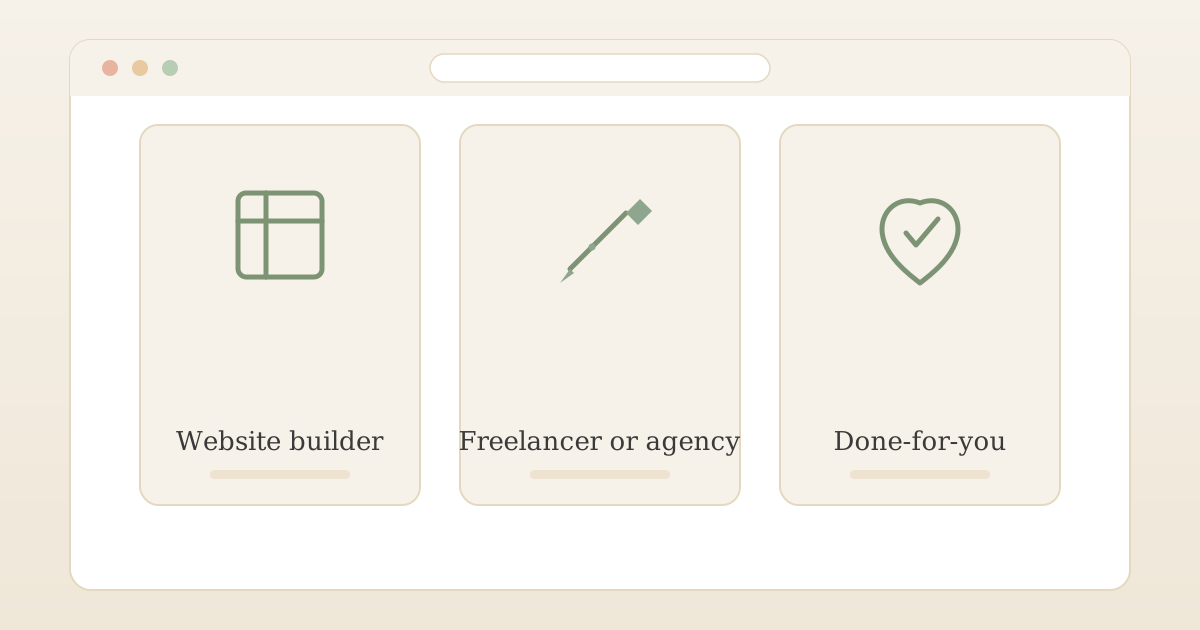
Every therapist website is built one of three ways: a DIY website builder like Wix or Squarespace, a custom build from a freelancer or agency, or a done-for-you service that handles the build and everything after it. Our full cost breakdown covers exact pricing across all three; this guide focuses on fit rather than price, since the cheapest option on paper isn't always the one that suits how you want to run your practice.
Website builder vs a custom or done-for-you website, compared
| Website builder (Wix, Squarespace) | Custom or done-for-you | |
|---|---|---|
| Design flexibility | Limited to the chosen template's structure | Built around your practice specifically |
| Ongoing cost | One plan fee, usually shown as an annual rate paid upfront | Freelance: build fee, often plus a separate retainer. Done-for-you: one fee, commonly with no upfront cost |
| Security & hosting | Handled by the platform automatically | Freelance: often on you or a separate contract. Done-for-you: included |
| Technical SEO control | Often limited on entry-level plans | Full control, or handled for you |
| Marketing & SEO expertise | Generic; strategy and execution are on you | Freelance: varies by provider. Done-for-you: can be built in if the provider specialises in the therapy niche |
| Accessibility fixes | Limited to what the template allows | Can be built or fixed directly |
| Moving away later | No direct site export; usually a rebuild | Not usually a concern once built, since you're not tied to a closed platform |
The figures and features above are typical patterns, not a quote for any specific plan, since builder pricing and plan features change over time; check the current plan pages if a specific limit matters to your decision.
When a website builder is genuinely enough
A website builder suits a practice more often than the marketing around "professional custom websites" suggests. It's a reasonable choice if:
- You're testing whether private practice suits you before committing to more setup
- Budget is genuinely tight and every pound matters more than flexibility
- Your needs are simple: a handful of pages, no complex booking integration, no need for anything a template doesn't already offer
- You're comfortable logging in yourself to make small edits as your practice changes
None of these make a builder the "cheap" option in a negative sense. Plenty of established practices run happily on Wix or Squarespace for years without ever needing more than the template provides.
Where a website builder tends to fall short for a therapist practice
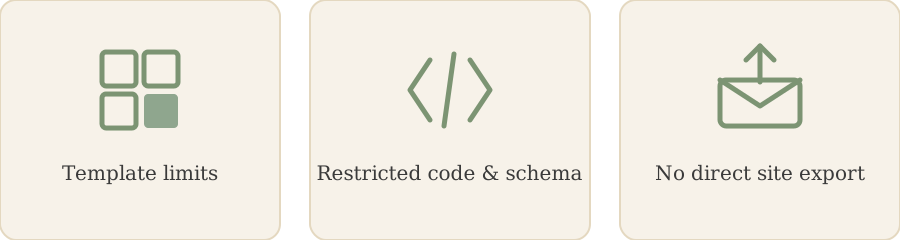
- Template limits. Builder templates are designed for small business in general, not specifically for the trust-heavy, health-adjacent content a therapist website needs to carry. Fitting your credentials, fees and client-facing tone into a generic template sometimes means working around the design rather than with it.
- Restricted code and structured data. Many builders restrict custom code, and therefore custom structured data, to their higher-tier plans. Structured data is what helps search engines understand and sometimes visually enhance your listing in results, covered in Google's own introduction to structured data; a template that won't let you add it is one less lever available for how your site shows up.
- Pricing steers you toward paying annually upfront. Wix's own pricing page shows only the annual-billed monthly rate by default, with a footnote that "displayed prices are for yearly subscriptions, paid in full at the time of purchase"; the higher month-to-month rate, and the loss of the free first-year domain that comes bundled with annual plans, only become clear once you reach checkout. None of this is unique to Wix. Plan names, prices and what's included on any website builder can also change at the platform's discretion over time, since you're on their terms rather than a fixed contract you control.
- Who's responsible for enquiry data. A contact or booking form built into your website builder still makes you the data controller for whatever it collects, even though the platform is technically doing the processing. The ICO's guide to controllers and processors sets out that distinction; in practice it means you're still the one responsible for how a client's enquiry details are used and protected, whichever platform is hosting the form.
- Accessibility is template-bound. You can typically only fix what the template's settings allow, rather than adjusting the underlying code directly, which matters if a specific accessibility issue falls outside what the template exposes. See our guide to website accessibility for therapists for what UK law requires and a checklist you can run against your own site.
- Social sharing previews are template-bound too. Whether you can set a custom title, description and image for each page when it's shared on social media or WhatsApp, rather than the platform's automatic guess, depends on the builder's own settings, and free or entry-tier plans sometimes restrict this to the homepage only. See our guide to social media for therapists for what actually makes a link preview look professional.
- Moving away later means a rebuild. Neither Wix nor Squarespace offers a full website export, so switching providers later usually means rebuilding your pages from scratch on the new platform, not migrating the existing design.
- A domain bought through Wix stays managed through Wix. Moving a Wix-registered domain to another provider is possible but isn't a quick DNS change: Wix's own support article on transferring a domain away explains that you first unlock the domain in your Wix dashboard, then wait for Wix to email a transfer authorisation code, and the transfer itself can then take up to a week. Worth knowing before buying a domain through a builder rather than a separate registrar.
None of this rules a website builder out. It just means the limits are real and worth knowing before you commit, not discovering two years in.
What "custom" and "done-for-you" actually mean
These two terms get used loosely, and mixing them up leads to the wrong expectation. A freelancer or agency build is usually a one-off project: they design and build your site, hand it over, and maintenance afterwards is either on you or covered by a further paid retainer, covered in our guide to website maintenance for therapists. A done-for-you service is an ongoing arrangement rather than a one-off project: the build, hosting, security and content edits are folded into a single monthly fee, so there's no separate maintenance contract or per-edit bill to negotiate later. Both remove the template constraints of a builder; only done-for-you also removes the ongoing technical upkeep.
Getting found still comes down to the content, not just the platform
Whichever route you choose, none of it replaces the basics of being found on Google: clear, specific page content that matches how a client actually searches, and consistent local details if you see clients in person. Our SEO for therapists guide covers those fundamentals in full, and they apply the same way regardless of which route builds your site.
What differs is who's applying them. A generic website builder or a general-purpose freelancer has no built-in knowledge of what actually works for a therapy practice specifically, so getting those fundamentals right is on you (or whoever you separately hire) either way. A done-for-you provider that specialises in the therapy niche, rather than small business websites generally, can fold that marketing and SEO expertise into the same fee instead of treating it as a separate add-on; it's worth asking any provider directly whether SEO is included or billed separately, since "done-for-you" doesn't guarantee it by definition.
A simple way to decide
- Tight budget, simple needs, happy to self-manage edits: a website builder is a sound starting point.
- Want full design and technical control, and don't mind a separate ongoing relationship for maintenance: a freelancer or agency build.
- Want the website to require nothing from you once it's live, so the practice stays the only thing you manage: a done-for-you service.
If you're still deciding whether you need a website at all before weighing up how to build one, our comparison of directories, social media and a website of your own is worth reading first.
Frequently asked questions
Should therapists use Wix or Squarespace for their website?
For many new or straightforward practices, yes, at least to start. A website builder gets a professional-looking site live quickly and inexpensively, and both platforms handle hosting and security for you. It's less suited to a practice that needs specific technical SEO control, full design flexibility, or wants nothing at all to manage day to day. Weigh that against your own budget and how much time you want to spend on the site itself rather than on clients.
What can't a website builder do for a therapist website?
Website builders are closed platforms, so you're working within whatever the chosen template allows rather than a fully open design. Many restrict custom code, and therefore custom structured data, to their higher-tier plans, which can limit how search engines are able to display your site in results. Accessibility fixes are also limited to whatever the template supports, rather than something you can adjust directly.
Can I move my website away from Wix or Squarespace later?
Not straightforwardly. Wix and Squarespace are closed platforms without a full website export, so moving usually means rebuilding your pages on a new platform rather than transferring the actual site. You can normally keep your domain name and take your written content and images with you, but the design itself typically has to be rebuilt from scratch. If you bought your domain through Wix specifically, moving it to another registrar is a further, separate step, done through Wix's own dashboard: you unlock the domain, wait for Wix to email a transfer authorisation code, and the transfer itself can then take up to a week.
Is a done-for-you website the same as a custom website from a freelancer?
Not quite. Both are built specifically for your practice rather than assembled from a generic template, but a freelancer or agency project is usually a one-off build, with maintenance and edits handled separately, either by you or through a further paid retainer. A done-for-you service folds the build, hosting, security and ongoing edits into one monthly fee, so there's no separate contract or bill for changes later.
Fit matters more than the label
"Website builder" and "custom website" aren't a quality ranking, they're different trade-offs between upfront cost, ongoing effort and how much control you want over the result. Start from what your practice actually needs today, not from whichever option sounds more professional, and revisit the decision if your needs outgrow it later.
Skip the trade-off: a custom site with nothing to maintain
UpTopWeb designs and builds a therapist website around your practice specifically, with hosting, security, foundational SEO and unlimited edits included in one monthly fee.
Get a free website