SEO
Backlinks for Therapists: Where Genuine Ones Actually Come From
Where legitimate backlinks for therapists actually come from, what Google calls a link scheme, and two realistic ones worth pursuing this month.
On this page6 sections
A backlink is simply another website linking to yours, and backlinks for therapists work best when they come from real recognition rather than a deliberate campaign. The useful question isn't "how do I get more links", it's "who would genuinely link to me, and why". This guide covers what a backlink actually does for a UK therapist website, where genuine ones realistically come from, what Google's own guidance treats as a link scheme worth avoiding, and two backlinks worth pursuing this month rather than a long list you'll never work through.
Key takeaways:
- A backlink is one signal among many that Google uses to judge a page, not a shortcut that overrides everything else covered in our beginner's guide to SEO for therapists.
- Genuine backlinks for therapists come from a small number of realistic sources: professional body directories, real local or peer mentions, and occasional press or podcast coverage.
- Buying links, bulk guest posting, or joining link exchanges breaches Google's link spam policy and risks the opposite of the intended effect.
- A paid or sponsored placement can still be worth doing for visibility, but any link inside it should be marked sponsored or nofollow, which means it won't work as a ranking backlink.
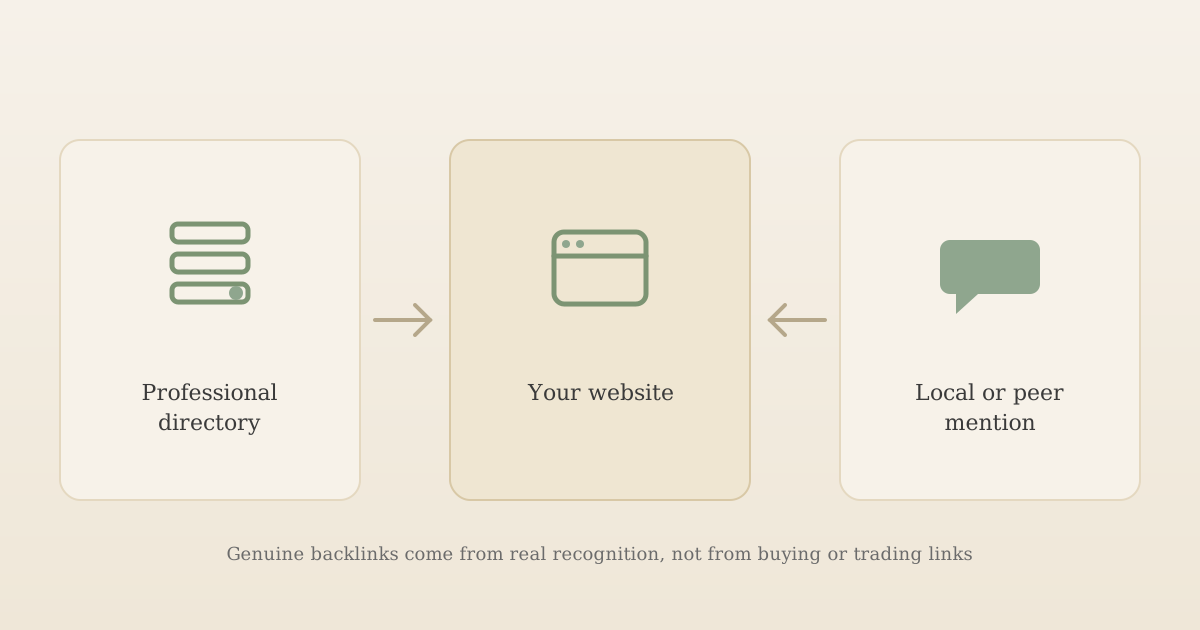
What backlinks for therapists actually look like
When another website links to yours, Google reads that link partly as a vote of confidence: a real site chose to point to your page. Google's own guidance is careful to frame this as one factor among many rather than a standalone score, and it explicitly works against links created to manipulate that signal rather than to genuinely help a reader find something useful.
For a therapist website, that means a backlink is worth having when it comes from somewhere a prospective client, a colleague or a search engine would recognise as legitimate: a professional body directory, a local publication, a training provider, a supervisor's website. It's not worth chasing a link from a site with no real connection to your work, even if that link is technically easy to get.
Where genuine backlinks for therapists come from
Most therapists don't need a backlink-building campaign. They need to make sure a handful of realistic, already-available sources are actually in place.
| Source | What it looks like | Typical effort |
|---|---|---|
| Professional body directory | A completed BACP or UKCP profile linking to your website | Low: mostly a one-off setup and keeping it current |
| Local press or local radio | A feature or interview after you've contacted a local outlet, or they've contacted you | Medium: needs a genuine local angle, not just a request |
| Supervisor or training provider | A mention or resource-page link from someone you already work with professionally | Low to medium: usually just a conversation |
| Local business or community group | A directory or "members" page link from a business network, wellbeing group or venue you're genuinely part of | Low: often already available if you've joined |
| Podcast or panel appearance | Show notes or an event page linking to your website after a genuine appearance | Medium: depends on being asked, or pitching a specific angle |
If you see clients locally, a completed Google Business Profile is worth having alongside these, though it's a slightly different thing: it's a local listing that helps nearby searches find you, not a backlink in the SEO sense, even though the two often get confused. Our guide to setting up a private therapy practice in the UK covers registering with a professional body as one of the early practical steps, and a completed directory profile is a natural by-product of that step rather than a separate task.
Local press, peer mentions and podcast appearances also tend to double as direct client-finding channels in their own right, not just backlink sources; our guide to getting your first counselling clients covers building the kind of local and peer relationships that make a genuine mention likely in the first place.
What Google calls a link scheme, and why it's not worth the risk
Google's spam policies for web search define link spam as "creating links to or from a site primarily for the purpose of manipulating search rankings", and set out several patterns that count, including:
- Buying or selling links for ranking purposes, including exchanging products, services or free work for a link.
- Excessive link exchanges, or pages created solely to swap links with other sites.
- Using automated programs or services to create links to your site in bulk.
- Low-quality directory or widget links, and forum comments or guest posts written mainly to plant a keyword-rich link rather than to genuinely contribute.
None of this describes a normal, honest way a therapist would end up with a link. It describes shortcuts sold as an "SEO service", and Google's own guidance is explicit that these can work against a site rather than for it. If you're ever offered a bulk package of backlinks or guaranteed link placements for a fee, that's the pattern being described above, not a legitimate route to more visibility.
There's a separate, more honest scenario worth understanding: a genuinely paid feature, a sponsored article, or a paid directory listing. These aren't against the rules, but Google's guidance on qualifying outbound links expects the site publishing them to mark any paid link as sponsored (or nofollow), which tells Google not to treat it as an editorial vote of confidence. In practice, that means a paid feature can still be worth doing for genuine visibility to real readers, but it's not a way to gain a ranking backlink, and any site promising otherwise for a fee is describing something closer to the link schemes above.
Two backlinks worth pursuing this month
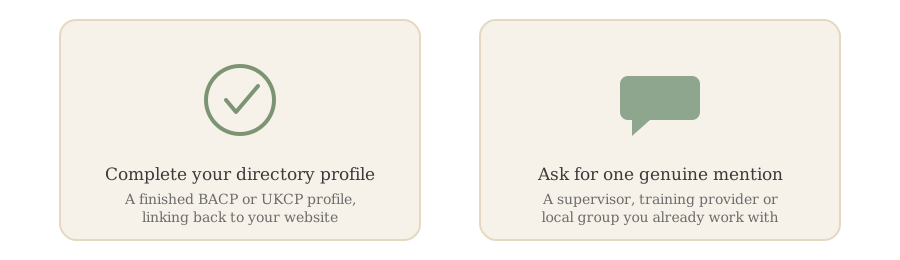
Rather than a long list, two concrete, realistic steps:
- Check your BACP or UKCP profile is complete and links to your current website. This is the single most reliable backlink available to a UK therapist, and it's common for it to be half-filled-in or pointing at an old domain. Confirm it on BACP's Find a Therapist directory or UKCP's Find a Therapist directory, whichever applies to your registration.
- Ask one person you already have a genuine connection with for a mention. A supervisor, a training provider whose course you completed, or a local group you're already part of is far more realistic, and far more valuable, than a cold pitch to an unrelated site. One honest mention from somewhere relevant does more than a batch of unrelated links ever will.
Frequently asked questions
Do therapists need backlinks for SEO?
Backlinks help, but they're one signal among many and not the first thing a therapist should focus on. Clear, specific pages and consistent local details (covered in our SEO and local SEO guides) matter more day to day. A handful of genuine backlinks from a professional directory or a real local mention are worth having, but chasing large numbers of them isn't necessary or, done badly, even helpful.
Where can therapists get legitimate backlinks?
The most realistic sources are a completed BACP or UKCP directory profile, a genuine mention from a supervisor, training provider or local business you already have a real connection with, and occasional local press or podcast coverage. All of these happen because of real recognition, not because a link was bought or traded.
Are paid backlinks against Google's rules?
Buying or selling links specifically to influence ranking breaches Google's link spam policy, whether or not any money changes hands directly. A paid feature or sponsored placement can still be worth doing for genuine visibility, but any link inside it should be marked sponsored or nofollow, which means it won't function as a ranking backlink even though it's honest and permitted.
Should therapists guest post on other sites to build backlinks?
Only if the site and the audience are genuinely relevant, for example a training provider's resource page or a supervisor's blog. Writing for unrelated sites purely to collect a link, or as part of a bulk guest-posting campaign, is exactly the pattern Google's guidance calls out as a link scheme, and it rarely brings real readers either.
Start with recognition, not volume
Backlinks for therapists work the same way professional recognition works generally: a small number of genuine connections carry more weight than a large number of arranged ones. Get your professional body profile right, be genuinely part of the local or peer network around your practice, and treat any offer of bulk, guaranteed backlinks as the risk it actually is.
Get a website worth linking to
UpTopWeb builds calm, professional websites for counsellors and therapists, giving directories, supervisors and local press somewhere genuine to point to.
Get a free website